


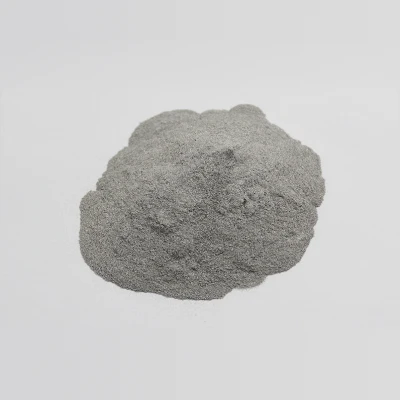
Milling Magnesium Powder
The evolution of microstructure during mechanical milling of magnesium powder has been studied. Commercially pure (99.6%, −325 mesh) magnesium powder was mechanically milled in a modified SPEX 8000 shaker mill in an inert atmosphere. The optical microscopy of the powder in the early stage...
| Product | Grade | Shape | Composition(%) | AD(g/cm3) | Particle Size |
| Milling Magnesium Powder | FSM-SMP358 | Nearly Spherical | >Mg 99% | 0.86-0.92 | 35-80 mesh |
| FSM-SMP451 | Nearly Spherical | >Mg 99% | 0.86-0.92 | 45-100 mesh | |
| FSM-MP30 | Irregular | >Mg 99% | 0.64-0.73 | 30-80 mesh | |
| FSM-MP60 | Irregular | >Mg 99% | 0.64-0.73 | 60-200 mesh | |
| FSM-MP150 | Irregular | >Mg 99% | 0.76-0.85 | -150 mesh | |
| Can be produced according to customer specifications | |||||
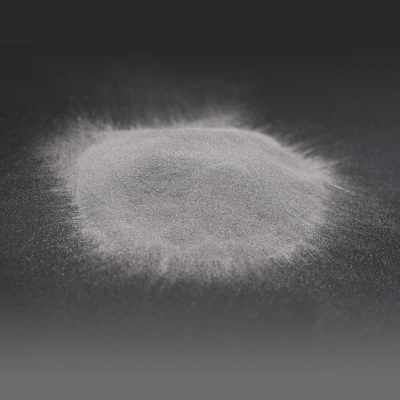
Commercially pure (99.6%, −325 mesh) magnesium powder was mechanically milled in a modified SPEX 8000 shaker mill in an inert atmosphere. The optical microscopy of the powder in the early stage of milling showed deformation by twinning and re-twinning within the grains developing sub-grain boundaries, which eventually defined nanometre-sized grains. The grain size reduction examined using XRD revealed a rapid decrease and then saturation of the grain size at approximately 42 nm. A relatively large final grain size compared to other mechanically milled metals was obtained due to the high recovery rate of magnesium. The corresponding internal strain was also observed to be low, confirming that enhanced recovery had occurred during milling. The internal strain during milling showed inverse grain size dependence. Moiré fringe patterns of TEM micrographs showed absence of dislocations within the grains of as milled magnesium powder.
The microstructural evolution and mechanical properties during mechanical milling of pure magnesium powders were investigated as a function of the milling time and processing control agent. Commercially pure magnesium powders were mechanically milled in a SPEX 8000 shaker Mixer/Mill in an inert atmosphere. From the TEM observations and the analysis of the X-ray diffraction patterns, the steady state grain size was approximately 75 nm regardless of the addition of a processing control agent, while the milling time to reach steady state was shorter when a processing control agent (lwt% stearic acid) was added to the pure magnesium. It is noteworthy that the steady state hardness of the pure magnesium with the processing control agent was hardly different from that of the pure magnesium milled without PCA. Hence, we conclude that the oxides present in the magnesium surface function the same as that of the PCA, and their effectiveness is dependent on the characteristics of the magnesium surface oxides broken by mechanical milling.
Hot Tags: milling magnesium powder, China milling magnesium powder manufacturers, suppliers, alloy in lcds, alloy in cookware, alloy in cables, alloy in coasters, alloy in energy industry, alloy density

You Might Also Like



Send Inquiry
