
abrasive
Aluminium oxide
The hardness is very high, and the polished material generally does not react chemically. Alumina polishing abrasives are commonly used for polishing steel samples. However, it is not suitable for polishing aluminum and aluminum alloys, because alumina abrasives are easy to make the aluminum surface dull and produce corrosion pits.
One of the important properties of abrasive is its hardness, it must be harder than the material to be processed, commonly used Mohs hardness tester to determine the hardness of various abrasives. Another important property of abrasives is toughness or volume strength. This property can be controlled by changing the mixing amount, purity, particle size and crystal structure of the raw material to suit a variety of applications.
For the manufacture of abrasive products, all raw materials, except powdered talc and iron oxide, need to be crushed and screened, and the screening size should be 4 to 900, that is, the diameter of about 6 mm (mm) to 6 microns (1/1000th of 1 mm) or finer. The grinding wheel is the most important abrasive product, which is mixed by the abrasive and the binder in a certain proportion, and sintered after die forming, and finally must be shaped, balanced and overspeed test. Emery cloth and sandpaper are another kind of abrasive products with large output, which are made of abrasive particles bonded on the base material (cloth or paper) and cut into different specifications after drying. Others are powder or granular abrasives, which need to be treated by a certain process after screening, such as abrasives for grinding or polishing, usually with mineral ointment or wax and other auxiliary materials to meet the needs of different working conditions.
Artificial abrasive products are mainly divided into corundum abrasive and silicon carbide abrasive two categories, specifically, there are basically the following:
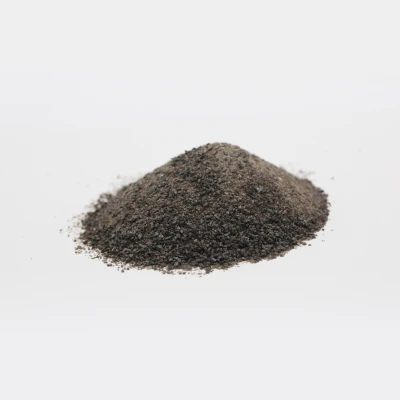
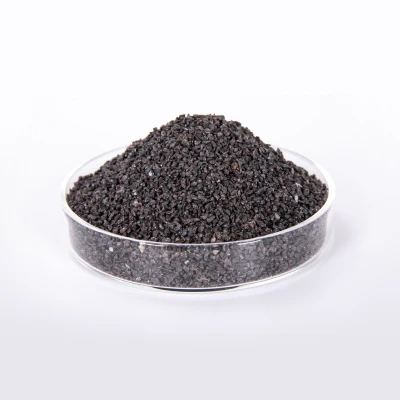
1, brown corundum abrasive, the main component is Al2O3, with medium hardness, toughness, particle sharp, relatively low price, suitable for processing high tensile strength metal. Microcrystalline corundum abrasives and black corundum abrasives are its derivative varieties.
2, white corundum abrasive, its hardness is slightly higher than brown corundum, but the toughness is poor, easy to cut into the workpiece when grinding, good self-sharpening, small heat, strong grinding ability, high efficiency. Chrome corundum abrasives are its derivative varieties.
3, single crystal corundum abrasive, its particles are composed of a single crystal, and has a good multi-edge cutting edge, high hardness and toughness, grinding ability, grinding heat less, the disadvantage is that the production cost is high, the output is low, so the price is relatively high. Zirconium corundum abrasives are also crystalline compounds with slightly lower hardness, finer crystal size and good wear resistance.
4, black silicon carbide abrasives, green silicon carbide abrasives, cubic silicon carbide abrasives, cerium silicon carbide abrasives, etc., belong to silicon carbide abrasives, the main component is silicon carbide SiC, high hardness, brittleness, sharp abrasive, good thermal conductivity, wear resistance, more suitable for processing hard and brittle metal and non-metallic products.
Suitable for mechanical, electronic, metal parts, hardware, tools, auto parts, instrumentation, casting, medical, craft jewelry and other industry products surface deburring, chamfering, deoxidizing and surface polishing.
High grinding efficiency, wear-resistant and durable, not easy to stick holes, high surface brightness!