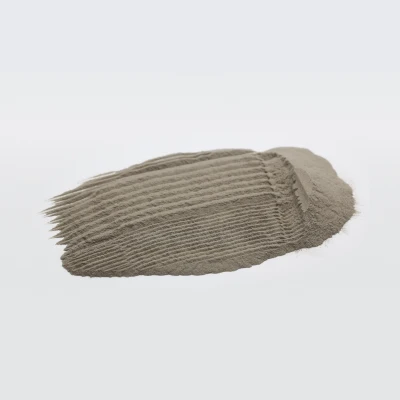

Refractories production process
According to the densification and shape of the product, there are sintering method, melting casting method and melt injection method. Sintering method is the department of raw materials pre-burned mature material, crushing and screening, and then mixed with raw material according to a certain ratio, through forming, drying and burning. The purpose of raw material pre-burning is to burn off the water, organic impurities and gas decomposed by sulfate, so as to reduce the burning shrinkage of the product and ensure the correctness of the shape and size of the product. The raw material also needs to be screened after crushing and grinding, and because the billet is graded by different particle sizes of powder, it can ensure the closest packing and obtain a dense billet.
In order to equalize the composition and particles of various raw materials and clinker, it is necessary to carry out mixing and add binder at the same time to enhance the bonding strength of the billet. For example, aluminum silicate billet is added to bonded clay, magnesium billet is added to sulfite pulp waste, and silica billet is added to lime milk. According to the amount of water content of the billet, semi-dry molding (about 5% water content), plastic molding (about 15% water content) and grouting molding (about 40% water content) can be used. It is then dried and burned. The fusion casting method is to melt the raw materials through the process of mixing and fine grinding, melt at high temperature, direct casting, cooling crystallization, annealing into products. Such as fused cast mullite bricks, corundum bricks and magnesia bricks. Their compact body, high mechanical strength, high temperature structural strength, good slag resistance, the scope of use is constantly expanding. Melt injection method is the method of melting the ingredients, blowing with high pressure air or superheated steam, so that it is dispersed into fibers or hollow balls. Products are mainly used as light fire resistant, heat insulation materials. In addition, it can also be made into powder or granular amorphous refractory materials, which are bonded with tar, asphalt, cement, phosphate, sulfate or chloride salt and are directly used without forming and sintering.