
Common 24 kinds of refractory raw materials main raw materials and secondary raw materials
Refractory aggregate and refractory powder in refractory castable are generally referred to as main raw materials, and the rest are called secondary raw materials.
Refractory aggregate is the +0.088mm or +0.1mm part of refractory castable, which is the main material in the structure of refractory castable and plays the role of skeleton. Therefore, refractory aggregate is a part of the determining factor of the physical and mechanical properties and high temperature performance of the castable body. Generally, the raw materials required for the preparation of refractory aggregate should be high-quality raw materials with dense structure, low water absorption (generally less than 5%), high strength and low impurity content.
Refractory powder is the matrix component of refractory castable. After high temperature action, it can unite or cement refractory aggregate, fill pores, achieve close packing, ensure the fluidity and volume stability of the mixture, promote sintering, and improve the density, strength, high temperature performance and service performance of the material (castable body).
By selecting different quality raw materials as the main raw materials for manufacturing refractory castables, refractory castables with different properties, different temperatures and different ranges of use can be made. Generally, composite raw materials are used as the main raw materials of refractory castables, which can obtain refractory castables with good comprehensive properties and long service life.
The main raw materials in modern high-efficiency refractory castables have used a large number of high-purity raw materials, homogeneous raw materials, electromelting raw materials, synthetic raw materials, transition raw materials and ultra-fine powder as well as carbon and synthetic non-oxide raw materials, so that the performance of refractory castables is greatly improved, even more than the fired refractory products.
The performance of refractory castable mainly depends on the raw materials used in the formulation, so the raw materials in refractory castable, especially the main raw materials, play an important role in the final product and receive special attention.
Sintered alumina
Sintered corundum, also known as sintered alumina or semi-molten alumina, is a refractory clinker made from calcined alumina or industrial alumina, which is ground into a ball or billet and sintered at a high temperature of 1750~1900℃. Sintered alumina containing more than 99% of aluminum oxide is mainly composed of uniform fine crystalline corundum directly combined. The gas yield is below 3.0%, the bulk density reaches 3.60%/ cubic meter, the refractoriness is close to the melting point of corundum, and it has good volume stability and chemical stability at high temperature. It is not affected by the erosion of reducing atmosphere, molten glass and liquid metal, and the mechanical strength and wear resistance are good at normal temperature and high temperature.
Fused corundum
Fused corundum is a kind of synthetic corundum made by melting pure alumina powder in high temperature electric furnace. It has the characteristics of high melting point, high mechanical strength, good thermal shock resistance, strong erosion resistance and small linear expansion coefficient. Fused corundum is the raw material for manufacturing high-grade special refractory materials. It mainly includes fused white corundum, fused brown corundum, sub-white corundum and so on.
Fused white corundum
Fused white corundum is pure alumina powder as raw material, after high temperature smelting, white. The smelting process of white corundum is basically the process of melting and recrystallization of industrial aluminum oxide powder, and there is no reduction process. Al2O3 content is not less than 9%, impurity content is very small. The hardness is slightly smaller and the toughness is slightly lower than that of brown corundum. Commonly used in the production of abrasive tools, special ceramics and high-grade refractory materials.
Fused brown corundum
Fused brown corundum is made of high bauxite as the main raw material and coke (anthracite), which is melted by high temperature electric furnace above 2000℃. Fused brown corundum has dense texture and high hardness, and is often used in ceramics, precision casting and high-grade refractory materials.
Subwhite corundum
Subwhite corundum is prepared by electric melting of super grade or primary bauxite under reducing atmosphere and controlled conditions. When melting, reducing agent (carbon), settling agent (iron filings) and decarburizing agent (iron scale) are added. Because its chemical composition and physical properties are close to white corundum, it is called sub-white corundum. Its bulk density is above 3.80g/cm3, and the apparent porosity is less than 4%, which is the ideal material for manufacturing high-grade refractory and wear-resistant materials.
mullite
Mullite is a refractory material with 3Al2O3·2SiO2 as the main crystalline phase. There is very little natural mullite and it is usually synthesized by sintering or electromelting. Mullite has the characteristics of uniform expansion, good thermal shock stability, high softening point under load, small creep value at high temperature, high hardness and good chemical corrosion resistance.
Zircon corundum mullite
Zirconium corundum mullite is synthesized from industrial alumina, kaolin and zircon by fine grinding, uniform mixing, semi-dry pressing and calcination at 1600~1700℃. Increasing zircon content leads to increasing sintering temperature, decreasing total shrinkage and increasing closed porosity. These reactions result in higher density and strength of sintered zircon corundum mullite and better thermal shock stability and slag resistance.
Magnesium aluminum spinel
Magnesia-aluminum spinel is made of industrial alumina and lightly burned magnesia by sintering at high temperature or electric fusion. The chemical formula of Mgo-Al spinel is MgO·Al2O3, in which the content of MgO is 28.2% and the content of Al2O3 is 71.8%. It has the advantages of high temperature resistance, abrasion resistance, corrosion resistance, high melting point, low thermal expansion, low thermal stress, good thermal shock stability, strong resistance to alkaline slag erosion and good electrical insulation properties.
Sillimanite, andalusite, kyanite
Generally, it is also often called three stones, the chemical formula is Al203-Si02, and the theoretical composition is Al2O3 63.1% and Si0236.9%. After heating, they are irreversibly transformed into mullite and quartzite, which have the advantages of good slag corrosion resistance, good thermal shock stability, and high softening point under load. The products of the kainite group are high-quality raw materials of amorphous refractory materials. Sillimanite and andalusite can be directly made into bricks or used as refractory aggregate because of small volume change during heating. When heated, the volume expansion of kyanite is large, such as as an expansion agent for amorphous refractory materials, can be directly used.
High bauxite
China's bauxite resources are mainly distributed in Shanxi, Henan, Guangxi and Guizhou. High bauxite clinker calcined at high temperature is mainly used for high alumina refractory materials, can also be used to make fused brown corundum, sub-white corundum. In recent years, the homogenized bauxite clinker produced in China has achieved good results in the application of amorphous refractory materials because of its low absorption rate and stable performance.
Soft clay
The mineral composition of soft clay is mainly kaolinite or polywater kaolinite, mixed with other impurity minerals, the content of A1203 can be from 22% to 38%, the average refractoriness is about 1600 dollars, soft clay is mostly clay, fine particles, easy to disperse in water, plasticity and adhesion is very strong. It is widely used in plastics, ramming materials, 'spray replenishing materials and refractory mud and low crotch refractory materials.
Clay clinker
According to the different raw materials and production methods used, fireclay clinker can be divided into two types: one is the hard clay block directly in the kiln forging and burning; The other is the use of kaolin or hard clay, after fine grinding, homogenization, press filtration dehydration, drying, and finally burning in the kiln, is a high-quality clay clinker. The main mineral phase of hard clay clinker is mullite, accounting for 35% ~ 55%, followed by glass phase and cristobalite. Clay clinker is the main raw material of common aluminum silicate refractories.
magnesite
Magnesite is a natural alkaline mineral raw material with magnesium carbonate (MgC03) as its main component. Our country has rich magnesite resources, high quality and large reserves. Magnesite is mainly distributed in Liaoning Province. Magnesite is mainly used to produce sintered magnesia, fused magnesia and basic refractory materials.
Sintered magnesia
Sintered magnesia is the product of fully sintering magnesite at 1600 ~ 1900℃, and the main mineral is cubic magnesite. The MgO content of high-quality magnesia is generally more than 95%, and the bulk density of particles is not less than 3.30g/cm3, which has excellent anti-alkaline slag erosion performance. Sintered magnesia is one of the main raw materials for alkaline refractory production.
Fused magnesia
Fused magnesia is made by melting selected magnesite or sintered magnesia in an electric arc furnace at a high temperature of 2500℃. Compared with sintered magnesia, the main crystal phase cubic magnesite has coarse grain and direct contact, high purity, dense structure, strong resistance to alkaline slag, and good thermal shock stability. It is a good raw material for advanced carbon-containing non-fired bricks and amorphous refractories.
Silicon carbide
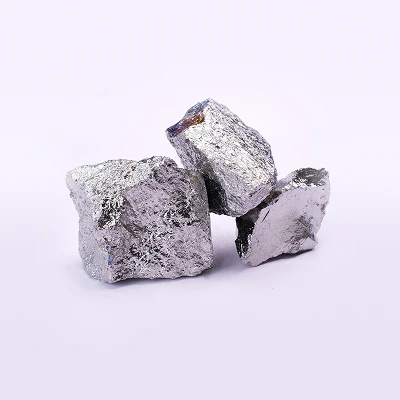
Silicon carbide is usually made from the mixture of coke and silica sand as the main raw materials by high temperature melting of electric furnace. β-SiC(cubic crystal) is formed at the temperature of 1400-1800℃, and α-SiC(hexagonal crystal) is formed when the temperature is higher than 18001. Silicon carbide has high hardness, high thermal conductivity, low thermal expansion rate and excellent resistance to neutral and acidic slag. The composition range of commercial silicon carbide is SiC90% ~ 99.5%, refractory castable, spray filler, ramming material and plastic often use high purity silicon carbide.
Silica fume
Silica fume is a by-product of the production of ferrosilicon and silicon products. The appearance is white to dark gray fine powder, the particles are round, the particle diameter is generally 0.02 ~ 0.45μm, the specific surface area is about 15~ 25m2/g, the bulk density is 0.15~0.25g/cm3, in recent years, some silica fume has been used as the leading product, and is no longer a by-product. It has high purity, white color and stable composition. Good rheological properties have been shown in the application of artesian castable.
graphite
Graphite is divided into artificial graphite and natural graphite. Artificial graphite is made by sintering petroleum coke (heated to above 2800 ° C) or by the process of graphite electrodes. Natural graphite crystals are hexagonal with rhombohedral symmetry. There are usually three forms: amorphous, flake graphite, and pure crystal. Amorphous graphite (no form) and artificial graphite have better fluidity than flake graphite and crystalline graphite in castable and chestnut feeding applications.
pitch
Coal tar pitch has a higher carbon residue content than petroleum asphalt, which can effectively provide carbon components for refractories. According to the formulation design requirements of the material, it can be used in fine powder or particle form. The use of blue in amorphous refractory applications is superior to other forms of carbon (such as graphite) because the asphalt has a low melting temperature and can be coated with particles, thus providing a good protective layer against slag erosion.
Calcium aluminate cement
The main method of production of high alumina cement is the sintering method, the purer limestone is the calcium oxide raw material for the production of all calcium aluminate cement, sintered alumina is used for the production of high-grade calcium aluminate cement, and low iron, low silicon bauxite is used as the alumina raw material for medium and low grade high alumina cement. Pure calcium aluminate cement or high alumina cement is the most important hydraulic cement used for the combination of refractory castables and sprays. In the construction of refractory castable lining, it is necessary to strictly control the water temperature and adding water, mixing strength and time, temperature and heating rate, among which temperature is the most important parameter, which significantly affects the formation of cement binding phase and the discharge of water in the initial heating stage.
Silica sol
Silica sol is a kind of aqueous colloid dispersed with silica particles, which is a milky liquid that is somewhat viscous to the touch and has a high specific surface. The silica sol can be cemented by dehydration, changing pH, adding salt, or an organic solvent that can be miscible with water. During drying, silicon-oxygen (SI-0-Si) bonding is formed on the particle surface by rapid dehydration, resulting in polymerization and internal bonding. The conversion of silica sol from solution to solid is called cementation. Commonly used in paint, castable, pump feed, ramming and spray feed.
Sodium silicate
Commonly used silicates are sodium silicate (Na2O•mSiO•nH2O), potassium silicate and lithium silicate. The dehydrated sodium silicate is usually as transparent as glass and soluble in water, so it is also called water glass. The molar ratio of Si02/N~0 in industrial products (called the modulus of water glass) is between 0.5 and 4.0, and the molar ratio of sodium silicate for refractory materials is 2.2 to 3.35. The viscosity of sodium silicate aqueous solution is affected by its molar ratio and concentration, and changes significantly with temperature. Sodium silicate is hydrated in aqueous solution, and the solution is alkaline. The smaller the molar ratio, the clearer the hydration of sodium silicate, and the pH value decreased with the decrease of molar ratio. The hydration reaction of sodium silicate with high molar ratio is slow. The curing agent selected for sodium silicate bonded refractories should be determined according to the application of refractories. Commonly used curing agents are sodium fluosilicate, polyaluminum chloride, phosphate, sodium phosphate, polyaluminum phosphate, polymagnesium phosphate, ammonium pentaborate, glyoxal, citric acid, tartaric acid, ethyl acetate, etc.
Phosphoric acid and phosphate
Phosphoric acid itself is not binding. When it is in contact with the refractory, due to the rapid reaction between the two to produce phosphate, it shows good bonding property. Different forms of phosphates can be used as binders. The most common salt used with refractories is aluminum phosphate, which is known for its solubility in water, bond strength and stability as a binder. Sodium phosphate in refractory materials is mainly used for coagulation, depolymerization and as a bonding agent for alkaline spray supplement. Sodium polyphosphate is often used as a water-reducing agent in castables. In addition, sodium phosphate can react with alkaline earth metal compounds (such as CaO and MgO) to produce condensation. It is based on this property that sodium phosphate is applied to magnesium alkaline spray supplement.
Rho - Al2O3
Rho Al2O3 is an active alumina, which is different from other crystalline Al2O3 and is the worst crystalline Al2O3 variant. Among the various crystal states of Al2O3, only rho -Al2O3 has spontaneous hydration reaction at room temperature, and the hydrated diaspore and boehmite sol can play the role of bonding and hardening. Rho -Al2O3 is finally transformed into an excellent refractory -α-Al2O3(corundum) at high temperature. Therefore, the rho -Al2O3 bonded castable can be regarded as a kind of refractory self-bonding castable, which plays the role of a bond, and itself is a high-level refractory oxide, with obvious excellent performance.