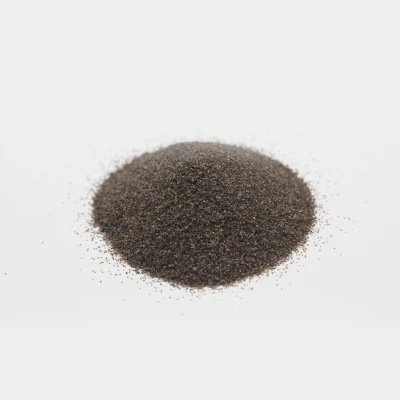

How does cryolite function in electrolytic aluminum?
In the aluminum smelting process, cryolite is used as the main raw material for aluminum smelting because:
1. Pure cryolite does not contain any metal impurities with a precipitation potential higher than aluminum, and relatively pure aluminum can be obtained as long as impurities are not added from the outside during the operation.
2 cryolite can dissolve alumina well, when the electrolytic temperature is 950℃-970℃, the solubility of alumina in cryolite solution is about 10%.
3. At the electrolytic temperature, the density of cryolite-alumina solution is lower than that of molten aluminum at the same temperature, which can float on molten aluminum to prevent aluminum oxidation, and the electrolyte and aluminum can be better separated.
4. Cryolite has a certain conductivity, so the pressure drop of the electrolyte layer is not too high.
5. Cryolite melt has a certain fluidity at the electrolytic temperature, and the anode gas can be discharged from the electrolyte, which is conducive to the cyclization of the electrolyte.
6. In the molten state, cryolite is basically non-absorbent and non-volatile, reducing material consumption and ensuring the stability of the electrolyte.
Cryolite, also known as sodium hexafluoroaluminate or sodium aluminum fluoride, the molecular formula is Na3AlF6, is a tiny white crystal, odorless, more soluble than natural cryolite. Larger than, hardness 2~3, melting point is easy to absorb water and moisture, crystolite is mainly used as aluminum electrolytic flux, rubber and grinding wheel wear filler, enamel paste, glass sunscreen and metal flux, crop pesticides, under normal circumstances, it does not decompose, non-volatile or non-delixing, its melting point is higher than aluminum, its conductivity is good, and it saves energy. It can be said that without cryolite, the world may not have such a large-scale aluminum industry.