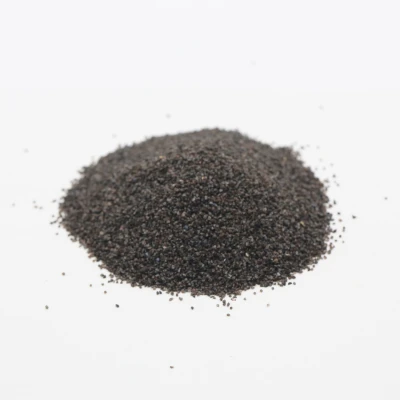

Reasons For The High Hardness Of Spinel
The crystal structure of spinel is a square crystal system, and each spinel cell contains eight cubic oxides and one octahedral oxide. The octahedral oxide has a larger diameter than the cubic oxide, resulting in a larger cell volume than other crystals.
The increase in the volume of the cell makes the spacing of the atoms of spinel larger and the chemical bonds more relaxed, which makes spinel have higher hardness.
At the same time, spinel shows a high degree of symmetry in the lattice points, and the crystal structure is very stable and not prone to distortion or warping, which is also conducive to the hardness of spinel.
Bonded structure
Spinel has a very strong bonding force, and its bonding structure is a mixed structure of tetrahedral and octahedral coordination, the tetrahedral side length is 0.5 nm, and the diameter of the octahedron is 1 nm.
Since the octahedral oxide has a larger diameter than the tetrahedral oxide, it can form stronger coordination bonds with the surrounding oxygen atoms, thus amplifying the bonding force.
In addition, the bonding force in spinel is also affected by the double action of chemical bond and ionic bond, in which the electron cloud overlaps to form a strong interaction, while ionic bond can form a more stable crystal structure through the staggered arrangement of the same ions.
Chemical composition
The hardness of spinel is also affected by the chemical composition, in general, most spinel contains aluminum, and iron will reduce the hardness of spinel, resulting in an increase in brittleness.
In addition, there are other metallic elements in spinel, such as copper, zinc, magnesium, etc., their addition can form a hybrid, increasing the stability and hardness of spinel.
Of course, different chemical compositions also affect the color, refractive index and other properties of spinel, which will not be repeated here.
Crystal defects are caused by the fact that the atoms in spinel cells cannot be completely filled. These defects are activated on the crystal surface or in the phonon system, which can make its atomic structure affected by distortion, warping, dislocation, etc., resulting in more complex crystal structure of spinel and increased hardness.
The common crystal defects in spinel, such as aerobic vacancy, iron interference, oxygen matrix defect and non-equilibrium damage, have a certain effect on the increase of spinel hardness.
Stress state
Stress state refers to the effect of stress state, strength and direction on the mechanical properties of the material.
When pressure is applied to the surface or contact surface of the material, the strength and direction of the crystal structure of spinel will change, making its surface harder, thereby increasing the hardness of spinel.
In addition, in the process of machining or chemical etching, the stress state of the surface of the spinel crystal will also change, thus making the surface more dense and increasing the hardness of the spinel.
JIYGO REFRACTORY & ABRASIVE LIMITED