
What Are The Production Methods Of Cryolite?
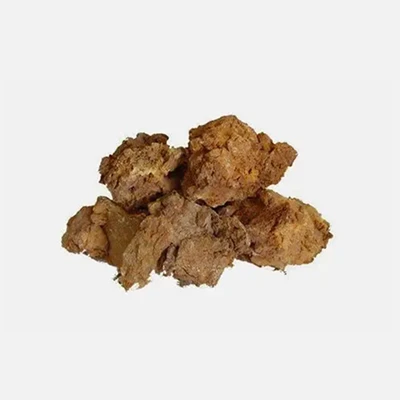
Cryolite is colorless crystal or powder, which is an important inorganic chemical raw material. It is used as an additive for electrolytic aluminum, a flux for smelting metal magnesium, and titanium. Cryolite is used as an electrolytic bath component in the production of aluminum to reduce the melting point and improve the conductivity of electrolytes. Magnesium fluoride has a low refractive index and can be used as a low refractive index material in photonic crystals because of its wide band gap with high refractive index materials. What are the production methods of cryolite? Today we are going to learn about it.
Hydrofluoric acid method: can be divided into dry method and wet method; The dry method is to react gaseous hydrofluoric acid and aluminum hydroxide at 400 ~ 700℃ to generate fluoroaluminic acid (H3A iF6), and then react with soda ash at high temperature to produce crurite. The wet method is to prepare cryolite by reacting 40 ~ 60% hydrofluoric acid with aluminum hydroxide and then adding soda ash.
Fluorosilicic acid method: can be divided into ammonium fluoride intermediate product and sodium fluorosilicate intermediate product method, the former is fluorosilicic acid and ammonia water after ammonia reaction with sodium aluminate to produce cryolite. The latter is the production of phosphorous fertilizer by fluorine containing waste gas through the recovery of sodium fluorosilicate, and then through ammoniation synthesis and other processes to produce cryolite.
Carbonation method: cryolite can also be prepared in sodium aluminate and sodium fluoride solution with carbon dioxide.
Aluminum industrial recovery method: Dilute hydrofluoric acid recovered from the waste gas of aluminum smelting can be recovered by reacting with sodium aluminate.
Alkali process: soda ash, fluorite, silica sand by roasting, grinding, leach and reaction with aluminum sulfate, rarely used in industry.
JIYGO REFRACTORY & ABRASIVE LIMITED