


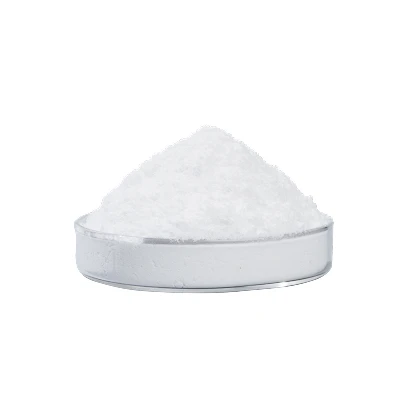
High-Purity White Alumina
High-Purity White Alumina | 99% Al₂O₃ Refractory Aggregate & Precision Abrasive "Arc-fused single-crystal alumina solving impurity-induced failures in high-temperature cracking and precision grinding."
Product Essence (Process Focus)

This isn't standard alumina:
01
Raw Material
Industrial alumina powder (not bauxite) smelted at 2,200°C
02
Sodium Control
Sulfur-added process reduces Na₂O to <0.2% (prevents steam explosion)
03
Crystal Growth
72-hour slow cooling forms 50-200μm complete crystals
Fundamental Differences from Brown Alumina
| Application Scenario | Choose White Alumina | Choose Brown Alumina |
| >1,500°C environments | Zero sodium-explosion risk | TiO₂ reduces strength |
| Stainless steel polishing | No iron contamination | May cause brown stains |
| Cutting tough materials | Brittle (Mohs 9.2) | Better toughness (with Ti) |
Solving Real Industrial Pain Points

Refractory Plant – Ladle Lining Spalling
"When castables contact 1,600°C molten steel:
Use 3-5mm white alumina aggregate (replaces brown)
<0.2% Na₂O eliminates steam expansion stress
Result at a specialty steel mill: Lining lifespan ↑ from 90→135 heats"
Optical Glass Mold – Polishing Scratches
"For polishing K9 glass:
Apply W20 white alumina powder (Fe₂O₃≤0.01%)
90% fewer scratches vs. standard alumina
Measured roughness: Ra 0.02μm"

Production details
Transparency of cost structure
Electricity price 0.65 yuan/kWh × 38,000 kWh/furnace + 12.5 tons of alumina powder → Single furnace cost ≈ 250,000 yuan
Quality Control Challenges
Fine powder processing: W63 and below require 120+ hours jet milling (40% of cost)
torage warning: Absorbs moisture if stored outdoors >3 months (requires dry warehouse)
FAQ
| Cost Structure | Brown Fused Alumina | White Fused Alumina |
| Raw material cost | The main raw material is bauxite (accounting for 70%-80%), supplemented by coke (reducing agent) and iron filings (adjusting composition). Bauxite reserves are large (high production in Shanxi, Henan and other places in my country), mining and processing are simple, and the price is low (about 800-1500 yuan/ton). | The main raw material is industrial alumina (purity ≥98%), and there are no other auxiliary raw materials. Industrial alumina needs to be purified and processed from bauxite, with high purity and a significantly higher price than bauxite (about 2500-4000 yuan/ton). |
| Energy cost | The electric arc furnace is used for melting and smelting, with a temperature of about 1800-2000℃, a shorter smelting time (about 8-12 hours for a single furnace), and a lower unit energy consumption (about 1200-1500kWh/ton). | The electric arc furnace is also used for smelting, but a higher temperature (2000-2200℃) is required to ensure that industrial alumina is completely melted and trace impurities are removed. The smelting time is longer (about 10-16 hours for a single furnace), and the unit energy consumption is higher (about 1800-2200kWh/ton). |
| Processing cost | After smelting, the block material can be crushed and screened. Because a small amount of impurities (such as iron and silicon) are allowed, the purification steps such as magnetic separation are simple, and the loss rate is about 5%-8%. | It requires fine crushing and multi-stage screening (to ensure uniform particle size), and because of the high purity required (Al₂O₃≥95%), multiple magnetic separation and acid washing are required to remove trace impurities, and the loss rate is higher (about 10%-15%). |
| Environmental protection cost | Bauxite has many impurities (silicon, iron, titanium, etc.), and the smelting produces a lot of dust and waste slag (such as ferrosilicon slag), which requires additional investment in desulfurization and dust removal equipment, and the processing cost accounts for about 5%-8% of the total cost. | Industrial alumina has high purity and few impurities. The amount of dust and waste slag is only 1/3-1/2 of that of brown corundum. The investment in environmental protection equipment is low, and the processing cost accounts for about 3%-5%. |
| Fixed cost allocation | The technology is mature and the production scale is large (my country's annual production capacity exceeds 10 million tons), and the fixed cost allocation of equipment depreciation, labor, etc. is low (about 10%-15%). | The production scale is relatively small (annual production capacity is about 3-5 million tons), and the fixed cost allocation is higher (about 15%-20%). |
If you struggle with:
Refractory spalling from sodium attack
Contamination in precision polishing
Short wheel life in silicon wafer cutting

Hot Tags: high-purity white alumina, China high-purity white alumina manufacturers, suppliers, refractory alloys, refractory stannates, refractory silicates, Rotary Kiln Bauxite, refractory for heaters, platinum silicate refractory


You Might Also Like



Send Inquiry
