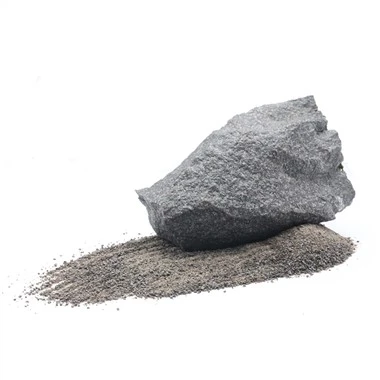

Smelting of ferrosilicon
Low-silicon ferrosilicon (10 ~ 15% silicon) can be smelted in blast furnaces with iron ore and silica. High coke ratio and wind temperature are required. In operation, the top temperature of the furnace is high, the gas contains much dust, and the prolific operation is difficult. High-silicon ferrosilicon is smelted in a carbon-lined reduction furnace, using silica, steel chips (or iron scales), and coke as raw materials. Electric furnace iron silicon is slag free smelting, raw materials must be clean, not mixed with mud sand and other impurities, the charge with wood chips and coal, can improve the performance of the charge. In the smelting process, the material surface is easy to crust and "stab fire" (the material surface spits fire), and it must be often "ramming furnace". The furnace produces iron silicon every 2 to 4 hours and casts ingots with a thickness of less than 100 mm in the ingot mold. Iron silicon is generally refined by open type electric furnace. In recent years, in order to prevent environmental pollution, more "low smoke hood" or "semi-closed" type electric furnace is used to facilitate the recovery of heat energy and smoke and dust removal; The production of high-silicon ferrosilicon (containing more than 75% silicon), mostly using rotary electric furnaces to reduce ramming furnace. Large ferrosilicon furnace capacity of 10000 ~ 96000 kVA, ferrosilicon production power consumption is about: 45% ferrosilicon, 5000 kW · h/ton; 75% ferrosilicon, 9000 kW · h/ton; 90% ferrosilicon, 14000 kW · h/ton. In order to meet the requirement that the aluminum content of ferrosilicon in electrical steel should not be too high, refining methods such as blowing oxygen or blowing chlorine have been developed in recent years.