
The erosion of slag can easily lead to the peeling of corundum brick and the loss of castable due to failure and carbonization
Driving and stopping too many times. In normal production, the temperature of the furnace refractory lining is high, and in the parking (especially in the case of hanging burner), due to the cooling effect of the burner cooling coil (or the entry of a large number of cold air), the temperature of the furnace refractory lining drops sharply, and the temperature rises quickly after driving. A stop and start is equivalent to a cold rush. According to the test results, the crack of corundum brick occurs after four times of acute cooling and acute heating. During the period from the end of 1983 to the fifth shutdown overhaul in April 1991, the two gasifiers were turned on and off 195 times, with each gasifier turning on and off once in 19.4 days on average. Such frequent opening and stopping of corundum bricks cause frequent acute cooling and acute heating and serious damage. In addition, when stopping, the furnace is full of water vapor, due to the cooling effect of the burner cooling coil, it is easy to produce condensation water in the furnace mouth, and the erosion of condensation water, carbon black, slag, etc., is easy to cause the spalling of corundum bricks and the loss of castable due to failure and carbonization.
The expansion joint of the furnace top is too small. In actual use, it was found that the damaged corundum brick and castable in the furnace were higher than the flange surface, and the ceramic fiber felt was pressed into a flat sheet. This shows that the original design of 40mm expansion joint height is not enough, the theoretical calculation also proves that the expansion joint is too small. In this way, the expansion of corundum bricks is blocked and subjected to strong pressure, which is easy to damage.
Improvement measures Since January 1988, improvement measures have been taken on the refractory lining of the gasifier furnace, and gradually improved according to the use effect. After repeated experiments, the following relatively perfect measures were finally adopted. Corundum brick is changed from three rings to five rings, and the height of a single brick is changed from 123mm to 70mm, thus reducing the thermal stress of corundum brick and the possibility of cracking of corundum brick. The mortar used in the furnace corundum brick is changed from the alumina fire mud with high sintering temperature to the third layer heat insulating brick fire mud with relatively low sintering temperature, and the joint surface of the furnace corundum brick and the corner brick is changed from the plane to the mortise-groove surface to avoid gas channeling from this part.
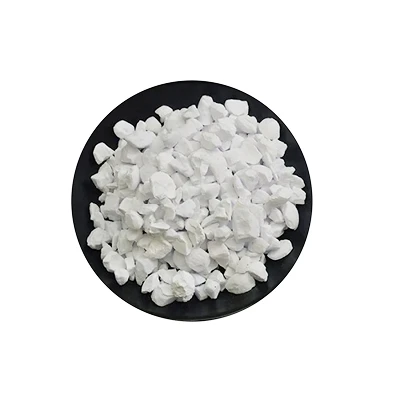
White corundum with a height of 50mm is poured in the ring gap between the furnace brick and the shell to seal the refractory castable. Stainless steel wire is added to the corundum as a skeleton to ensure the overall strength of the cast corundum. Heat insulation bricks are laid on top of the cast corundum to double seal the castable to prevent the castable from running away. According to the expansion coefficient of corundum brick used, the axial expansion amount of the whole corundum brick lining is calculated, and the appropriate expansion joint height is selected to make the expansion joint height of the furnace top reasonable, so as to avoid the strong pressure caused by the blocked expansion of the refractory lining.
Since June 1992, after the above measures have been completely adopted in the refractory lining of the gasifier, the use of the refractory lining of the gasifier has been fundamentally improved, the cracking of the furnace brick and the running loss of castable have been basically eliminated, and the phenomenon of overtemperature alarm on the outer wall of the furnace has also been eliminated. From the inspection of the gasifier refractory lining in each overhaul, the thickness of the corundum brick in the top of the gasifier vault and the upper part of the cylinder is not large (generally 1030mm, the remaining thickness is 80110mm), while the corundum brick in the middle and lower part of the cylinder is rapidly thinned due to the strong erosion of the burner flame. Less than 8000h of corundum bricks have been left, or even none. For example, the No. 2 gasifier in 1989 and 1990 twice due to the lower part of the cylinder corundum brick thinning to zero, causing the upper part of the corundum brick collapse, forced to carry out overhaul in advance. From 1990 to 1991, the thinning rate of corundum bricks was also as high as about 10mm per month on average, which was difficult to ensure a production cycle.
The main reasons for the damage of corundum brick in residual oil gasifier are as follows. Melting loss. Ni, V, Ca, Na, Fe, Mg and other impurities in the residual oil used in the gasifier react with the corundum brick component Al2O3 to form a low melting point compound, which is lost in the melting state at the operating temperature. The loss amount increases with the increase of the operating temperature and the flow rate of the process gas. Peel off. The impurities contained in the gasifier raw materials penetrate into the brick through the opening porosity of the corundum brick, and react with the brick components to generate new minerals. Due to the different coefficient of thermal expansion or the volume change effect (such as V2O3 meets O2 to generate V2O5, the volume increases by 40%), in the furnace temperature fluctuation, especially in the case of opening and stopping, slag cleaning, hanging burner, cracks occur at the junction of different minerals and continue to expand, and finally flake or block spalling. The greater the temperature fluctuation, the more driving and stopping times, and the more stripping.
Damage caused by accidental events. Such as burner nozzle damage, burner cooling water coil water leakage, burner installation is not centered, oxygen overtemperature, chill ring damage, cold water overflow into the combustion chamber. Corundum brick and other refractory materials are of poor quality, construction masonry quality is not up to standard, oven quality is poor, etc. Improvement measures in the above several aspects of research at the same time, the fire-resistant lining has been improved. The reason for the replacement of the refractory lining of the ggator is that the corundum brick in the lower part of the cylinder body is damaged or thinned seriously, while the thickness of the corundum brick in the upper part of the cylinder and the crown of the vault is still large. Therefore, the service life of the refractory lining of the whole gator can be extended by increasing the thickness of the corundum brick in the lower part of the cylinder with the fastest melting loss and thinning and extending the service life of the corundum brick in this part.
Through several years of efforts, after taking the above improvement measures, the problems such as the easy damage of the refractory lining of the gasifier furnace, the short service life of the corundum brick in the lower part of the combustion chamber cylinder, and the easy overtemperature of the external wall of the thermocouple hole have been basically solved, greatly reducing the load reduction production and shutdown maintenance caused by the gasifier. Then through the reasonable allocation of residuum varieties, the optimization of process operation, the quality of lining masonry and the improvement of the quality of corundum bricks produced by Luoyang Refractory Research Institute, the service life of the thickened corundum bricks in gassing furnace has met the needs of two years of repair, which has solved the main problem of fertilizer production and created a good condition for the stable and excellent production of large fertilizer plants.