
Classification Of Aluminium Silicate Refractories
Thermal insulation material refers to the material or material complex used for building envelope or thermal equipment, impedance heat flow transfer, including both thermal insulation material and cold retaining material. On the one hand, thermal insulation materials meet the thermal environment of building space or thermal equipment, and on the other hand, they also save energy. Therefore, some countries regard insulation materials as the "fifth energy" after coal, oil, natural gas and nuclear energy. It has a strong impedance effect on heat flow, and is mainly used for insulation and insulation of walls, roofs or industrial pipes and kilns of housing buildings.
According to the principle of insulation, it is divided into:
① Porous material. Insulation is achieved by filling pores with gases with low thermal conductivity. Generally, air is used as the thermal resistance medium, which is mainly fibrous aggregate structure and porous structural materials. The insulation of foam is better, followed by mineral fibers (such as asbestos), expanded perlite and porous concrete, foam glass and so on.
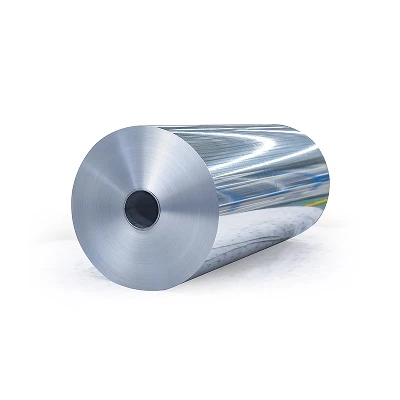
② Reflective material. If aluminum foil can reduce radiation heat transfer by thermal reflection, several layers of aluminum foil or a composite structure with a thin air layer with paper can also increase the thermal resistance value. Thermal insulation materials are often used in the form of loose materials, coils, sheets and prefabricated blocks for thermal insulation and insulation of building roofs, exterior walls and floors. It can be directly laid (such as aerated concrete) or placed in the roof and envelope structure as the core material, or it can be paved as the ground insulation layer. The fiber aluminum-silicon refractory is a refractory with Al2O3 and SiO2 as the basic chemical composition. It can be classified according to the mineral composition, chemical composition and production process of the raw materials used. For products mainly made of natural raw materials, according to the amount of Al2O3 and SiO2 content in the products, it can be divided into three categories:
Semi-silicon products: Al2O3 content is 15~ 30%;
Clay products: Al2O3 content is 30~ 46% (according to the composition characteristics of China's raw materials, generally 30~ 48%);
High aluminum products: Al2O3 content is greater than 46% (according to the composition characteristics of China's raw materials, generally > 48%).
Semi-siliceous products are made of semi-siliceous adhesive, primary kaolin or wax stone and other raw materials, so its Al2O3 content is low, not more than 30%. Clay products are made of fireclay as the main raw material, and some of the clay burning mature material is turned into granular material, which is combined with some raw clay. High aluminum products can be made of various high aluminum raw materials with Al2O3 content greater than 46%. High aluminum products produced with natural high bauxite according to their different Al2O3 content, can be customarily divided into I (Al2O3≥ 75%), II (Al2O360% ~ 75%), III (Al2O348% ~ 60%) various products of chemical extension composition.
If the product is characterized by the nature of the main raw material, the product may also be named by the name of the raw material. For example, the products produced with waxite as the main raw material are called waxite bricks, and the products produced with sillimanite or andalusite as the main raw material are respectively called sillimanite bricks and andalusite bricks. If the product is produced with artificial raw materials (such as sintered corundum, fused corundum, synthetic mullite) as the main raw material, it is classified according to the main crystal phase in the product. Such as mullite brick, corundum mullite brick.
JIYGO REFRACTORY & ABRASIVE LIMITED