


The Functions And Advantages Of Tabular Alumina
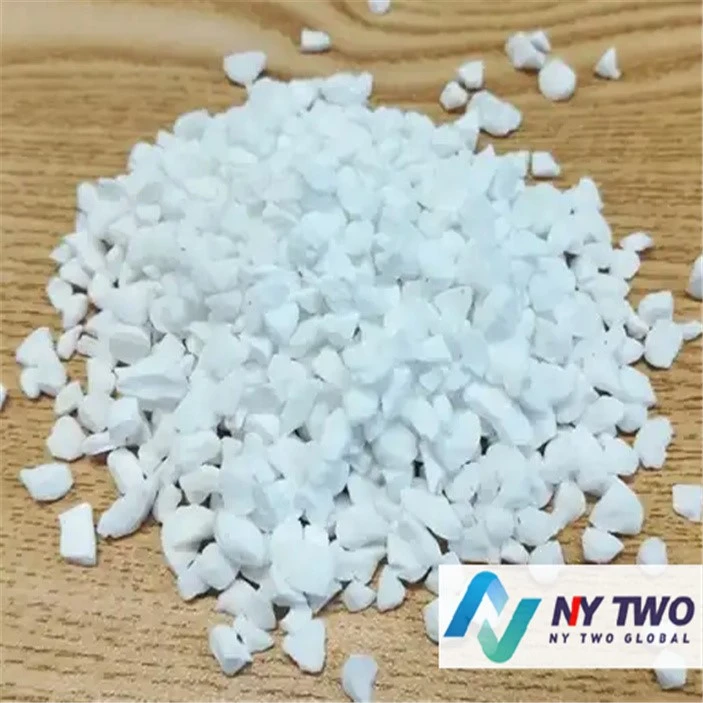
Tabular alumina has a wide range of applications in various industries. It is mainly used as a main component in aluminum carbon, aluminum-magnesium, magnesia-carbon, magnesium-Spinus, and aluminum-chromium refractory bricks, or as an enriched alumina component. The shaped refractory material can be widely used in steel, casting, ceramics, and other industries. In the steel industry, Tabular alumina can be used in almost the whole process of ironmaking steelmaking, such as blast furnaces, ladle furnaces, and direct reduction plants.
Tabular alumina has high refractoriness, and excellent thermal shock, creep, and wear resistance, making it suitable for high-temperature and high-pressure conditions. In the steel industry, Tabular alumina is widely used in ladle refractories, ladle linings, mold linings, furnace linings, furnace gates, furnace bottoms, etc. The use of Tabular alumina in steelmaking has improved the refractories' thermal stability and wear resistance, reducing the refractories' consumption and improving the production process's efficiency.
Tabular alumina is a synthetic high-purity alumina aggregate with a purity of above 99%. It has a plate-like crystal structure and small and closed pores, and the porosity is roughly equivalent to fused corundum. It has good volume stability, minimal re-sintering shrinkage, and high-temperature treatment of refractory or castables used for production. Its thermal shock stability and bending strength are excellent, and its price is higher than other alumina.
In summary, Tabular alumina is a high-performance refractory material with a wide range of applications in various industries. It is mainly used as a main component in various refractory materials, and its performance is superior to other alumina. The steady use of Tabular alumina in the steel industry is an indication of its effectiveness and value.
JIYGO REFRACTORY & ABRASIVE LIMITED


