

What are the thermal conductivity characteristics of High Carbon Ferro Manganese?
High Carbon Ferro Manganese (HCFeMn) is a crucial alloy in the steelmaking industry. As a supplier of High Carbon Ferro Manganese, I am well - versed in its various properties, including its thermal conductivity characteristics. In this blog, we will explore the thermal conductivity of HCFeMn, its influencing factors, and its significance in industrial applications.
Thermal Conductivity Basics
Thermal conductivity is a property that describes a material's ability to conduct heat. It is defined as the quantity of heat that passes through a unit area of a material in a unit time, under a unit temperature gradient. For metals and alloys like High Carbon Ferro Manganese, thermal conductivity is an important characteristic as it affects many aspects of their processing and application.
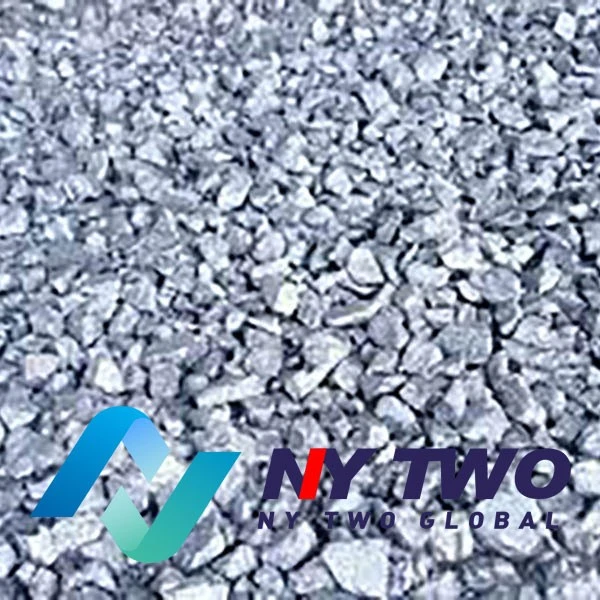
The thermal conductivity of HCFeMn is mainly determined by the movement of free electrons within the alloy. In a metallic lattice, free electrons can carry heat energy from the high - temperature region to the low - temperature region. The more freely the electrons can move, the higher the thermal conductivity of the material.
Factors Affecting the Thermal Conductivity of High Carbon Ferro Manganese
Chemical Composition
The chemical composition of High Carbon Ferro Manganese has a significant impact on its thermal conductivity. HCFeMn typically contains a high percentage of manganese (usually around 70 - 80%) and carbon (around 6 - 8%), along with small amounts of other elements such as silicon, phosphorus, and sulfur.
Manganese is a key element in HCFeMn. It has relatively good thermal conductivity. As the manganese content increases, the thermal conductivity of the alloy may increase to some extent. However, carbon also plays an important role. Carbon atoms dissolve in the iron - manganese lattice, and they can scatter free electrons, reducing the mean free path of the electrons. As a result, an increase in carbon content generally leads to a decrease in thermal conductivity.
For example, when the carbon content in HCFeMn rises from 6% to 8%, the electron - atom interactions become more frequent, which restricts the movement of electrons and thus lowers the thermal conductivity of the alloy. Other elements, such as silicon, can also affect the thermal conductivity by changing the crystal structure and electron mobility of the alloy.
Microstructure
The microstructure of High Carbon Ferro Manganese also influences its thermal conductivity. During the solidification and cooling process of HCFeMn, different microstructures can be formed, such as ferrite, pearlite, and cementite.
Ferrite has relatively higher thermal conductivity because it has a simple crystal structure and more free electrons that can move freely. Pearlite, which is a combination of ferrite and cementite, has a lower thermal conductivity compared to ferrite. Cementite, with its complex crystal structure and strong covalent bonds, has very low thermal conductivity.
If the HCFeMn has a finer microstructure, the grain boundaries will increase. Grain boundaries act as obstacles to the movement of free electrons, which can scatter the electrons and reduce the thermal conductivity of the alloy. On the other hand, if the alloy has a more uniform and coarse - grained microstructure, the thermal conductivity may be relatively higher.
Temperature
Temperature is another important factor affecting the thermal conductivity of High Carbon Ferro Manganese. Generally, the thermal conductivity of metals and alloys decreases with increasing temperature.
At low temperatures, the lattice vibrations of the alloy are relatively weak, and the free electrons can move more freely. As the temperature rises, the lattice vibrations become more intense. These lattice vibrations, known as phonons, collide with free electrons more frequently, reducing the electron mobility and thus decreasing the thermal conductivity.
For HCFeMn, in the temperature range of steelmaking processes (usually several hundred to over a thousand degrees Celsius), the change in thermal conductivity with temperature is significant. When the temperature increases from 500°C to 1000°C, the thermal conductivity of HCFeMn can drop by a considerable amount, which has a profound impact on the heat transfer efficiency during the steelmaking process.
Significance of Thermal Conductivity in Industrial Applications
Steelmaking
In the steelmaking process, High Carbon Ferro Manganese is used as an alloying agent to improve the properties of steel. The thermal conductivity of HCFeMn affects the heat transfer rate within the molten steel.
During the addition of HCFeMn to molten steel, a high thermal conductivity allows for a more rapid heat transfer between the alloy and the steel. This helps to quickly homogenize the temperature of the molten steel, ensuring a more uniform distribution of alloying elements. On the other hand, if the thermal conductivity is too low, the heat transfer will be slow, which may lead to local overheating or uneven alloying in the steel.
For example, in an electric arc furnace (EAF) steelmaking process, when adding HCFeMn to the molten steel, the appropriate thermal conductivity of HCFeMn helps to maintain a stable temperature field in the furnace, improve the melting efficiency of the alloy, and reduce energy consumption.
Casting and Forging
In the casting and forging processes of steel products containing HCFeMn, the thermal conductivity of the alloy also plays a crucial role. During casting, the solidification process of the molten metal is closely related to the heat transfer rate. A higher thermal conductivity of HCFeMn can accelerate the cooling rate of the castings, which may affect the microstructure and mechanical properties of the final products.
In forging, the heat distribution in the workpiece is important for the deformation process. The thermal conductivity of HCFeMn affects how the heat generated during forging is dissipated. If the thermal conductivity is suitable, it can ensure a more uniform temperature distribution in the forging, reducing the risk of cracking and improving the quality of the forged products.
Comparison with Other Alloys
When comparing High Carbon Ferro Manganese with other related alloys such as Medium Carbon Ferromanganese, there are some differences in thermal conductivity. Medium Carbon Ferromanganese generally has a lower carbon content compared to HCFeMn. As mentioned before, a lower carbon content usually leads to higher thermal conductivity due to less electron - scattering effect of carbon atoms.
Another comparison can be made with magnesium - based alloys, such as 500g/17.6oz Magnesium Shavings Magnesium Metal Pure 99.99% Emergency Fire Starter For Camping Hiking Bushcraft BBQ and Good Sales Aluminized Magnesium Plate. Magnesium has a relatively high thermal conductivity compared to many iron - based alloys. However, the addition of other elements in magnesium - based alloys can change their thermal conductivity. In contrast, HCFeMn has a different thermal conductivity behavior due to its unique chemical composition and crystal structure, which is more suitable for specific applications in the steel industry.
Conclusion
The thermal conductivity of High Carbon Ferro Manganese is a complex property that is influenced by chemical composition, microstructure, and temperature. Understanding these characteristics is crucial for optimizing its applications in steelmaking, casting, and forging processes.
As a supplier of High Carbon Ferro Manganese, we are committed to providing high - quality products with stable thermal conductivity properties. Our products can help steel manufacturers improve production efficiency, reduce energy consumption, and enhance the quality of steel products.
If you are interested in our High Carbon Ferro Manganese products or would like to discuss procurement and technical details, please feel free to contact us for further communication and negotiation.
References
- "Physical Metallurgy Principles" by Robert W. Cahn and Peter Haasen.
- "Steelmaking and Refining Processes" by Joseph D. Verhoeven.