

What is the specific heat capacity of White Fused Alumina?
White Fused Alumina (WFA) is a high - quality refractory material widely used in various industrial applications. As a supplier of White Fused Alumina, understanding its specific heat capacity is crucial for both us and our customers. In this blog, we will delve into the concept of specific heat capacity, explore the specific heat capacity of White Fused Alumina, and discuss its implications in industrial use.
Understanding Specific Heat Capacity
Specific heat capacity is defined as the amount of heat energy required to raise the temperature of a unit mass of a substance by one degree Celsius (or one Kelvin). It is denoted by the symbol (c) and is measured in joules per kilogram per degree Celsius ((J/(kg\cdot^{\circ}C))) or joules per kilogram per Kelvin ((J/(kg\cdot K))). The formula for calculating the heat energy (Q) required to change the temperature of a substance is given by (Q = mc\Delta T), where (m) is the mass of the substance, (c) is the specific heat capacity, and (\Delta T) is the change in temperature.
The specific heat capacity of a substance is an important physical property as it determines how much energy is needed to heat or cool the substance. Substances with high specific heat capacities require more energy to change their temperature, while those with low specific heat capacities can be heated or cooled more easily.
Specific Heat Capacity of White Fused Alumina
White Fused Alumina is a form of aluminum oxide ((Al_2O_3)) produced by fusing high - purity alumina powder in an electric arc furnace at very high temperatures. The specific heat capacity of White Fused Alumina varies depending on factors such as its purity, crystal structure, and temperature.
At room temperature (around (25^{\circ}C)), the specific heat capacity of White Fused Alumina is approximately (0.88 J/(g\cdot K)) or (880 J/(kg\cdot K)). As the temperature increases, the specific heat capacity of White Fused Alumina also changes. At high temperatures, the specific heat capacity generally increases due to the increased vibrational and rotational energy of the atoms and molecules in the material.
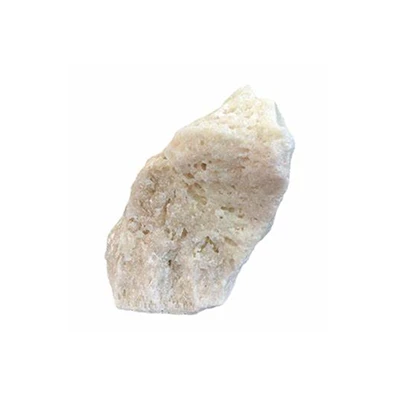
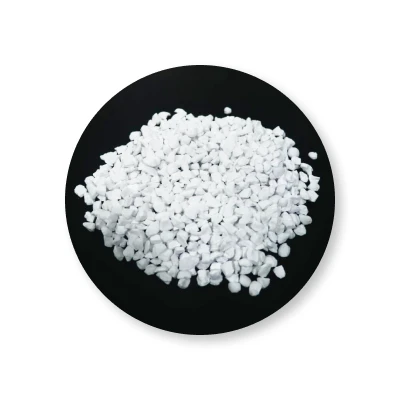
The specific heat capacity of White Fused Alumina is influenced by its crystal structure. White Fused Alumina typically has a corundum crystal structure, which is a dense and stable structure. The strong atomic bonds in the corundum structure contribute to its relatively high specific heat capacity compared to some other materials.
Importance of Specific Heat Capacity in Industrial Applications
Refractory Applications
White Fused Alumina is widely used in refractory applications, such as lining furnaces, kilns, and other high - temperature industrial equipment. The specific heat capacity of White Fused Alumina plays a crucial role in these applications. In a furnace, for example, the refractory lining made of White Fused Alumina needs to absorb and store a large amount of heat energy during the heating process. A high specific heat capacity allows the refractory lining to absorb more heat without a significant increase in temperature, which helps to protect the furnace structure and maintain a stable operating temperature.
Abrasive Applications
In abrasive applications, White Fused Alumina is used as an abrasive material in grinding wheels, sandpapers, and other abrasive products. The specific heat capacity affects the performance of the abrasive during the grinding process. When the abrasive comes into contact with the workpiece, heat is generated due to friction. A high specific heat capacity of White Fused Alumina helps to dissipate the heat generated during grinding, preventing the workpiece from overheating and reducing the risk of thermal damage.
Comparison with Other Refractory Materials
It is interesting to compare the specific heat capacity of White Fused Alumina with other refractory materials. For example, Silicon Carbide has a specific heat capacity of around (0.67 J/(g\cdot K)) at room temperature, which is lower than that of White Fused Alumina. This means that Silicon Carbide requires less energy to change its temperature compared to White Fused Alumina. On the other hand, Tabular Alumina T60/t64 has a specific heat capacity similar to that of White Fused Alumina due to its similar chemical composition and crystal structure. Another material, Fused Alumina - Magnesia Spinel, also has a specific heat capacity that is comparable to White Fused Alumina, which makes it suitable for similar high - temperature applications.
Factors Affecting the Specific Heat Capacity of White Fused Alumina
Purity
The purity of White Fused Alumina has a significant impact on its specific heat capacity. Higher purity White Fused Alumina generally has a more uniform crystal structure and fewer impurities. Impurities can disrupt the atomic bonds in the material and affect its thermal properties. As a result, high - purity White Fused Alumina usually has a more predictable and consistent specific heat capacity.
Particle Size
The particle size of White Fused Alumina can also influence its specific heat capacity. Smaller particle sizes generally have a larger surface area to volume ratio. This can affect the heat transfer process and the way the material stores and releases heat. In some cases, finer particles may have a slightly different specific heat capacity compared to coarser particles due to differences in surface effects and packing density.
Temperature Range
As mentioned earlier, the specific heat capacity of White Fused Alumina changes with temperature. At low temperatures, the specific heat capacity is mainly determined by the vibrational energy of the atoms in the crystal lattice. As the temperature increases, additional degrees of freedom, such as rotational and translational motion, become more significant, leading to an increase in the specific heat capacity.
Measuring the Specific Heat Capacity of White Fused Alumina
There are several methods for measuring the specific heat capacity of White Fused Alumina. One common method is the differential scanning calorimetry (DSC). In DSC, a sample of White Fused Alumina and a reference material are heated or cooled at a controlled rate, and the difference in heat flow between the sample and the reference is measured. By analyzing the heat flow data, the specific heat capacity of the sample can be calculated.
Another method is the adiabatic calorimetry. In this method, the sample is placed in an adiabatic container, and heat is added to the sample in a controlled manner. The temperature change of the sample is measured, and the specific heat capacity is calculated based on the heat input and the temperature change.
Conclusion and Call to Action
Understanding the specific heat capacity of White Fused Alumina is essential for optimizing its use in various industrial applications. As a supplier of high - quality White Fused Alumina, we are committed to providing our customers with detailed information about the physical properties of our products, including specific heat capacity.
If you are interested in purchasing White Fused Alumina for your industrial needs, we invite you to contact us for more information and to discuss your specific requirements. Our team of experts is ready to assist you in selecting the right grade and quantity of White Fused Alumina for your application.
References
- "Thermophysical Properties of Refractory Materials" by J. F. Elliott and M. Gleiser
- "Introduction to Ceramics" by W. D. Kingery, H. K. Bowen, and D. R. Uhlmann
- Technical data sheets provided by leading refractory material manufacturers.