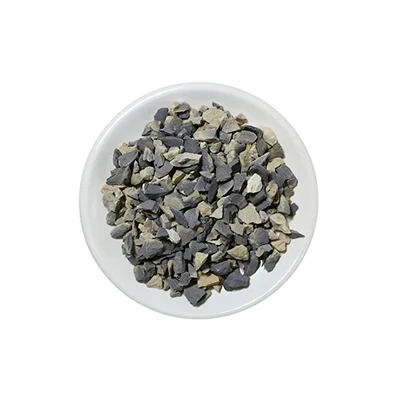
Ferrochrome
Ferrochrome is an iron alloy composed of chromium and iron. It is an important alloy additive in steelmaking. According to different carbon content, ferrochrome is divided into high carbon ferrochrome (carbon content is 4~8%), medium carbon ferrochrome (carbon content is 0.5~4%), low carbon ferrochrome (carbon content is 0.15~0.50%), micro-carbon ferrochrome (carbon content is 0.06%), ultra-carbon ferrochrome (carbon content is less than 0.03%), and silicon chromium alloy, ferrochrome nitride, etc.
The lower the carbon content of ferrochrome, the more difficult it is to control the smelting, the power consumption is large, the cost is high, and the ferrochrome with a carbon content of less than 2% is suitable for smelting stainless steel, acid-resistant steel and other low-carbon chromium steel. Ferrochrome with a carbon content of more than 4%, commonly used to refine ball bearing steel and steel for automotive parts. Ferrochrome containing about 5% chromium can be used as a chrome agent for alloy transfer iron.
An iron alloy with chromium and iron as its main components. It is one of the main alloying agents used in the iron and steel industry. Besides the main components chromium and iron, it also contains impurities such as carbon, silicon, sulfur and phosphorus. Ferrochrome chromium containing 55% ~ 75%, according to the carbon content is divided into high carbon (C) (4% ~ 10%, the carbon (C) (0.5% ~ 4%, low carbon (> 0.15% ~ 0.5% C) and (C) 0.15% or less of carbon ferrochrome. High carbon ferrochrome is also known as carbon ferrochrome, medium, low and micro carbon ferrochrome is also known as refined ferrochrome. A high carbon ferrochrome produced by chromium ore with a low ratio of ferrochrome, containing Cr 50% ~ 55% called the charge grade ferrochrome, and nitrogen containing N2% ~ 10% of ferrochrome as a nitrogen alloying agent, also known as ferrochrome nitride.
There are about 50 kinds of chrome-containing minerals found in nature, which belong to oxides, chromates and silicates respectively. In addition, there are a few hydroxides, iodate, nitride and sulfide. Chromium nitride and chromium sulfide minerals are found only in meteorites. Chromium minerals with industrial value belong to chromium spinel minerals, their chemical formula is (Mg, Fe2+) (Cr, Al, Fe3+) 2O4 or (Mg, Fe2+) O (Cr, Al, Fe3+) 2O3, its Cr2O3 content is 18% ~ 62%.
Common chromium minerals are:
(1) Chromite, chemical composition of (Mg, Fe) Cr2O4, between ferrochromite (FeCr2O4, containing FeO 32.09%, Cr2O3 67.91%) and magnesium chromite (MgCr2O4, containing Mg 20.96%, Cr2O3 79.04%), Ferrochromite and magnesium chromite are also known as chromite. Chromite is an equiaxed crystal system, the crystal is a small octahedron, usually granular and dense blocky aggregate, the color is dark, the stripes are brown, semi-metallic luster, hardness 5.5, density 4.2 ~ 4.8, with weak magnetism. Chromite is a magmatic origin mineral, which occurs in ultrabasic rocks. When ore-bearing rocks are damaged by weathering, chromite is often transferred to placer ore. Chromite is the most important mineral raw material for chromium smelting, and the inferior ores rich in iron can be used as high-grade refractory materials.
(2) Chromium-rich SPAR, also known as ferrochrome spinel or aluminum chromite, chemical composition is Fe (Cr, Al) 2O4, containing Cr2O3 32% ~ 38%.
(3) Hard chromium spinel, chemical composition of (Mg, Fe) (Cr, Al) 2O4, containing Cr2O3 32% ~ 50%. The morphology, physical properties, origin, occurrence and use of chrome-rich SPAR and hard chrome-spinel are the same as those of chromite. Industrial production of chromium metal methods include aluminum reduction, silicon reduction, carbon reduction and electrolysis.
The use of chromite
Chromium is one of the important strategic materials. It has the characteristics of hard quality, wear resistance, high temperature resistance and corrosion resistance. Its chromite uses are: [4]
(1) In the metallurgical industry? Chromite is mainly used to produce chromite alloys and metallic chromium. a chromium iron alloy as the steel additive to produce a variety of high strength, corrosion resistance, wear resistance, high temperature resistance, oxidation resistance of special steel? Such as stainless steel, acid-resistant steel, heat-resistant steel, ball bearing steel, spring steel, tool steel and other b metal chromium is mainly used for smelting special alloys with cobalt, nickel, tungsten and other elements. These special steels and special alloys are indispensable materials for the production of guns, missiles, rockets and ships in the aviation, aerospace, automotive, shipbuilding and national defense industries.
(2) In refractories? Chromite is used to make chrome bricks, chrome magnesia bricks and other special refractory materials.
(3) In the chemical industry is mainly used to produce sodium dichromate? And then make other chromium compounds? Used in pigment, textile, electroplating, tanning and other industries? It can also produce catalysts and catalytic agents. Why? Chromite sales channels also have three kinds of? That is? Metallurgical industry, refractory industry and chemical industry. The following is the use of chromite in the metallurgical industry to introduce the use and smelting process of ferrochrome and chromium salts
Chromium is one of the important strategic materials, because of its hard quality, wear resistance, high temperature resistance, corrosion resistance and other properties, in the metallurgical industry, refractory materials and chemical industry has been widely used.