


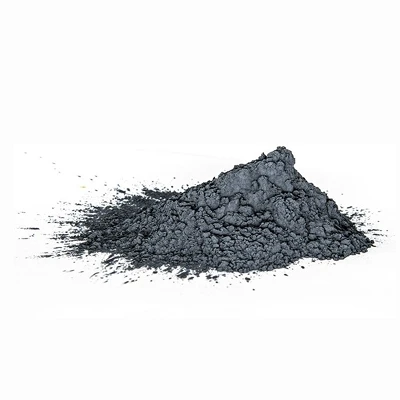
Silicon Carbide
Silicon carbide, also called carborundum, is a compound made from silicon and carbon. This chemical compound is found in a mineral called moissanite.The naturally occurring form of silicon carbide is named after a French pharmacist called Dr. Ferdinand Henri Moissan. Moissanite is usually found in very little quantities in meteorites, kimberlite, and corundum. Hence, most commercial silicon carbide is synthetic.Although it is difficult to find naturally occurring silicon carbide on Earth, it is quite abundant in space. Silicon carbide is one of the most useful chemical compounds in the world today. Its application cuts across a large number of industries.
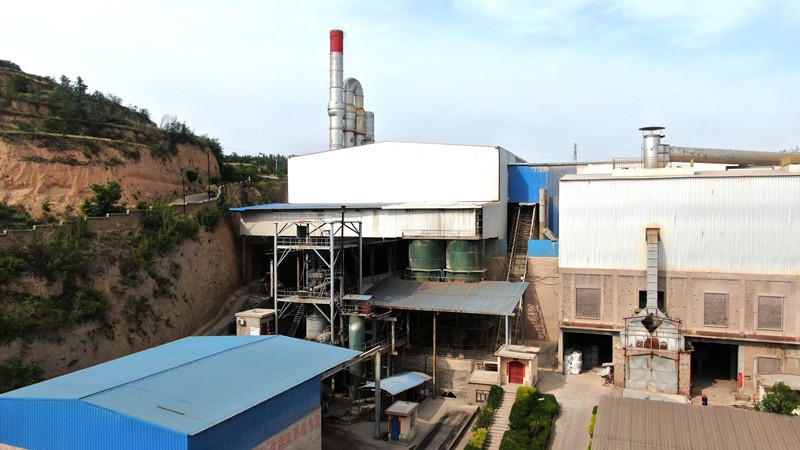
Our Factory
NY TWO GLOBAL has strong presence at refractory & abrasive industry since ten years ago. By combining sources and optimized expert team, we are widening our business into Alloy, Big Bag and retail industries.We have two 100% owned BFA plants and one big bag plant. By investing some other refractory plants, we enhance our position of production and quality control for a better price.Refractory & Abrasive Raw Material: Silicon Carbide, White Fused Alumina, White Tabular Alumina, Black Silicon Carbide, Fused Mullite, Bauxite,Fused Magnesia ,Dead Burned Magnesia, Calcined Alumina etc. Alloy: High-Medium-Low Carbon Ferro Manganese, High Carbon Ferro Chrome, Low Carbon Ferro Chrome, Silico Manganese, Ferro Silicon, Silicon Metal, manganese Metal, Cored Wires,Incoulants,etc.
Why Choose Us
Factory strength
NY TWO GLOBAL has strong presence at refractory & abrasive industry since ten years ago. By combining sources and optimized expert team, we are widening our business into Alloy, Big Bag and retail industries.
Quality control
Real-time data testing and inspecting for each phase of production by our own laboratory.
Our certificate
All our plants meet ISO 9001:2015, ISO 14001:2015 & OHSAS 18001:2007.
Production market
By strong presence in China, India, Turkey, Europe and U.S., we have tight connections with main player in each Industries.
Related Product

Zirconia beads use rare earth yttrium oxide as a stabilizer, the use of high whiteness, high fineness of raw materials to ensure that the material does not pollute. Fine microstructure, smooth working surface, reduce the internal friction of beads, improve the grinding efficiency. 2, can be

Brown corundum abrasive sand is widely used in machining parts for ultra-fine grinding, but also can manufacture refractory materials, heat insulation panels, ceramic tools, brown corundum abrasive sand can also be used as spray raw materials.

Professional supply JS standard 240#--8000# Silicon carbide: Specific gravity: 3.2 Bulk density: 1.45-1.56g/cm3 Mohs hardness: 9.15 Typical ingredients (%6): SiC:292.5 Free C: s0.30Fe 0:s1.2 Shape: Polygonal Color: Green: 25kg pack. Silicon Carbide product introduction:Green silicon carbide..

Cubic silicon carbide, also known as B-SiC, is a cubic crystal system (adamantine crystal type). The hardness of cubic silicon carbide /B-SiC is 9.25-9.6, which is close to 10 of diamond, and the finish is better than diamond. Cubic silicon carbide /B-SiC is second only to chrysospar *1One of.

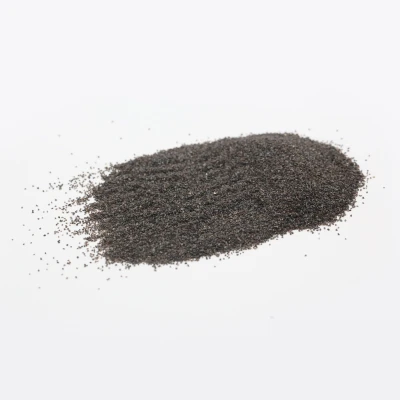
Black silicon carbide powder is made of high quality silicon carbide and petroleum coke as raw materials, which is smelted at a high temperature of more than 2000 degrees in a resistance furnace for more than 46 hours. The hardness of black silicon carbide is between corundum and diamond, the

Product Introduction Of Mullite Brick
High alumina refractory with mullite (Al2O3•SiO2) as the main crystalline phase. Generally, the alumina content is between 65% and 75%. In addition to mullite, the lower alumina content also contains a small amount of glass phase and cristobalite; Higher alumina content also contains a.

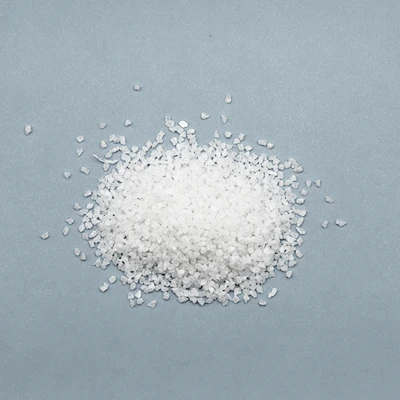
WA white corundum sand is made of aluminum oxide powder as raw material, which is crystallized by electrolysis. Its hardness is slightly higher than that of brown corundum, with slightly lower toughness, high purity, strong grinding force, low heat output, high efficiency, acid and alkali.

Alumina sand: Shape: Polygonal Mohs Hardness: 9 Specific gravity :3.95-3.97 Bulk density: GB10-220:1.6-1.97g /cm3 GB240-1200: 0.7-1.7g/cm3 Typical composition (%6): Al203:99.60Na20:0.18Si02:0.01 Fe203:0.02 CaO+Mgo: 0.02 Color: White Packing: 25kg pack

[Product specifications] : various specifications of sand, powder [Production capacity] : 50,000 tons/year 【 Application 】 : metallurgy, ceramics, building materials, chemical, electric power and casting industries. 【 Product Introduction 】 : Electric fused mullite is a kind of high quality.
What is Silicon Carbide
Silicon carbide, also called carborundum, is a compound made from silicon and carbon. This chemical compound is found in a mineral called moissanite.The naturally occurring form of silicon carbide is named after a French pharmacist called Dr. Ferdinand Henri Moissan. Moissanite is usually found in very little quantities in meteorites, kimberlite, and corundum. Hence, most commercial silicon carbide is synthetic.Although it is difficult to find naturally occurring silicon carbide on Earth, it is quite abundant in space. Silicon carbide is one of the most useful chemical compounds in the world today. Its application cuts across a large number of industries.
Benefits of Silicon Carbide
Excellent high-temperature performance
The melting point of silicon carbide products is as high as 2700°C, which can maintain its structural stability and strength in high-temperature environments, so it is widely used in high-temperature molten metals, high-temperature heating furnaces, high-temperature petrochemical and other fields.
Strong corrosion resistance
Silicon carbide has excellent corrosion resistance and can work stably for a long time in acid, alkali and oxidative environments.
High hardness and high strength
Silicon carbide has higher hardness and strength than traditional ceramic materials, so it has good wear resistance and impact resistance.
Excellent thermal conductivity and electrical conductivity
Silicon carbide has high thermal conductivity and excellent electrical conductivity, so it is widely used in the manufacture of high-power electronic components and radiators.
Properties of SiC
Polytypism of SiC
SiC is known for its polytypism (different crystalline structures), generated by the stacking of Si and C along the principal axis (C-axis). The AaBbCcAaBbCc stacking generates a 3C-SiC zinc-blende lattice, AaBbAaBb generates 2H-SiC with a wurtzite lattice, and AaBbAaCcAaBbAaC generates a 4H-SiC lattice. Different crystalline forms with varying numbers of atoms per unit cell affect the physical properties of polytypes owing to the varying electronic energy bands and vibrational branches.
Band Structure
Different crystalline forms of SiC have varying bandgap sizes, ranging from 2.4 eV (3C-SiC) to 3.35 eV (2H-SiC), which are crucial for determining their electronic and optical properties. SiC polytypes are indirect semiconductors, which means that the polytype with the smallest bandgap (3C-SiC ) to that with the largest bandgap (2H-SiC) requires the participation of phonons (quantized vibrational modes). Although SiC polytypes are indirect semiconductors, they are excellent candidates for power applications.
Doping
Doping is a physical method used to obtain the desired electrical properties of SiC. In this process, an element, either an acceptor (aluminum/boron/gallium) or a donor (nitrogen/phosphorus), is introduced at the crystal growth stage to alter its conductivity. Since diffusion is not a feasible method to dope SiC, ion implantation with dopant activation via high-temperature heating is used to dope SiC. Previous studies reported the success of doping SiC with nitrogen for applications such as reducing power loss in vertical power device structures and high-frequency applications.
Electrical Properties
Unintentional doping with nitrogen donors during the growth process indicates that they have excess electrons during the growth process, revealing n-type conductivity in SiC. Doped nitrogen atoms replace carbon atoms at lattice sites, varying the ionization energies owing to differing local environments and a specific interference effect. Furthermore, Hall measurements help determine the concentration of nitrogen donors, assuming an equal distribution among various lattice sites.
Chemical Stability
SiC undergoes facile oxidation and forms a silicon dioxide (SiO2) film, which gradually hinders the oxidation process. However, if substances that can remove or break the silicon dioxide film exist simultaneously, SiC can be oxidized further. SiC does not easily dissolve in acids or bases but can be easily attacked by alkaline melts. The primary impurities found in SiC include C and SiO2 and the amount of impurities varies depending on the product type.
Application of Silicon Carbide
Silicon Carbide Used in Military Bulletproof Armor
Silicon carbide is used to manufacture bulletproof armor. The property of this compound that makes it to be applied for such a purpose is its hardness. Bullets and other harmful objects will have to contend with the hard ceramic blocks that silicon carbide forms. Bullets can't penetrate the ceramic blocks.
Silicon Carbide Used in Semiconductors
Silicon carbide becomes a semiconductor when dopants are added to it. Dopants like boron and aluminum added to silicon carbide make it become a p-type semiconductor. On the other hand, dopants such as nitrogen and phosphorus added to silicon carbide make it become an n-type semiconductor. You can read this post for more information about the differences between p-type semiconductors & n-type semiconductors.
Silicon Carbide Used in Abrasives
Silicon carbide is commonly used as an abrasive because of how hard it is. It is used in the manufacture of grinding wheels, cutting tools, and sandpaper. Silicon carbide abrasives are usually cheaper than other abrasives of similar quality. The abrasives are used to grind materials such as steel, aluminum, cast iron, and rubber.
Silicon Carbide Used in Electric Vehicles
Silicon carbide is a better choice over silicon for powering electric vehicles. Electric vehicles powered by silicon carbide are highly efficient and cost-effective. At present, many well-known companies have used silicon carbide to improve efficiency and range when manufacturing electric vehicles, such as Tesla.
Silicon Carbide Used in Jewelry
Structurally similar to diamond, yet more lustrous, cheaper, more durable, and lighter than diamond, silicon carbide is a well-deserved alternative to diamond in the jewelry industry.
Silicon Carbide Used in Fuel
In addition to its other uses, silicon carbide is used as fuel. It is used as a fuel in steel manufacture and produces purer steel than most other fuels. It is also a cheaper and more environmentally-friendly fuel.
Identifying your refractory needs
The first step in choosing a suitable refractory material is identifying the application's specific needs. Consider the temperature range the refractory needs to withstand, the chemical environment, and the specific application. This will help narrow down the choices and ensure that suitable refractory material is selected.
Researching refractory materials
Once your requirements are identified, it is essential to research the different types of refractory materials available. Consider the thermal shock resistance, chemical resistance, and other important factors.
Consider Your Budget
When selecting a refractory material, it is vital to consider the budget. Different refractory materials have different prices, and selecting a material that fits within the budget is important. Additionally, it is crucial to consider the total ownership cost, including installation, maintenance, and repair costs.
According to silicon carbide qualification
In order to gain customers'trust, silicon carbide manufacturer usually carry out quality certification of silicon carbide. So when we purchase silicon carbide, we can check the qualification of silicon carbide manufacturer. The more authoritative the certification authority is, the better the silicon carbide is.
How is Silicon Carbide Made?
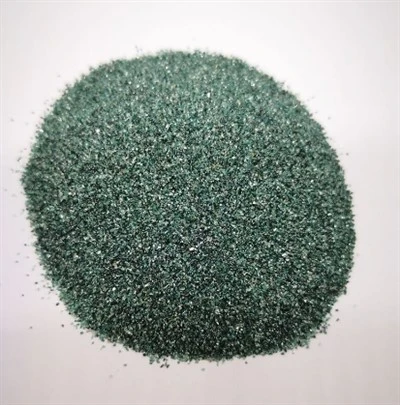
Lely method
During this process, a granite crucible heats to a very high temperature, usually by way of induction, to sublimate silicon carbide powder. A graphite rod with lower temperature suspends in the gaseous mixture, which inherently allows the pure silicon carbide to deposit and form crystals.
Chemical vapor deposition
Alternatively, manufacturers grow cubic SiC using chemical vapor deposition, which is commonly used in carbon-based synthesis processes and used in the semiconductor industry. In this method, a specialized chemical blend of gases enters a vacuum environment and combines before depositing onto a substrate.
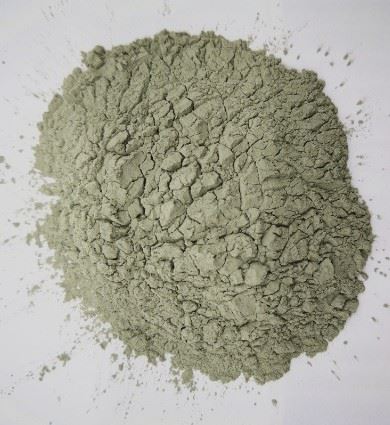
Silicon Carbide Storage Precautions
Orderly storage, the same batch number as far as possible in rows, to avoid mistakes in the process of taking materials.
Silicon carbide micro powder has a strong moisture absorption, try to avoid removing the moisture-proof film storage; this can avoid moisture agglomeration, shorten the drying time.
As far as possible to use the principle of first-in first-out material, to avoid clumping of raw materials due to excessive storage time.
if the ultra-fine silicon carbide powder in transit broken packaging, try to store separately to avoid dust pollution.
It is recommended that the warehouse as far as possible closed, stored separately, and pay attention to moisture, wind and rain.
Our Factory

FAQ
Hot Tags: silicon carbide, China silicon carbide manufacturers, suppliers, refractory fluxes, refractory phosphate silicates, refractory for ducts, extrusion refractory, refractory silica, refractory for thermal insulation systems


You Might Also Like


Send Inquiry
