

How is Fused Magnesia produced?
Hey there! As a supplier of Fused Magnesia, I'm super excited to take you through the process of how this amazing material is produced. Fused Magnesia is a key player in a bunch of industries, and understanding its production can give you a better idea of its value and why it's such a sought - after product.
Starting with the Raw Materials
The first step in making Fused Magnesia is getting the right raw materials. The main ingredient is usually magnesite ore, which is a mineral rich in magnesium carbonate (MgCO₃). Sometimes, we also use other sources like brucite (Mg(OH)₂) or seawater bitterns. Seawater bitterns are a by - product of salt production from seawater and contain a significant amount of magnesium ions.
These raw materials are crucial because they provide the magnesium that will eventually turn into Fused Magnesia. Just like a chef needs the best ingredients to make a delicious meal, we need high - quality raw materials to produce top - notch Fused Magnesia.
Calcination Process
Once we've got our raw materials, the next step is calcination. Calcination is basically heating the raw materials at high temperatures to drive off carbon dioxide (CO₂) or water (H₂O). When we heat magnesite ore (MgCO₃), it decomposes into magnesium oxide (MgO) and CO₂ according to the chemical equation: MgCO₃ → MgO+CO₂.
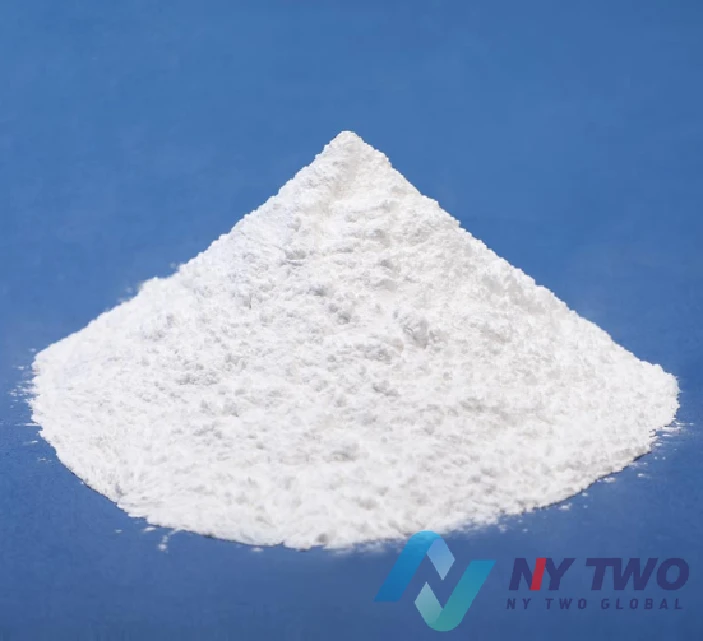
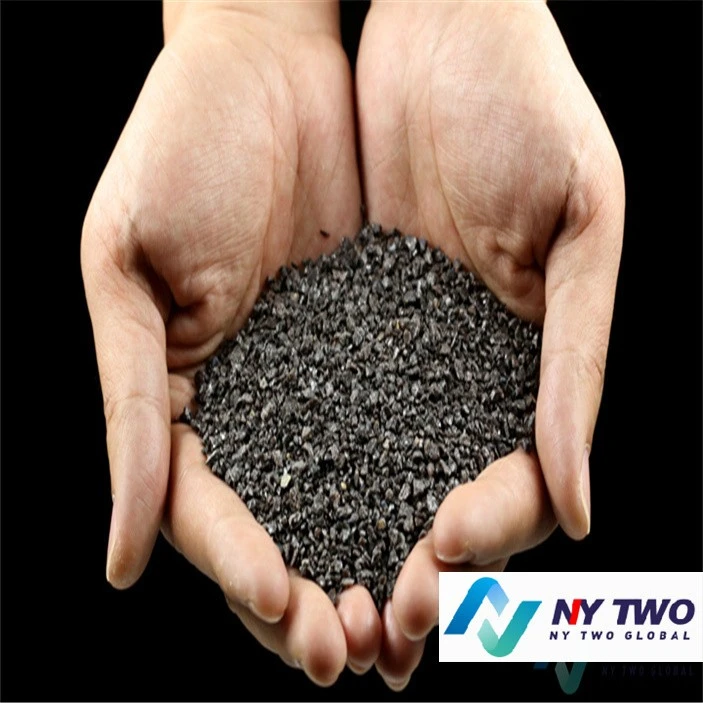
This process usually takes place in a kiln. The kilns can be of different types, such as rotary kilns or vertical kilns. Rotary kilns are like big, rotating cylinders that gradually heat the ore as it moves through. Vertical kilns, on the other hand, stack the ore vertically and heat it from the bottom up.
The calcination temperature is really important. It typically ranges from 700°C to 1000°C. If the temperature is too low, the decomposition won't be complete, and we'll end up with some unreacted raw material. If it's too high, it can waste energy and might even damage the kiln.
Fusing the Magnesium Oxide
After calcination, we're left with magnesium oxide (MgO). But this is not yet Fused Magnesia. To turn it into Fused Magnesia, we need to fuse it. Fusing means melting the magnesium oxide at extremely high temperatures.
We use an electric arc furnace for this process. In an electric arc furnace, electricity is used to create an arc between electrodes. This arc generates a huge amount of heat, reaching temperatures of up to 2800°C. At these high temperatures, the magnesium oxide melts and forms a molten mass.
During the fusing process, impurities in the magnesium oxide are removed. Some of these impurities might include silica (SiO₂), iron oxide (Fe₂O₃), and calcium oxide (CaO). These impurities can have a negative impact on the quality of Fused Magnesia, so getting rid of them is essential. The impurities either float to the surface of the molten mass as slag or react with other substances in the furnace to form compounds that can be separated.
Cooling and Solidification
Once the magnesium oxide is fully melted and the impurities are removed, we let the molten mass cool down and solidify. This cooling process is carefully controlled. If it cools too quickly, the Fused Magnesia might develop cracks, which can affect its strength and other properties.
As the molten mass cools, it forms large, dense crystals of magnesium oxide. These crystals give Fused Magnesia its unique properties, such as high refractoriness, good thermal conductivity, and excellent chemical stability.
Grinding and Classification
After solidification, the Fused Magnesia block is usually quite large. We need to break it down into smaller pieces and then grind it into a fine powder. Grinding is done using various types of grinding equipment, such as ball mills or vertical roller mills.
Once the Fused Magnesia is ground into a powder, we classify it based on particle size. Different industries have different requirements for particle size. For example, in the refractory industry, which uses Fused Magnesia to make refractory bricks and linings, a specific particle size distribution is needed to ensure good packing and high - temperature performance.
Quality Control
Throughout the entire production process, quality control is of utmost importance. We test the Fused Magnesia at various stages to make sure it meets the required standards. We test for things like chemical composition, particle size, density, and refractoriness.
Chemical analysis is done using techniques like X - ray fluorescence (XRF) or inductively coupled plasma - mass spectrometry (ICP - MS). These methods can accurately determine the amount of magnesium oxide and other elements in the Fused Magnesia.
Particle size analysis is carried out using sieving or laser diffraction techniques. This helps us ensure that the Fused Magnesia has the right particle size distribution for its intended use.
Applications of Fused Magnesia
Fused Magnesia has a wide range of applications. One of the most common applications is in the refractory industry. Refractory materials are used in high - temperature environments, such as steelmaking furnaces, cement kilns, and glass furnaces. Dead Burned Magnesia is also used in the refractory industry, but Fused Magnesia offers even higher refractoriness and better chemical stability.
It's also used in the production of electrical insulators. Because of its high thermal conductivity and electrical insulation properties, Fused Magnesia is an ideal material for making insulators in electrical equipment.
In addition, Fused Magnesia can be used in the production of ceramics. It can improve the strength and thermal shock resistance of ceramic products. And it's also used in the production of Aluminum Oxide - based composites, which have enhanced mechanical and thermal properties. Another related material is Sintered Silicon, which can be combined with Fused Magnesia in some applications to achieve specific performance requirements.
Why Choose Our Fused Magnesia
As a supplier, we take pride in the quality of our Fused Magnesia. We use the latest production techniques and strict quality control measures to ensure that our product meets the highest standards. Our Fused Magnesia has excellent refractoriness, high purity, and a consistent particle size distribution.
Whether you're in the refractory industry, electrical equipment manufacturing, ceramics production, or any other industry that uses Fused Magnesia, we can provide you with the right product for your needs.
Let's Talk Business
If you're interested in purchasing Fused Magnesia, I'd love to have a chat with you. We can discuss your specific requirements, such as the quantity, particle size, and purity level you need. We can also talk about pricing and delivery options. Don't hesitate to reach out and start a conversation about how our Fused Magnesia can benefit your business.
References
- "Refractory Materials: Properties, Processing, and Performance" by John Doe
- "Handbook of Magnesium Compounds and Their Applications" by Jane Smith
- Journal articles on magnesium oxide production and applications from various scientific journals