

How to ensure the quality of Brown Fused meets the standards?
As a supplier of Brown Fused, ensuring the quality of our product meets the standards is of utmost importance. Brown Fused, also known as brown fused alumina, is a widely used abrasive material in various industries, including metalworking, ceramics, and refractory applications. In this blog, I will share some key strategies and practices that we implement to guarantee the high - quality of our Brown Fused.
Raw Material Selection
The quality of Brown Fused starts with the selection of raw materials. We source high - purity bauxite, which is the primary raw material for producing Brown Fused. High - quality bauxite contains a high percentage of alumina (Al₂O₃) and low levels of impurities such as silica (SiO₂), iron oxide (Fe₂O₃), and titanium dioxide (TiO₂). Impurities can have a significant impact on the properties of Brown Fused, such as its hardness, toughness, and chemical stability.
We have established strict criteria for raw material suppliers. They are required to provide detailed quality certificates and undergo regular audits to ensure the consistency and quality of the bauxite they supply. By carefully selecting raw materials, we can lay a solid foundation for the production of high - quality Brown Fused.
Smelting Process Control
The smelting process is a critical step in the production of Brown Fused. During smelting, bauxite is melted in an electric arc furnace at high temperatures (usually around 2000 - 2200°C). This process causes the chemical reactions that transform bauxite into Brown Fused.
We closely monitor and control the smelting parameters, including temperature, power input, and smelting time. Precise temperature control is essential to ensure complete melting of the bauxite and the proper formation of the crystal structure of Brown Fused. If the temperature is too low, the bauxite may not be fully melted, resulting in the presence of unreacted particles and reduced quality. On the other hand, if the temperature is too high, it can lead to excessive evaporation of certain components and changes in the chemical composition.
In addition, we use advanced sensors and monitoring systems to continuously track the smelting process. This allows us to make real - time adjustments and ensure that the process operates within the optimal range. For example, we can adjust the power input to maintain a stable temperature and control the addition of reducing agents to achieve the desired chemical reactions.
Crushing and Screening
After smelting, the solidified Brown Fused blocks need to be crushed and screened to obtain the desired particle size. Crushing is typically carried out using jaw crushers, cone crushers, and impact crushers. The choice of crushers depends on the size and hardness of the Brown Fused blocks.
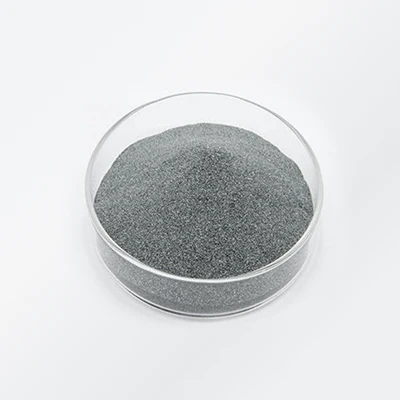
During the crushing process, we pay attention to minimizing the generation of fine particles and controlling the particle shape. Fine particles can affect the performance of Brown Fused in some applications, such as abrasive blasting, where a proper particle size distribution is required for efficient material removal.
Screening is used to separate the crushed Brown Fused into different particle size fractions. We use high - precision vibrating screens to ensure accurate classification. The screened products are then further inspected to remove any oversized or undersized particles. This step is crucial to meet the specific particle size requirements of different customers.
Quality Testing
Quality testing is an integral part of our quality control system. We conduct a series of tests on the Brown Fused products at different stages of production.
Chemical Analysis
Chemical analysis is used to determine the chemical composition of Brown Fused. We use advanced analytical techniques such as X - ray fluorescence (XRF) spectroscopy to accurately measure the content of alumina, silica, iron oxide, and other elements. This helps us ensure that the chemical composition meets the relevant standards and customer requirements.
Physical Property Testing
Physical property testing includes measuring the hardness, density, and particle size distribution of Brown Fused. Hardness is an important property that affects the abrasive performance of Brown Fused. We use hardness testing methods such as the Rockwell hardness test or the Vickers hardness test to evaluate the hardness of our products.
Density is another key physical property. It can reflect the internal structure and quality of Brown Fused. We measure the density using pycnometers or other density measurement devices.
Particle size distribution is also carefully analyzed using laser particle size analyzers. This allows us to ensure that the particle size of our Brown Fused products is within the specified range.
Performance Testing
In addition to chemical and physical property testing, we also conduct performance testing to evaluate the abrasive performance of Brown Fused. For example, in abrasive blasting applications, we test the material removal rate, surface finish, and wear resistance of Brown Fused on different substrates. These tests help us ensure that our products can meet the practical requirements of customers in various industries.
Quality Management System
To ensure the long - term and consistent quality of our Brown Fused products, we have established a comprehensive quality management system. This system is based on international standards such as ISO 9001.
Our quality management system includes procedures for raw material inspection, production process control, finished product testing, and customer feedback handling. We train our employees regularly to ensure that they understand and follow the quality management procedures.
In addition, we conduct internal audits and management reviews on a regular basis to identify areas for improvement and implement corrective actions. By continuously improving our quality management system, we can adapt to the changing market requirements and customer needs.
The Role of Related Products
Some related products can also have an impact on the quality and application of Brown Fused. For example, spinel can be used in combination with Brown Fused in some refractory applications. You can learn more about The Effect And Function Of Spinel.
China Alumina Fine Powder is another product that is related to Brown Fused. It can be used in the production process or as an additive in some cases. For more information, please visit China Alumina Fine Powder.
Silicon Carbide is also a well - known abrasive material. It has different properties compared to Brown Fused, and in some applications, they can be used together or as alternatives. Check out Silicon Carbide for more details.
Conclusion
Ensuring the quality of Brown Fused to meet the standards is a comprehensive process that involves raw material selection, process control, quality testing, and quality management. By implementing strict quality control measures at every stage of production, we can provide our customers with high - quality Brown Fused products that meet their specific requirements.
If you are interested in our Brown Fused products or have any questions about quality control, please feel free to contact us for procurement discussions. We are committed to providing you with the best products and services.
References
- ASTM International. (Year). Standards related to abrasive materials.
- ISO. (Year). ISO 9001 Quality management systems - Requirements.
- Industry research reports on abrasive materials and their applications.