

Is White Fused Alumina magnetic?
White fused alumina is a high - quality refractory material widely used in various industries due to its excellent physical and chemical properties. One question that often arises among our customers and in the industry is whether white fused alumina is magnetic. In this blog, as a supplier of white fused alumina, I will explore this topic in depth, providing a scientific and comprehensive analysis.
What is White Fused Alumina?
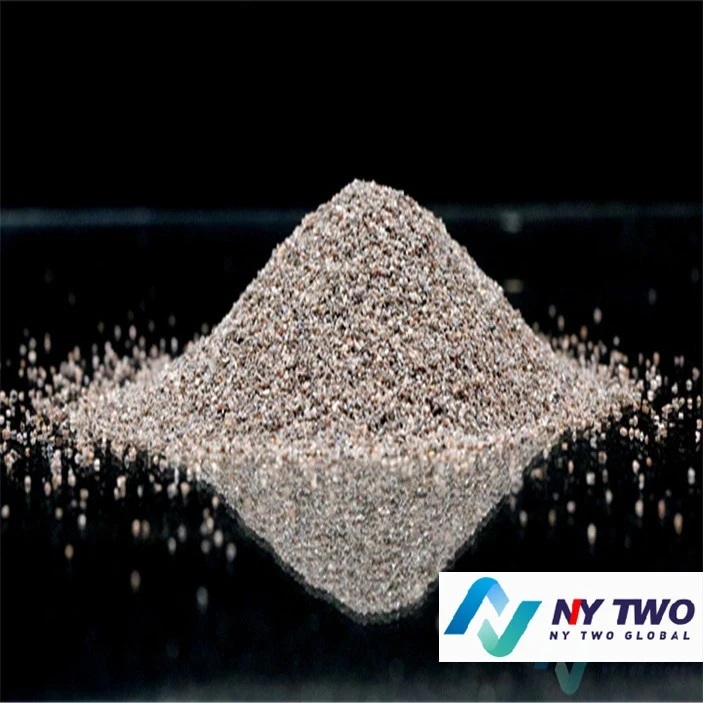
Before delving into the magnetic properties, it's essential to understand what white fused alumina is. White fused alumina is produced by melting high - purity alumina powder in an electric arc furnace at extremely high temperatures (around 2000 - 2200°C). This high - temperature melting process results in a material with a high degree of purity, usually over 99% Al₂O₃. It has a white color, high hardness (second only to diamond in some cases), and good chemical stability. These properties make it suitable for a wide range of applications, such as abrasives, refractories, and ceramic products.

The Basics of Magnetism
To determine whether white fused alumina is magnetic, we need to understand the basics of magnetism. Magnetism is a property of materials that respond to a magnetic field. There are different types of magnetism, including ferromagnetism, paramagnetism, and diamagnetism.
Ferromagnetic materials, such as iron, nickel, and cobalt, have strong magnetic properties and can be magnetized easily. They are attracted to magnets and can retain their magnetization even after the external magnetic field is removed.
Paramagnetic materials are weakly attracted to magnetic fields. Their magnetic susceptibility is positive but small. Examples of paramagnetic materials include aluminum, oxygen, and some transition metals.
Diamagnetic materials, on the other hand, are repelled by magnetic fields. Their magnetic susceptibility is negative and very small. Most organic compounds, copper, and water are diamagnetic materials.
Is White Fused Alumina Magnetic?
Now, let's analyze whether white fused alumina is magnetic based on its chemical composition and crystal structure.
The main component of white fused alumina is aluminum oxide (Al₂O₃). Aluminum oxide is a diamagnetic material. The electronic structure of aluminum and oxygen atoms in Al₂O₃ results in a net magnetic moment of zero. When placed in a magnetic field, the induced magnetic field in Al₂O₃ opposes the external magnetic field, causing a weak repulsion.
In addition, the high - purity nature of white fused alumina further ensures its diamagnetic property. During the production process, impurities that might introduce magnetic properties are removed. As a result, pure white fused alumina shows diamagnetic behavior and is not attracted to magnets.
However, it's important to note that in real - world scenarios, there might be a very small amount of impurities in white fused alumina. If these impurities contain ferromagnetic or paramagnetic elements, they could potentially make the white fused alumina weakly magnetic. But in general, for high - quality white fused alumina with high purity, the magnetic effect is extremely weak and can be considered negligible.
Implications in Industrial Applications
The non - magnetic property of white fused alumina has significant implications in its industrial applications.
In the abrasive industry, non - magnetic abrasives are preferred in some applications, especially those where magnetic contamination is not allowed. For example, in the manufacturing of precision components for the electronics industry, using non - magnetic white fused alumina abrasives can prevent magnetic particles from adhering to the components, ensuring the quality and performance of the final products.
In the refractory industry, the non - magnetic property of white fused alumina is also beneficial. In high - temperature furnaces where magnetic materials might interact with the magnetic fields generated by heating elements or other equipment, non - magnetic white fused alumina can be used without causing interference.
Comparison with Other Refractory Materials
Let's compare white fused alumina with other refractory materials in terms of magnetism.
Zirconia Bead is another popular refractory material. Zirconia itself is also diamagnetic. Similar to white fused alumina, zirconia beads have a very weak response to magnetic fields. However, the specific magnetic behavior might vary depending on the purity and any additives used in the production of zirconia beads.
Boron Carbide Ceramic is known for its high hardness and wear resistance. Boron carbide is also diamagnetic, and its non - magnetic property makes it suitable for applications where magnetic interference needs to be avoided, such as in the aerospace and defense industries.
Zirconia Mullite is a composite material that combines the properties of zirconia and mullite. Similar to the above materials, zirconia mullite is generally non - magnetic due to the diamagnetic nature of its main components.
Quality Control and Magnetic Testing
As a white fused alumina supplier, we pay great attention to the quality control of our products, including ensuring their non - magnetic property. We use advanced testing methods to detect any possible magnetic impurities in our white fused alumina.
Magnetic susceptibility measurement is one of the common methods. By measuring the magnetic susceptibility of the product, we can determine whether it shows diamagnetic, paramagnetic, or ferromagnetic behavior. If the measured magnetic susceptibility is within the range of typical diamagnetic materials, it indicates that the white fused alumina is of high quality and has the expected non - magnetic property.
Conclusion
In conclusion, white fused alumina is generally non - magnetic due to its main component, aluminum oxide, being a diamagnetic material. The high - purity production process further ensures its non - magnetic nature. This non - magnetic property makes white fused alumina suitable for a wide range of industrial applications where magnetic interference is a concern.
If you are interested in purchasing high - quality white fused alumina for your specific applications, feel free to contact us for more information and to start a procurement negotiation. We are committed to providing you with the best products and services to meet your needs.
References
- "Ceramics Science and Technology" by R. E. Tressler, G. L. Messing, C. G. Pantano.
- "Introduction to Magnetism and Magnetic Materials" by David Jiles.
- Technical literature from refractory material research institutions.