

What are the international standards for Brown Fused Alumina?
Hey there! As a supplier of Brown Fused Alumina, I've had my fair share of chats with folks who are curious about the international standards for this stuff. So, I thought I'd put together this blog to shed some light on it.
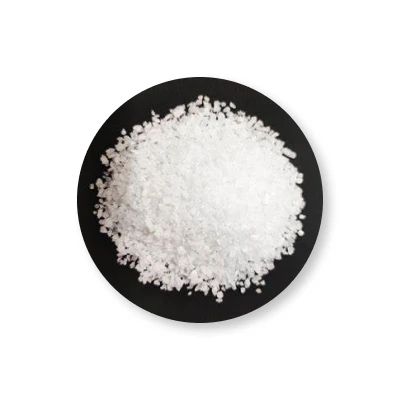
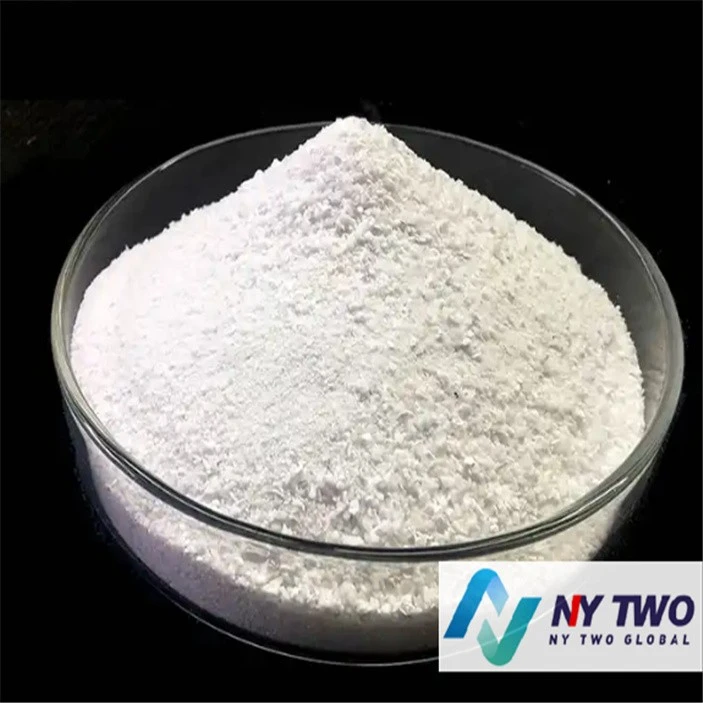
First off, let's talk a bit about what Brown Fused Alumina is. It's an abrasive material that's super tough and heat - resistant. It's made by fusing high - grade bauxite in an electric arc furnace, and it gets its brown color from the iron and titanium impurities present in the bauxite.
One of the most important international standards for Brown Fused Alumina comes from the International Organization for Standardization (ISO). ISO has set out a series of specifications that cover everything from the chemical composition to the physical properties of the material.
In terms of chemical composition, ISO standards require that Brown Fused Alumina should have a minimum of 94.5% aluminum oxide (Al₂O₃). The levels of other elements like silicon dioxide (SiO₂), titanium dioxide (TiO₂), and iron oxide (Fe₂O₃) are also regulated. For example, the SiO₂ content should be less than 2.5%, TiO₂ between 2 - 4%, and Fe₂O₃ less than 1%. These limits are important because they can affect the performance of the Brown Fused Alumina in different applications.
Physical properties are also a big deal. The grain size distribution is carefully controlled according to ISO standards. Different applications require different grain sizes. For example, in the abrasive industry, coarser grains are used for heavy - duty grinding, while finer grains are used for precision finishing. ISO has a set of sieve analysis methods to ensure that the grain size of Brown Fused Alumina meets the specified requirements.
Another important aspect is the density of the material. The density of Brown Fused Alumina should be within a certain range, usually around 3.9 - 4.0 g/cm³. This density affects how the material behaves during use. A higher - density Brown Fused Alumina is generally more durable and can withstand more pressure during grinding or cutting operations.
The hardness of Brown Fused Alumina is also regulated. It typically has a Mohs hardness of around 9, which makes it one of the hardest materials available for abrasive applications. This hardness allows it to cut through a wide variety of materials, from metals to ceramics.
Now, let's talk about how these international standards impact us as a supplier. Meeting these standards is not just a formality; it's crucial for our business. Customers around the world rely on these standards to ensure that they're getting a high - quality product. When we can prove that our Brown Fused Alumina meets ISO standards, it gives our customers the confidence to use our product in their applications.
We also have to be aware of regional standards. In the United States, the American National Standards Institute (ANSI) has its own set of standards for abrasives, including Brown Fused Alumina. These standards are similar in many ways to the ISO standards but may have some slight differences in terms of testing methods or specific requirements.
In Europe, the European Committee for Standardization (CEN) also has standards for abrasives. Although there is a lot of harmonization between ISO, ANSI, and CEN standards, we still have to pay close attention to the details to make sure we're compliant with the regulations in different markets.
One of the things that sets our Brown Fused Alumina apart is our commitment to quality control. We have a state - of - the - art testing facility where we regularly test our products against these international standards. We use advanced equipment to analyze the chemical composition, measure the grain size distribution, and test the physical properties. This way, we can guarantee that every batch of our Brown Fused Alumina meets or exceeds the required standards.
Our Brown Fused Alumina has a wide range of applications. It's commonly used in the abrasive industry for grinding wheels, sandpaper, and abrasive blasting. In the refractory industry, it can be used to make high - temperature resistant bricks and linings. It's also used in the production of cutting tools, ceramics, and even in some aerospace applications.
If you're in the market for other related products, we also have some great options. Check out our Tabular Alumina T 64 which is perfect for high - temperature applications. And our Zirconia Mullite is another great choice for refractory applications. We're also A reliable calcined bauxite supplier in China, so if you need calcined bauxite, we've got you covered.
In conclusion, international standards for Brown Fused Alumina play a vital role in ensuring the quality and performance of the product. As a supplier, we take these standards very seriously and work hard to meet and exceed them. If you're looking for high - quality Brown Fused Alumina that meets international standards, we'd love to have a chat with you. Whether you're in the abrasive, refractory, or any other industry that uses Brown Fused Alumina, we can provide you with the right product for your needs. So, don't hesitate to reach out if you're interested in purchasing. Let's start a conversation and see how we can work together!
References
- International Organization for Standardization (ISO) standards for abrasives
- American National Standards Institute (ANSI) standards for abrasives
- European Committee for Standardization (CEN) standards for abrasives