

What are the surface characteristics of White Tabular Alumina?
White tabular alumina is a high - quality refractory raw material widely used in various industrial fields. As a supplier of white tabular alumina, I am very familiar with its surface characteristics, which play a crucial role in determining its performance and application.
1. Surface Morphology
The surface of white tabular alumina typically exhibits a polycrystalline structure. Under a scanning electron microscope (SEM), we can observe that it consists of numerous small, well - formed crystals. These crystals are usually in a regular shape, often approaching a near - cubic or polyhedral form. The edges and corners of these crystals are relatively sharp, which is a result of the high - temperature sintering process during its production.
This polycrystalline surface structure provides a large specific surface area. A larger specific surface area means that the white tabular alumina has more contact points with other substances when it is used in applications such as refractories or catalysts. For example, in refractory castables, the large specific surface area allows for better bonding with binders and other aggregates, enhancing the overall strength and stability of the castable.
2. Surface Chemical Composition
The main chemical component of white tabular alumina is alumina (Al₂O₃), with a purity usually above 99%. On the surface, in addition to pure alumina, there may be a small amount of adsorbed substances. These adsorbed substances can include trace amounts of moisture, carbon dioxide from the air, and some impurities introduced during the production process.
The high - purity alumina on the surface endows white tabular alumina with excellent chemical stability. It is resistant to most chemical attacks, including acids and alkalis under normal conditions. This chemical stability makes it suitable for use in harsh chemical environments, such as in the lining of chemical reactors or in the production of corrosion - resistant refractory materials.
However, the presence of adsorbed moisture can have an impact on its performance. Moisture on the surface can react with some substances during high - temperature processes, leading to the formation of unwanted compounds. Therefore, proper storage and pre - treatment are necessary to ensure the quality of white tabular alumina.
3. Surface Porosity
White tabular alumina has a certain degree of surface porosity. The pores on the surface can be classified into two types: open pores and closed pores. Open pores are connected to the external environment, while closed pores are isolated within the material.
The porosity of white tabular alumina affects its physical and chemical properties. For example, the presence of open pores allows for better gas permeability. In some applications, such as in the production of porous refractory materials for filtration or in the lining of kilns where gas exchange is required, the appropriate porosity can improve the performance of the final product.
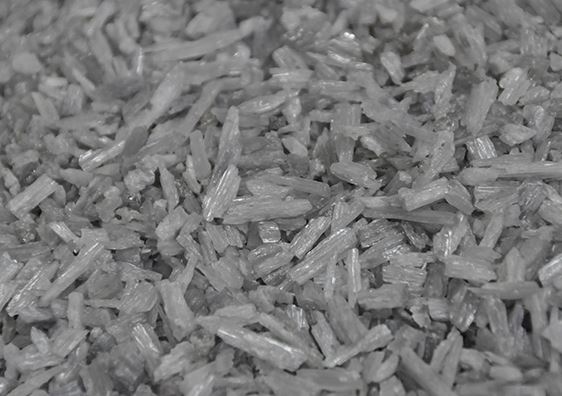
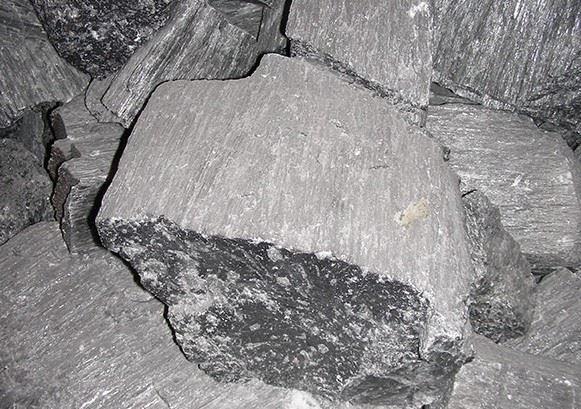
On the other hand, the porosity also affects the strength of the material. A higher porosity generally leads to a lower strength. Therefore, in applications where high strength is required, such as in the production of high - load - bearing refractory bricks, the porosity of white tabular alumina needs to be carefully controlled.
4. Surface Hardness and Abrasion Resistance
The surface of white tabular alumina is very hard. This hardness is a result of its high - purity alumina composition and the dense polycrystalline structure. The hardness of white tabular alumina is comparable to that of some natural gemstones, which gives it excellent abrasion resistance.
In applications such as abrasives, white tabular alumina is a popular choice. When used as an abrasive, its hard surface can effectively remove materials from the workpiece surface, providing a smooth and precise finish. In refractory applications, its abrasion resistance ensures that the refractory lining can withstand the erosion of high - velocity particles and molten metals, prolonging the service life of the lining.
5. Surface Reactivity
Although white tabular alumina is chemically stable, its surface can still exhibit a certain degree of reactivity under specific conditions. For example, at high temperatures, the surface alumina can react with some metal oxides or fluxes to form new compounds.
In the production of refractories, this reactivity can be utilized to improve the bonding strength between different components. By adding appropriate additives, the surface of white tabular alumina can react with these additives to form a strong bonding phase, enhancing the overall performance of the refractory product.
Comparison with Related Materials
When comparing white tabular alumina with other similar materials such as Fused Mullite and White corundum powder, its surface characteristics show some differences.
Fused mullite has a different crystal structure and chemical composition compared to white tabular alumina. The surface of fused mullite is more likely to have a glassy phase due to its melting and solidification process. This glassy phase can affect its chemical reactivity and mechanical properties. In contrast, the polycrystalline surface of white tabular alumina provides better thermal stability and strength.
White corundum powder also has a high - purity alumina composition, but its particle size and surface morphology are different from those of white tabular alumina. White corundum powder usually has smaller particle sizes and a more irregular surface. This makes it more suitable for applications where fine grinding and polishing are required, while white tabular alumina is better for applications where high strength and thermal stability are crucial.
Application - Oriented Surface Modification
Based on the specific requirements of different applications, the surface of white tabular alumina can be modified. For example, in the field of Synthesis Of Mullite, the surface of white tabular alumina can be coated with certain additives to promote the reaction between alumina and silica to form mullite more efficiently.
Surface modification can also be used to improve the dispersion of white tabular alumina in a matrix. By modifying the surface charge or adding dispersing agents, the agglomeration of particles can be reduced, ensuring a more uniform distribution of white tabular alumina in the final product.
Conclusion
In conclusion, the surface characteristics of white tabular alumina, including its morphology, chemical composition, porosity, hardness, abrasion resistance, and reactivity, have a significant impact on its performance and application. Understanding these surface characteristics is essential for optimizing its use in various industrial fields.
As a supplier of white tabular alumina, I am committed to providing high - quality products with well - controlled surface characteristics. If you are interested in our white tabular alumina products or have any questions about its application, please feel free to contact us for procurement and in - depth discussions. We look forward to collaborating with you to meet your specific needs.
References
- Smith, J. R. "Refractory Materials: Properties and Applications." Elsevier, 2018.
- Johnson, A. M. "Alumina - Based Materials: Structure and Performance." Springer, 2019.
- Brown, C. D. "Surface Chemistry of Inorganic Materials." Wiley, 2020.