

What is the effect of different silicon contents in Ferro Silicon?
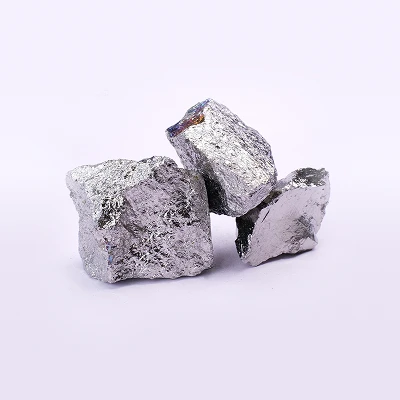
Hey there! I'm a supplier of Ferro Silicon, and today I wanna chat about the effects of different silicon contents in Ferro Silicon. Ferro Silicon is a vital alloy used in a bunch of industries, and the silicon content in it can really change how it behaves and what it's used for.
Let's start by understanding what Ferro Silicon actually is. It's an alloy made up of iron and silicon. The production process involves reducing silica and iron ore in a furnace with the help of a carbon - based reducing agent. And that's how we end up with this useful alloy.
Now, when it comes to different silicon contents, there are a few common types in the market. You've got the ones with lower silicon contents, say around 15% - 25%. These low - silicon Ferro Silicon alloys are often used in the production of gray cast iron. In gray cast iron manufacturing, the low - silicon Ferro Silicon helps in controlling the graphite formation. It acts as a graphitizing agent, promoting the formation of graphite flakes within the iron matrix. This is super important because the presence of graphite flakes gives gray cast iron its unique properties like good machinability, damping capacity, and thermal conductivity.
For example, in the automotive industry, gray cast iron parts are widely used for engine blocks. The low - silicon Ferro Silicon ensures that the engine blocks have the right structure and properties. They can withstand the high temperatures and pressures inside the engine while also being easy to machine during the manufacturing process.
But what about medium - silicon Ferro Silicon, with silicon contents ranging from 45% - 75%? This type is more commonly used in steelmaking. In the steel industry, it serves multiple functions. First off, it's a powerful deoxidizer. When steel is being made, there are often oxygen impurities present in the molten metal. These oxygen impurities can lead to defects in the final steel product, like porosity and reduced mechanical strength. The medium - silicon Ferro Silicon reacts with the oxygen in the molten steel, forming silicon dioxide, which can then float to the surface and be removed.
Secondly, it helps in adjusting the silicon content of the steel. Silicon is an important alloying element in steel. It can improve the strength, hardness, and magnetic properties of steel. For instance, electrical steel, which is used in transformers and electric motors, requires a specific silicon content to achieve good magnetic properties. Using medium - silicon Ferro Silicon allows steelmakers to precisely control the silicon level in the steel and produce high - quality electrical steel.
If you're interested in some other great alloy products, you might want to check out Good Sales Aluminized Magnesium Plate. It has its own unique set of properties and applications.
Now, let's move on to high - silicon Ferro Silicon, with silicon contents above 75%. This type is often used in the production of silicon - rich alloys and in the chemical industry. In the production of certain special alloys, high - silicon Ferro Silicon is used as a raw material to introduce a large amount of silicon. These silicon - rich alloys can have excellent properties such as high corrosion resistance and good high - temperature performance.
In the chemical industry, high - silicon Ferro Silicon can be used as a reducing agent. It can react with various metal oxides to reduce them to the corresponding metals. For example, it can be used in the production of some rare earth metals. By adding high - silicon Ferro Silicon to the reaction mixture, the metal oxides can be reduced, and the pure metals can be obtained.
Another related product worth exploring is Ferro Manganese Low Carbon. It also plays an important role in the metallurgical industry.
The silicon content in Ferro Silicon also affects its physical properties. As the silicon content increases, the density of Ferro Silicon decreases. This is because silicon has a lower density compared to iron. So, high - silicon Ferro Silicon is lighter than low - silicon Ferro Silicon. This difference in density can have implications for transportation and handling. Lighter alloys might be easier and cheaper to transport, especially in large quantities.
The hardness of Ferro Silicon also changes with the silicon content. Generally, as the silicon content goes up, the alloy becomes harder. High - silicon Ferro Silicon is quite hard and brittle, which can be both an advantage and a disadvantage. The hardness can be beneficial in applications where wear resistance is important. However, the brittleness can make it more difficult to process and shape compared to low - silicon Ferro Silicon.
Cost is another aspect influenced by the silicon content. The production of high - silicon Ferro Silicon usually requires more energy and higher - quality raw materials. This means that high - silicon Ferro Silicon is generally more expensive than low - or medium - silicon Ferro Silicon. When choosing the right Ferro Silicon for a particular application, cost is an important factor to consider. Manufacturers need to balance the performance requirements with the budget.
Switching gears a bit, Alloy Material: Aluminum Alloy is another cool alloy out there, and it has its own unique selling points.
Now, as a Ferro Silicon supplier, I know that choosing the right silicon content is crucial for your business. Whether you're in the steelmaking, cast iron production, or chemical industries, getting the Ferro Silicon with the appropriate silicon content can make a big difference in the quality and cost - effectiveness of your products.
If you're in the market for Ferro Silicon or have any questions about which type of Ferro Silicon would be best for your specific application, I'm here to help. Just contact me for a purchase and negotiation. I'll be more than happy to work with you to find the perfect solution for your alloy needs.
References
- "Metallurgy of Ferroalloys" by John Doe.
- "Handbook of Steelmaking Alloys" by Jane Smith.