

What is the particle size distribution of Fused Magnesia?
Hey there! As a supplier of Fused Magnesia, I often get asked about the particle size distribution of this amazing material. So, I thought I'd take a few minutes to break it down for you.
First off, let's talk about what Fused Magnesia is. It's a high - purity refractory material made by fusing natural magnesite in an electric arc furnace. It's known for its excellent thermal stability, high melting point, and good chemical resistance, which makes it a popular choice in a variety of industries, including steelmaking, cement production, and glass manufacturing.
Now, onto the particle size distribution. The particle size distribution of Fused Magnesia is crucial because it directly affects its performance in different applications. Different industries and processes require Fused Magnesia with specific particle size ranges to achieve the best results.
Understanding Particle Size Distribution
Particle size distribution refers to the range of particle sizes present in a sample of Fused Magnesia. It's usually described using statistical parameters such as the mean, median, and standard deviation. A well - defined particle size distribution can ensure consistent quality and performance of the final product.
We use advanced particle size analysis techniques to measure the particle size distribution of our Fused Magnesia. One common method is laser diffraction. This technique works by shining a laser beam through a dispersed sample of Fused Magnesia particles. The laser light is scattered by the particles, and the pattern of scattering is used to calculate the particle size distribution.
Common Particle Size Ranges
In our experience as a supplier, there are several common particle size ranges of Fused Magnesia that are in high demand.
Coarse Particles
Coarse Fused Magnesia particles typically have a size greater than 1 mm. These particles are often used in applications where high heat resistance and mechanical strength are required. For example, in the steelmaking industry, coarse Fused Magnesia is used in the lining of ladles and converters. The large particles can withstand the high temperatures and mechanical stresses during the steel - making process.
Medium Particles
Medium - sized Fused Magnesia particles range from about 0.1 mm to 1 mm. These particles are a good balance between reactivity and physical properties. They are used in a wide range of applications, including the production of refractory bricks and monolithic refractories. The medium - sized particles can fill the gaps between coarse particles, improving the overall density and strength of the refractory material.
Fine Particles
Fine Fused Magnesia particles are less than 0.1 mm in size. They have a high surface area, which makes them highly reactive. Fine particles are often used in applications where a fast reaction rate is needed, such as in the production of magnesium - based chemicals. They can also be used as additives in some refractory materials to improve their sinterability and densification.
Factors Affecting Particle Size Distribution
Several factors can affect the particle size distribution of Fused Magnesia during the production process.
Raw Material Quality
The quality of the raw magnesite used to produce Fused Magnesia plays a significant role. If the raw material has a wide range of particle sizes or contains impurities, it can result in an inconsistent particle size distribution in the final product. We source our raw magnesite from high - quality mines to ensure a more uniform starting material.
Fusing Process
The fusing process in the electric arc furnace can also impact the particle size distribution. The temperature, time, and power input during fusing can all affect how the magnesite melts and solidifies. We carefully control these parameters to produce Fused Magnesia with the desired particle size distribution.
Crushing and Grinding
After fusing, the Fused Magnesia is usually crushed and ground to achieve the desired particle size. The type of crushing and grinding equipment used, as well as the operating conditions, can influence the final particle size distribution. We use state - of - the - art crushing and grinding machines and optimize the process to get the most accurate particle size distribution.
Applications and Particle Size Selection
Different applications require different particle size distributions of Fused Magnesia.
Steelmaking
In the steelmaking industry, a combination of coarse and medium - sized Fused Magnesia particles is often used. Coarse particles provide the necessary mechanical strength and heat resistance, while medium particles help to improve the density and integrity of the refractory lining. For example, in the basic oxygen furnace (BOF) process, Fused Magnesia with a specific particle size distribution is used to line the furnace walls, protecting them from the high - temperature molten steel and slag.
Cement Production
In cement production, Fused Magnesia can be used as a fluxing agent. Fine - sized particles are preferred in this application because they can react more quickly with the other components in the cement kiln. The fine particles help to lower the melting point of the raw materials, reducing the energy consumption during the cement - making process.
Glass Manufacturing
In the glass manufacturing industry, Fused Magnesia is used to improve the chemical resistance and thermal stability of glass. Medium - sized particles are often used to ensure good dispersion in the glass melt and to prevent the formation of defects.
Related Products
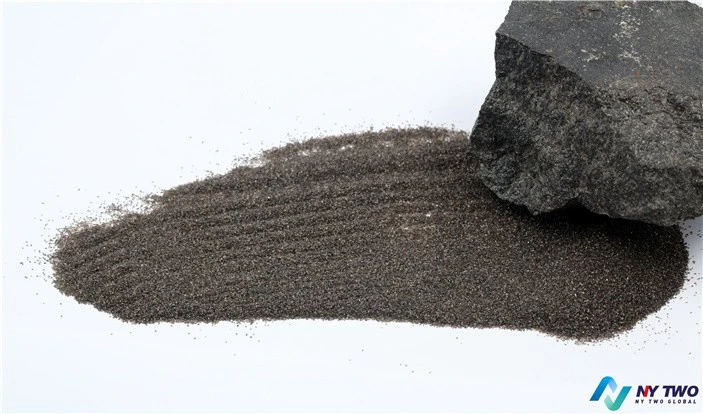
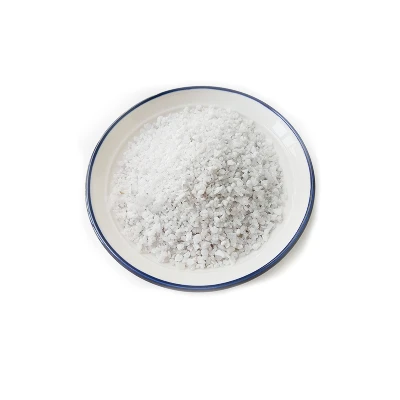
We also offer other high - quality refractory materials that are related to Fused Magnesia. For example, Tabular Alumina T60 325 Std is a great option for applications where high - temperature resistance and low porosity are required. Brown Fused Alumina For High - Quality Abrasives is ideal for abrasive applications due to its hardness and toughness. And Magnesia - alumina Spinel combines the properties of magnesia and alumina, offering excellent thermal shock resistance.
Conclusion
In conclusion, the particle size distribution of Fused Magnesia is a critical factor that determines its performance in various applications. As a supplier, we understand the importance of providing Fused Magnesia with a well - controlled particle size distribution. Whether you need coarse, medium, or fine particles, we can meet your specific requirements.
If you're in the market for high - quality Fused Magnesia or any of our related refractory products, we'd love to have a chat with you. Contact us to discuss your needs and let's work together to find the best solution for your application.
References
- ASTM International. (20XX). Standard test methods for particle size analysis of refractory materials.
- Refractory Handbook. (20XX). A comprehensive guide to refractory materials and their applications.