

What is the role of High Carbon Ferro Manganese in heat - resistant steel production?
Heat-resistant steel is a crucial material in various industries, including aerospace, automotive, and power generation, due to its ability to withstand high temperatures and harsh environments. The production of heat-resistant steel involves a complex process, and the addition of certain alloying elements plays a vital role in enhancing its performance. One such alloying element is high carbon ferro manganese, which I supply as a reliable supplier. In this blog, I will delve into the role of high carbon ferro manganese in heat-resistant steel production and highlight its significance.
Understanding High Carbon Ferro Manganese
High carbon ferro manganese is an alloy composed primarily of manganese (Mn), iron (Fe), and carbon (C). It is produced by smelting a mixture of manganese ore, iron ore, and carbonaceous materials in a submerged arc furnace. The high carbon content in this alloy typically ranges from 6% to 8%, which gives it unique properties that are beneficial for steel production.
Role of High Carbon Ferro Manganese in Heat-Resistant Steel Production
1. Deoxidation
During the steelmaking process, oxygen is present in the molten steel, which can lead to the formation of oxides and other impurities. These impurities can have a detrimental effect on the mechanical properties and quality of the steel. High carbon ferro manganese acts as a powerful deoxidizer, reacting with oxygen to form manganese oxides. These oxides are then removed from the molten steel, resulting in a cleaner and purer steel product.
The deoxidation reaction can be represented by the following equation:
2Mn + O₂ → 2MnO
By removing oxygen from the steel, high carbon ferro manganese helps to improve the steel's strength, toughness, and ductility. It also reduces the risk of porosity and other defects in the final product.
2. Grain Refinement
Grain refinement is an important process in heat-resistant steel production as it can significantly enhance the steel's mechanical properties. High carbon ferro manganese plays a crucial role in this process by promoting the formation of fine grains in the steel microstructure.
When high carbon ferro manganese is added to the molten steel, it forms small particles of manganese sulfide (MnS). These particles act as nuclei for the formation of new grains during solidification. As a result, the steel has a finer grain structure, which improves its strength, hardness, and wear resistance.
In addition, fine-grained steel has better resistance to creep and fatigue, which are important properties for heat-resistant applications. Creep is the slow deformation of a material under constant stress at high temperatures, while fatigue is the failure of a material due to repeated loading. By improving the steel's resistance to these phenomena, high carbon ferro manganese helps to extend the service life of heat-resistant steel components.
3. Solid Solution Strengthening
Solid solution strengthening is a mechanism by which the strength and hardness of a metal are increased by the addition of alloying elements. High carbon ferro manganese dissolves in the iron matrix of the steel, forming a solid solution. The presence of manganese atoms in the iron lattice disrupts the regular arrangement of atoms, making it more difficult for dislocations to move.
Dislocations are defects in the crystal structure of a metal that are responsible for plastic deformation. By impeding the movement of dislocations, high carbon ferro manganese increases the strength and hardness of the steel. This is particularly important for heat-resistant steel, as it needs to maintain its mechanical properties at high temperatures.
4. Improvement of Corrosion Resistance
Heat-resistant steel is often exposed to corrosive environments, such as high-temperature gases and liquids. High carbon ferro manganese can improve the corrosion resistance of heat-resistant steel by forming a protective oxide layer on the surface of the steel.
Manganese forms a stable oxide layer that adheres well to the steel surface and acts as a barrier against further corrosion. This oxide layer prevents the penetration of corrosive agents, such as oxygen and moisture, into the steel, thereby protecting it from corrosion.
In addition, high carbon ferro manganese can also enhance the steel's resistance to oxidation at high temperatures. Oxidation is a chemical reaction in which a metal reacts with oxygen to form an oxide. By reducing the rate of oxidation, high carbon ferro manganese helps to maintain the integrity and performance of heat-resistant steel components in high-temperature environments.
Other Related Alloying Materials
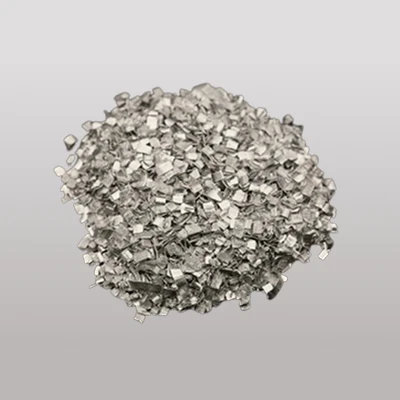
In addition to high carbon ferro manganese, there are other alloying materials that are commonly used in heat-resistant steel production. For example, MAGNESIUM SHAVINGS can be used as a deoxidizer and desulfurizer in steelmaking. Magnesium reacts with oxygen and sulfur to form magnesium oxides and sulfides, which can be easily removed from the molten steel.
Pure Magnesium Powder Suppliers With High Quality offer a source of pure magnesium powder that can be used in various applications, including steelmaking. Pure magnesium powder can be added to the molten steel to improve its fluidity and reduce the formation of inclusions.
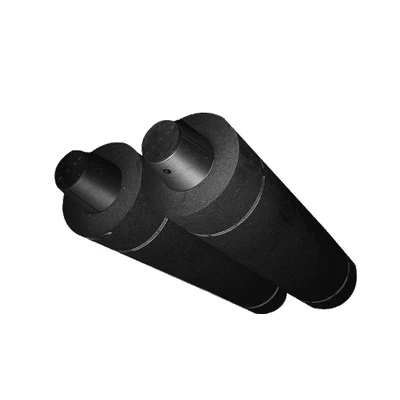
Graphite Electrodes are another important material in steelmaking. They are used in electric arc furnaces to provide the heat necessary for melting the steel scrap and other raw materials. Graphite electrodes have high electrical conductivity and thermal resistance, making them suitable for high-temperature applications.
Conclusion
High carbon ferro manganese plays a crucial role in heat-resistant steel production. Its functions include deoxidation, grain refinement, solid solution strengthening, and improvement of corrosion resistance. By adding high carbon ferro manganese to the steel, manufacturers can produce heat-resistant steel with superior mechanical properties, better performance, and longer service life.
As a reliable supplier of high carbon ferro manganese, I am committed to providing high-quality products to meet the needs of the heat-resistant steel industry. If you are interested in purchasing high carbon ferro manganese or have any questions about its application in heat-resistant steel production, please feel free to contact me for further discussion and potential procurement negotiations.
References
- ASM Handbook, Volume 1: Properties and Selection: Irons, Steels, and High-Performance Alloys, ASM International
- Steelmaking and Refining Volume, The Making, Shaping and Treating of Steel, United States Steel Corporation
- Physical Metallurgy Principles, Robert E. Reed-Hill and Robert Abbaschian