

What is the thermal conductivity of Fused Spinel?
Fused spinel, a remarkable material with diverse applications, has piqued the interest of many in various industries. As a supplier of fused spinel, I often receive inquiries about its thermal conductivity. In this blog, we will delve into the concept of thermal conductivity of fused spinel, exploring its significance, factors influencing it, and how it relates to different applications.
Understanding Thermal Conductivity
Thermal conductivity is a fundamental property of materials that describes their ability to conduct heat. It is defined as the quantity of heat that passes through a unit area of a material in a unit time under a unit temperature gradient. In simpler terms, it measures how quickly heat can move through a material. The SI unit of thermal conductivity is watts per meter - kelvin (W/(m·K)).
For a material like fused spinel, thermal conductivity plays a crucial role in determining its suitability for specific applications. High - thermal - conductivity materials can transfer heat rapidly, while low - thermal - conductivity materials act as insulators, reducing heat transfer.
What is Fused Spinel?
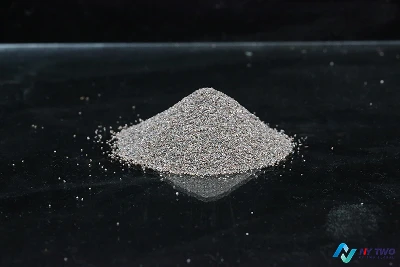
Fused spinel is a synthetic mineral produced by melting a mixture of high - purity raw materials in an electric arc furnace. It has a cubic crystal structure and is known for its excellent thermal stability, chemical resistance, and mechanical strength. Fused spinel is widely used in the refractory industry, as well as in other sectors such as ceramics, metallurgy, and glass manufacturing.
Thermal Conductivity of Fused Spinel
The thermal conductivity of fused spinel can vary depending on several factors. Generally, the thermal conductivity of fused spinel at room temperature ranges from about 5 to 10 W/(m·K). However, this value can change significantly with temperature, composition, and microstructure.
Temperature Dependence
As temperature increases, the thermal conductivity of fused spinel typically decreases. At low temperatures, lattice vibrations (phonons) are the main carriers of heat. As the temperature rises, these phonons interact more strongly with each other and with lattice defects, which scatters the phonons and reduces their ability to transfer heat.
Composition
The composition of fused spinel has a profound impact on its thermal conductivity. Different raw materials and their proportions can lead to variations in the crystal structure and chemical bonds within the spinel. For example, spinels with different ratios of magnesium oxide (MgO) and aluminum oxide (Al₂O₃) will have different thermal conductivities. A spinel with a higher MgO content may have a different thermal conductivity compared to one with a higher Al₂O₃ content.
Microstructure
The microstructure of fused spinel, including grain size, porosity, and the presence of impurities, also affects its thermal conductivity. Smaller grain sizes can increase the scattering of phonons at grain boundaries, reducing the thermal conductivity. Porosity can act as a barrier to heat transfer, as air has a much lower thermal conductivity than the spinel matrix. Impurities can introduce additional scattering centers, further decreasing the thermal conductivity.
Applications and Thermal Conductivity
The thermal conductivity of fused spinel makes it suitable for a wide range of applications.
Refractory Applications
In the refractory industry, fused spinel is used to line furnaces, kilns, and other high - temperature equipment. Its moderate thermal conductivity helps to provide good insulation, reducing heat loss from the furnace and improving energy efficiency. For example, in steelmaking furnaces, fused spinel refractories can withstand the high temperatures and chemical reactions while minimizing heat transfer to the surroundings.

Ceramics
In the ceramics industry, fused spinel can be used as an additive to improve the thermal shock resistance and mechanical properties of ceramic products. Its thermal conductivity can also affect the firing process and the final properties of the ceramics. For instance, in the production of ceramic tiles, the thermal conductivity of the spinel additive can influence the rate of heat transfer during firing, which in turn affects the density and strength of the tiles.
Metallurgy
In metallurgical processes, fused spinel can be used as a lining material in ladles and tundishes. Its thermal conductivity helps to control the temperature of the molten metal, ensuring a stable and efficient casting process.
Comparison with Other Materials
When comparing the thermal conductivity of fused spinel with other materials, it is interesting to note its position in the spectrum of thermal conductors.
Brown corundum is made of high quality abrasive grade bauxite. Brown corundum generally has a higher thermal conductivity than fused spinel. It is often used in applications where high heat transfer is required, such as in abrasive tools and some high - temperature industrial processes.
Mesh Magnalium PowderMagnesium Production has its own unique thermal properties. Magnalium powder is mainly used in the production of magnesium and has different thermal conductivity characteristics compared to fused spinel, which is more focused on refractory and high - temperature applications.
Tabular Alumina is another material used in the refractory industry. Tabular alumina usually has a relatively high thermal conductivity at high temperatures, which makes it suitable for applications where rapid heat transfer is necessary. In contrast, fused spinel can provide a more balanced combination of thermal insulation and stability, making it a preferred choice in some cases.
Importance in Industrial Processes
The thermal conductivity of fused spinel is of great importance in industrial processes. In high - temperature applications, controlling heat transfer is crucial for energy efficiency, product quality, and equipment lifespan. By using fused spinel with the appropriate thermal conductivity, industries can optimize their processes and reduce costs.
For example, in the glass manufacturing industry, the thermal conductivity of the refractory lining made of fused spinel can affect the melting and refining processes of glass. A lining with the right thermal conductivity can ensure uniform heating of the glass batch, reducing the formation of defects and improving the overall quality of the glass products.
How We Ensure Quality and Thermal Conductivity
As a fused spinel supplier, we take several steps to ensure the quality and consistency of the thermal conductivity of our products.
First, we carefully select high - purity raw materials. By using high - quality raw materials, we can control the composition of the fused spinel and minimize the presence of impurities that could affect its thermal conductivity.
Second, we have strict quality control measures during the production process. Our electric arc furnaces are precisely controlled to ensure a uniform melting and crystallization process, which results in a consistent microstructure and thermal properties.
Finally, we conduct thorough testing on our products. We use advanced testing equipment to measure the thermal conductivity at different temperatures and under various conditions. This allows us to provide accurate data to our customers and ensure that our products meet their specific requirements.
Contact Us for Fused Spinel Procurement
If you are interested in procuring fused spinel for your specific applications, we would be delighted to have a discussion with you. Our team of experts can provide you with detailed information about the thermal conductivity of our fused spinel products, as well as other relevant properties. We can also offer customized solutions based on your specific needs. Whether you are in the refractory industry, ceramics, metallurgy, or any other sector that requires high - quality fused spinel, we are here to assist you. Reach out to us to start a fruitful conversation about your procurement requirements.
References
- Kingery, W. D., Bowen, H. K., & Uhlmann, D. R. (1976). Introduction to Ceramics. Wiley.
- Reed, J. S. (1995). Principles of Ceramics Processing. Wiley.
- Schneider, H., Somers, J., & Baumann, M. (2008). Refractories Handbook. Wiley - VCH.