

What is the thermal conductivity of refractory materials?
Thermal conductivity is a crucial property in the field of refractory materials, influencing their performance in various high - temperature applications. As a refractory supplier, I have witnessed firsthand the importance of understanding thermal conductivity and how it impacts the selection of the right refractory products for different industrial needs.
Understanding Thermal Conductivity
Thermal conductivity, denoted by the symbol λ (lambda), is a measure of a material's ability to conduct heat. It is defined as the quantity of heat (Q) that passes through a unit area (A) of a material per unit time (t) under a unit temperature gradient (∆T/∆x). Mathematically, it is expressed as (λ=\frac{Q\cdot\Delta x}{A\cdot\Delta t\cdot\Delta T}). In SI units, thermal conductivity is measured in watts per meter - kelvin (W/(m·K)).
For refractory materials, thermal conductivity plays a vital role in determining their efficiency in high - temperature environments. Low thermal conductivity is often desirable in applications where heat insulation is required, such as in furnace linings. A refractory with low thermal conductivity can reduce heat loss from the furnace, leading to energy savings and improved process efficiency. On the other hand, in some applications where rapid heat transfer is needed, a refractory with high thermal conductivity may be preferred.
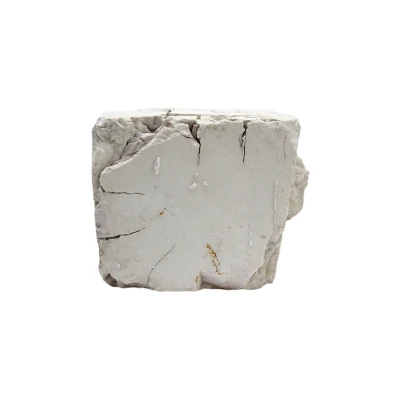

Factors Affecting the Thermal Conductivity of Refractory Materials
- Chemical Composition
The chemical composition of a refractory material is one of the primary factors influencing its thermal conductivity. Different chemical elements and compounds have different atomic and molecular structures, which affect the way heat is transferred through the material. For example, materials rich in silica (SiO₂) generally have relatively low thermal conductivity due to the complex structure of silica networks that impede the movement of heat - carrying phonons (quantized lattice vibrations). In contrast, materials containing metallic oxides like alumina (Al₂O₃) can have higher thermal conductivity, especially at high purities. China Alumina Fine Powder is a high - quality product with a specific chemical composition that can significantly influence the thermal conductivity of the refractory materials it is used in. Alumina has a well - ordered crystal structure that allows for relatively efficient heat transfer through phonon conduction. - Porosity
Porosity is another critical factor affecting thermal conductivity. Refractory materials with high porosity have lower thermal conductivity because the pores act as barriers to heat transfer. The air trapped within the pores has a much lower thermal conductivity compared to the solid refractory matrix. As the porosity increases, the effective cross - sectional area for heat conduction decreases, and the heat has to take a more tortuous path through the solid phase, resulting in reduced thermal conductivity. For example, insulating refractories are often designed to have high porosity to achieve low thermal conductivity and excellent heat - insulating properties. - Temperature
The thermal conductivity of refractory materials is also strongly temperature - dependent. In general, the thermal conductivity of most refractory materials increases with temperature up to a certain point and then may start to decrease or level off. At low temperatures, heat transfer is mainly through phonon conduction. As the temperature rises, the number of phonons increases, and their mean free path may also change, affecting the thermal conductivity. At very high temperatures, additional heat transfer mechanisms such as radiation may become significant, which can further complicate the relationship between temperature and thermal conductivity. - Microstructure
The microstructure of a refractory material, including grain size, grain boundaries, and crystal orientation, can have a significant impact on thermal conductivity. Smaller grain sizes often lead to lower thermal conductivity because grain boundaries act as scattering centers for phonons, impeding their movement. A well - oriented crystal structure can enhance thermal conductivity in the direction of the crystal orientation, as phonons can move more freely along the ordered lattice.
Types of Refractory Materials and Their Thermal Conductivities
- Alumina - Based Refractories
Alumina - based refractories are widely used in various high - temperature applications due to their excellent thermal and mechanical properties. The thermal conductivity of alumina refractories depends on the alumina content and the manufacturing process. High - purity alumina refractories with a low porosity can have relatively high thermal conductivity, making them suitable for applications where heat transfer is required, such as in some types of heat exchangers. China Alumina Fine Powder is a key raw material for producing high - quality alumina - based refractories. These refractories can have thermal conductivities ranging from about 2 to 30 W/(m·K) depending on the specific composition and microstructure. - Silica - Based Refractories
Silica - based refractories are known for their good thermal shock resistance and relatively low thermal conductivity. Silica exists in different polymorphs, such as quartz, cristobalite, and tridymite, each with different thermal properties. The thermal conductivity of silica refractories is typically in the range of 1 - 2 W/(m·K) at room temperature and may increase slightly with temperature. These refractories are commonly used in applications where heat insulation is important, such as in glass - melting furnaces. - Magnesia - Based Refractories
Magnesia - based refractories are used in high - temperature applications, especially in the steel industry. Magnesia (MgO) has a relatively high melting point and good chemical stability. The thermal conductivity of magnesia - based refractories is generally higher than that of silica - based refractories, typically in the range of 3 - 10 W/(m·K). The thermal conductivity can be influenced by factors such as the purity of magnesia, the presence of impurities, and the porosity of the material. - Zirconia - Based Refractories
Zirconia - based refractories, such as Zirconia Mullite, have unique thermal properties. Zirconia (ZrO₂) has a relatively low thermal conductivity, especially in its stabilized forms. The addition of zirconia to other refractory materials can help to reduce their thermal conductivity and improve their thermal shock resistance. Zirconia - mullite refractories combine the properties of zirconia and mullite, offering a good balance between thermal insulation and mechanical strength. Their thermal conductivity can range from 1 - 5 W/(m·K), depending on the composition and microstructure. - Brown Corundum - Based Refractories
Brown Corundum is a commonly used abrasive and refractory material. Brown corundum is mainly composed of alumina with some impurities. Refractories made from brown corundum can have a relatively high thermal conductivity due to the high alumina content. The thermal conductivity of brown corundum - based refractories can be in the range of 10 - 20 W/(m·K), making them suitable for applications where rapid heat transfer is required.
Measuring the Thermal Conductivity of Refractory Materials
There are several methods for measuring the thermal conductivity of refractory materials. The most common methods include the steady - state method and the transient method.
- Steady - State Method
In the steady - state method, a constant heat flux is applied to the sample, and the temperature difference across the sample is measured under steady - state conditions. The thermal conductivity is then calculated using Fourier's law of heat conduction. This method is relatively simple and accurate for materials with stable thermal properties. However, it can be time - consuming, especially for materials with low thermal conductivity, as it may take a long time to reach steady - state conditions. - Transient Method
The transient method measures the thermal conductivity by observing the transient temperature response of the sample to a sudden heat input. There are different types of transient methods, such as the hot - wire method and the laser flash method. The laser flash method is widely used for measuring the thermal conductivity of refractory materials. In this method, a short laser pulse is applied to one side of the sample, and the temperature rise on the opposite side is measured as a function of time. The thermal diffusivity is first determined from the temperature - time curve, and then the thermal conductivity is calculated using the relationship between thermal diffusivity, density, and specific heat capacity.
Importance of Thermal Conductivity in Industrial Applications
- Furnace Linings
In furnace linings, the thermal conductivity of the refractory material is of utmost importance. A low - thermal - conductivity refractory can reduce heat loss from the furnace, leading to significant energy savings. By minimizing heat transfer through the furnace walls, the energy required to maintain the desired temperature inside the furnace can be reduced, resulting in lower operating costs. For example, in a steel - making furnace, using a high - quality insulating refractory with low thermal conductivity can improve the overall efficiency of the steel - making process. - Heat Exchangers
In heat exchangers, a refractory with high thermal conductivity is often required to ensure efficient heat transfer between the hot and cold fluids. The refractory material needs to be able to transfer heat quickly from the hot side to the cold side without significant losses. Alumina - based refractories with high thermal conductivity are commonly used in heat exchanger applications to achieve this goal. - Glass - Melting Furnaces
In glass - melting furnaces, the thermal conductivity of the refractory material affects the heat distribution inside the furnace and the energy consumption. A refractory with appropriate thermal conductivity can help to maintain a uniform temperature distribution, ensuring high - quality glass production. Silica - based refractories are often used in glass - melting furnaces due to their low thermal conductivity and good thermal shock resistance.
Conclusion
Understanding the thermal conductivity of refractory materials is essential for selecting the right refractory products for different industrial applications. As a refractory supplier, I am committed to providing high - quality refractory materials with well - characterized thermal properties. By considering factors such as chemical composition, porosity, temperature, and microstructure, we can offer refractories that meet the specific thermal conductivity requirements of our customers. Whether you need a low - thermal - conductivity refractory for heat insulation or a high - thermal - conductivity refractory for efficient heat transfer, we have the expertise and products to meet your needs.
If you are interested in purchasing refractory materials or have any questions about thermal conductivity and its impact on your application, please feel free to contact us for further discussion and procurement negotiations. We look forward to working with you to find the best refractory solutions for your business.
References
- Touloukian, Y. S., & DeWitt, D. P. (Eds.). (1970). Thermal conductivity: nonmetallic solids. Plenum Press.
- Kriven, W. M., & Bradt, R. C. (2006). Introduction to ceramics processing. Wiley - Interscience.
- Zuhair A. Munir, U. Anselmi - Tamburini, & M. Ohyanagi. (2006). The effect of processing on the thermal conductivity of ceramics. Journal of the American Ceramic Society, 89(6), 1771 - 1789.