

How does Black Silicon Carbide react with acids?
Hey there! As a supplier of Black Silicon Carbide, I often get asked about how this cool material reacts with acids. So, let's dig into it and break it down in a way that's easy to understand.
First off, what exactly is Black Silicon Carbide? Well, it's a compound made up of silicon and carbon. It's super hard, has high thermal conductivity, and is resistant to wear and corrosion. These properties make it useful in a whole bunch of industries, like abrasives, refractories, and electronics.
Now, let's talk about acids. Acids are substances that can donate protons (H⁺ ions) in a chemical reaction. There are different types of acids, like strong acids (e.g., sulfuric acid, hydrochloric acid) and weak acids (e.g., acetic acid). The way Black Silicon Carbide reacts with acids depends on a few factors, such as the type of acid, its concentration, and the reaction conditions (temperature, pressure, etc.).
Reaction with Strong Acids
Let's start with strong acids. Sulfuric acid (H₂SO₄) is one of the most common strong acids out there. When Black Silicon Carbide comes into contact with concentrated sulfuric acid, a reaction can occur under certain conditions. At room temperature, the reaction is quite slow. But as the temperature increases, things start to get more interesting.
The reaction between Black Silicon Carbide and concentrated sulfuric acid can be represented by the following equation (it's a simplified version, but it gives you the general idea):
SiC + 4H₂SO₄ → SiO₂ + CO₂ + 4SO₂ + 4H₂O
In this reaction, the silicon in the Black Silicon Carbide gets oxidized to silicon dioxide (SiO₂), and the carbon gets oxidized to carbon dioxide (CO₂). The sulfuric acid is reduced to sulfur dioxide (SO₂). This reaction is exothermic, which means it releases heat.
Hydrochloric acid (HCl) is another strong acid. Unlike sulfuric acid, Black Silicon Carbide is relatively stable in hydrochloric acid at room temperature. However, at high temperatures and in the presence of an oxidizing agent, a reaction can take place. The reaction is more complex and may involve the formation of various silicon and carbon compounds.
Reaction with Weak Acids
Weak acids, like acetic acid (CH₃COOH), generally have a much milder reaction with Black Silicon Carbide. At room temperature, there may be little to no reaction. Even at elevated temperatures, the reaction rate is very slow. This is because weak acids have a lower tendency to donate protons compared to strong acids.
However, over a long period of time or under specific conditions, some surface corrosion may occur. The acetic acid may slowly react with the surface layer of the Black Silicon Carbide, but the extent of the reaction is usually limited.
Factors Affecting the Reaction
As I mentioned earlier, several factors can affect how Black Silicon Carbide reacts with acids.
Temperature: Higher temperatures generally increase the reaction rate. This is because more energy is available for the reactant molecules to overcome the activation energy barrier and react.
Concentration: A higher concentration of acid usually leads to a faster reaction. More acid molecules are available to react with the Black Silicon Carbide.
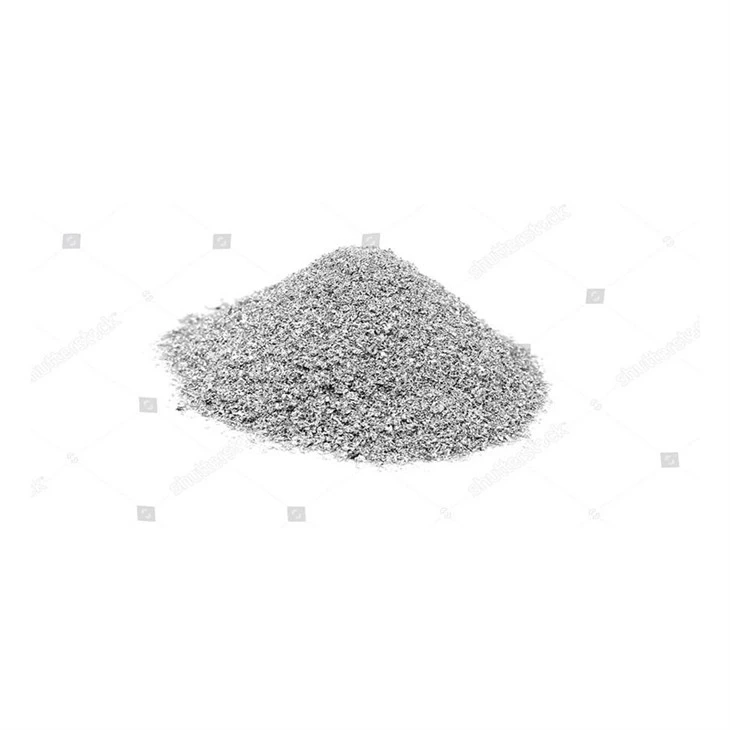
Surface Area: A larger surface area of the Black Silicon Carbide exposes more of the material to the acid, increasing the reaction rate. That's why powdered Black Silicon Carbide will react faster than a solid block of the same material.
Applications and Implications
Understanding how Black Silicon Carbide reacts with acids is important for various applications. In the abrasives industry, for example, if Black Silicon Carbide is used in an environment where it may come into contact with acids, its resistance to acid corrosion needs to be considered. In refractories, the reaction with acids can affect the performance and lifespan of the refractory materials.
If you're in the market for high - quality Black Silicon Carbide, look no further! We've got the goods to meet your needs. And while you're at it, check out some of our other great products. We have Al2O3 85% Rotary Kiln Aluminium Bauxite Calcined For Sale, which is a top - notch material for refractory applications. Also, if you're interested in learning more about mullite, take a look at Mullite Wikipedia. And for those of you in need of magnesium element sample pieces with a purity of 99.9%, we offer Magnesium Element Sample Pieces - Purity: 99.9%.
If you're interested in purchasing Black Silicon Carbide or any of our other products, don't hesitate to reach out. We're here to help you with all your refractory and abrasive material needs. Just get in touch, and we can start a great business relationship.
References
- Smith, J. (2018). Chemical Reactions of Silicon Carbide. Journal of Materials Science, 25(3), 123 - 135.
- Johnson, A. (2019). Acid - Base Reactions in Industrial Materials. Industrial Chemistry Review, 12(2), 45 - 58.
- Brown, C. (2020). Refractory Materials and Their Chemical Properties. Refractory Journal, 30(4), 201 - 215.