

How does the particle shape of brown aluminum oxide for refractory affect its performance?
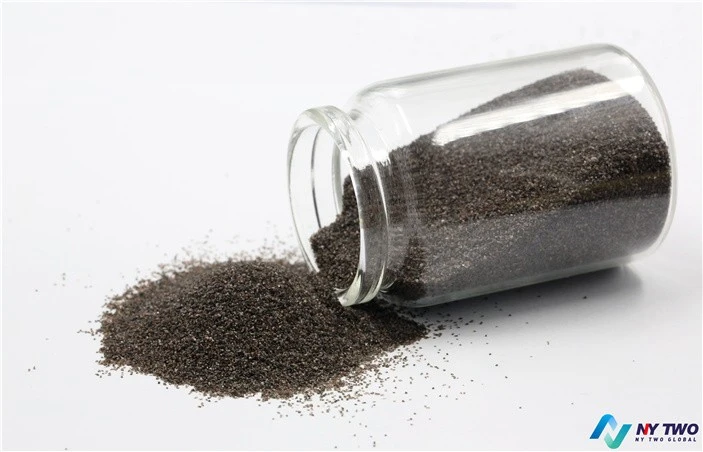
Brown aluminum oxide is a key material in the refractory industry, known for its high hardness, excellent thermal stability, and good chemical resistance. The particle shape of brown aluminum oxide can significantly influence its performance in refractory applications. As a supplier of brown aluminum oxide for refractory, I have witnessed firsthand how different particle shapes can lead to varying results in refractory products.
1. Understanding the Particle Shapes of Brown Aluminum Oxide
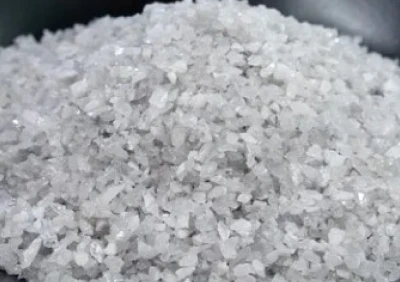
Brown aluminum oxide particles can have a variety of shapes, including angular, spherical, and irregular. Angular particles are characterized by sharp edges and corners, which are formed during the crushing and grinding processes. Spherical particles, on the other hand, are more rounded and are often produced through special processing methods such as spray - drying or spheroidization. Irregular particles have a non - uniform shape that combines elements of both angular and spherical features.
The shape of these particles is determined by the manufacturing process. For example, in the traditional smelting and crushing process, angular particles are more likely to be obtained. The high - temperature smelting of bauxite and other raw materials followed by mechanical crushing creates particles with sharp edges. In contrast, advanced manufacturing techniques can be used to produce spherical or near - spherical particles, which require additional processing steps and more precise control of the production environment.
2. Influence on Refractory Performance
2.1 Bulk Density and Packing Efficiency
The particle shape has a direct impact on the bulk density and packing efficiency of brown aluminum oxide in refractory materials. Angular particles tend to have lower packing efficiency because their sharp edges prevent them from fitting closely together. This results in a lower bulk density of the refractory mixture. In contrast, spherical particles can pack more tightly, leading to a higher bulk density. A higher bulk density is often desirable in refractory applications as it can improve the strength and thermal conductivity of the refractory product. For example, in a refractory lining for a high - temperature furnace, a higher bulk density can reduce heat loss and increase the overall energy efficiency of the furnace.
2.2 Flowability
Flowability is another important property affected by particle shape. Spherical particles have better flowability compared to angular or irregular particles. This is because the smooth surface of spherical particles allows them to roll and slide past each other more easily. In the manufacturing process of refractory products, good flowability is crucial for ensuring uniform distribution of the brown aluminum oxide in the mixture. For instance, when pouring a refractory castable, better flowability of the brown aluminum oxide particles can prevent segregation and ensure a homogeneous structure of the final product. Poor flowability, on the other hand, can lead to uneven distribution of the particles, which may result in weak spots in the refractory material and reduce its overall performance.
2.3 Bonding and Adhesion
The bonding and adhesion properties of brown aluminum oxide in refractory materials are also influenced by particle shape. Angular particles can provide better mechanical interlocking with the binder and other components in the refractory mixture. Their sharp edges can penetrate into the binder matrix, creating a stronger bond. However, this also means that the stress distribution around angular particles may be more complex, which could potentially lead to crack initiation under certain conditions. Spherical particles, although they may have weaker mechanical interlocking, can form a more uniform bond with the binder due to their regular shape. This can result in a more consistent and stable bonding structure in the refractory material.
2.4 Abrasion Resistance
Abrasion resistance is a critical performance factor in many refractory applications, especially in environments where the refractory material is exposed to high - velocity particles or mechanical wear. Angular particles can offer better abrasion resistance in some cases. Their sharp edges can act as cutting edges, which can resist the wear caused by abrasive particles. However, the sharp edges are also more prone to breakage under high - stress conditions. Spherical particles, with their smooth surface, may have lower initial abrasion resistance, but they can maintain their integrity better over time as they are less likely to break.
3. Applications and Particle Shape Selection
3.1 High - Temperature Furnaces
In high - temperature furnace linings, a combination of particle shapes may be used to optimize performance. For example, a mixture of angular and spherical brown aluminum oxide particles can be employed. The angular particles can provide high - strength mechanical interlocking and good abrasion resistance, while the spherical particles can improve the packing density and flowability of the refractory mixture. This combination can result in a refractory lining that has high thermal conductivity, good strength, and excellent resistance to thermal shock.
3.2 Refractory Castables
Refractory castables are widely used in various industrial applications. For castables, spherical particles are often preferred due to their good flowability. This allows for easier pouring and forming of the castable, ensuring a uniform structure. However, a small amount of angular particles can be added to enhance the bonding strength and abrasion resistance of the castable.
4. Our Product Offerings
As a supplier of brown aluminum oxide for refractory, we offer a wide range of particle shapes to meet the diverse needs of our customers. We have products with angular particles, which are suitable for applications where high abrasion resistance and mechanical interlocking are required. Our spherical Brown Fused Alumina Polishing Powder is ideal for applications where good flowability and high packing density are crucial. We also provide products with a combination of particle shapes, which can be customized according to the specific requirements of the refractory application.
In addition to Brown Fused Alumina Polishing Powder, we also offer related products such as Aluminumsilicate and 63 - 125µm Magnalium Powder, MgAl, 50/50, Powder - Alloy Of Magnesium And Aluminium, Aluminium/Magnesium Alloy Powder, Various Quantities Available. These products can be used in conjunction with brown aluminum oxide to further enhance the performance of refractory materials.
5. Conclusion and Call to Action
The particle shape of brown aluminum oxide plays a crucial role in determining the performance of refractory materials. By understanding the influence of particle shape on bulk density, flowability, bonding, and abrasion resistance, customers can make more informed decisions when selecting brown aluminum oxide for their refractory applications.
We are committed to providing high - quality brown aluminum oxide products with different particle shapes to meet the specific needs of our customers. Whether you are in the steel industry, cement industry, or any other field that requires refractory materials, we can offer you the right solution. If you are interested in our products or have any questions about the particle shape and performance of brown aluminum oxide for refractory, please feel free to contact us for more information and to start a procurement negotiation. We look forward to working with you to develop the best refractory solutions for your business.
References
- Smith, J. (2018). "Particle Shape Effects in Refractory Materials". Journal of Refractory Technology, 25(3), 123 - 135.
- Johnson, A. (2019). "Influence of Particle Morphology on the Properties of Refractory Castables". International Journal of Refractory Metals & Hard Materials, 37, 45 - 52.
- Brown, C. (2020). "Advances in Manufacturing Techniques for Brown Aluminum Oxide with Controlled Particle Shapes". Refractory Engineering Review, 40(2), 67 - 74.