

How does the phase composition of brown aluminum oxide for refractory affect its properties?
Brown aluminum oxide is a crucial material in the refractory industry, renowned for its excellent thermal and mechanical properties. As a supplier of brown aluminum oxide for refractory applications, I've witnessed firsthand how the phase composition of this material significantly impacts its performance. In this blog, we'll delve into the intricate relationship between the phase composition of brown aluminum oxide and its properties, exploring how these factors influence its suitability for various refractory applications.
Understanding Brown Aluminum Oxide Phase Composition
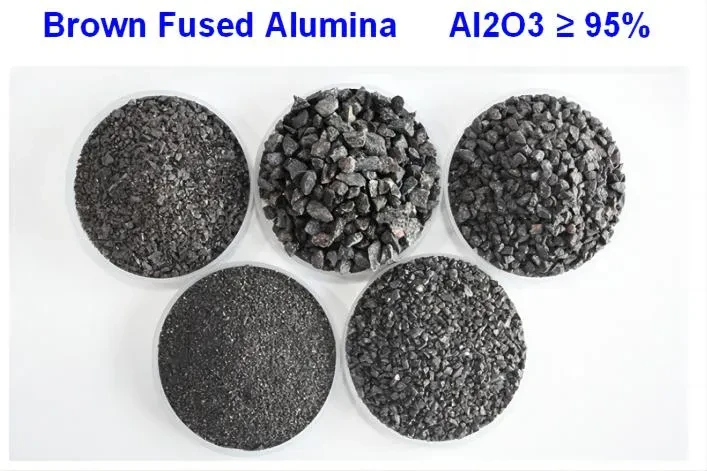
Brown aluminum oxide, also known as brown fused alumina, is primarily composed of aluminum oxide (Al₂O₃), with small amounts of other elements such as silicon (Si), iron (Fe), titanium (Ti), and calcium (Ca). The phase composition of brown aluminum oxide can vary depending on the raw materials used, the manufacturing process, and the specific grade of the product.
The main phases found in brown aluminum oxide include corundum (α - Al₂O₃), which is the most stable and desirable phase due to its high hardness, thermal stability, and chemical inertness. Other phases may include mullite (3Al₂O₃·2SiO₂), hercynite (FeAl₂O₄), and rutile (TiO₂). The presence and proportion of these phases can have a profound impact on the properties of brown aluminum oxide.
Impact of Phase Composition on Physical Properties
Hardness and Abrasion Resistance
Corundum, the dominant phase in high - quality brown aluminum oxide, has a high Mohs hardness of 9, making it extremely hard and resistant to abrasion. A higher proportion of corundum in the phase composition generally results in better abrasion resistance, which is crucial in refractory applications where the material is subjected to high - speed particle impact or sliding wear. For example, in lining materials for industrial furnaces where molten metals or high - velocity gas streams are present, a brown aluminum oxide with a high corundum content can withstand the abrasive forces and maintain its integrity over time.
Density
The density of brown aluminum oxide is also influenced by its phase composition. Corundum has a relatively high density, and as the proportion of corundum increases, the overall density of the material also rises. A higher density can be advantageous in some refractory applications as it can contribute to better packing and reduced porosity, which in turn can improve the material's resistance to penetration by molten metals or slag.
Impact of Phase Composition on Thermal Properties
Thermal Conductivity
The thermal conductivity of brown aluminum oxide is affected by the presence and distribution of different phases. Corundum has a relatively high thermal conductivity, which allows for efficient heat transfer. In refractory applications where rapid heat dissipation is required, such as in heat exchangers or furnace linings for high - temperature processes, a brown aluminum oxide with a high corundum content can help to maintain a more uniform temperature distribution and prevent thermal stress buildup.
On the other hand, phases like mullite have lower thermal conductivity. In some cases, a controlled amount of mullite in the phase composition can be beneficial as it can act as a thermal barrier, reducing heat loss and improving the energy efficiency of the refractory system.
Thermal Expansion
Thermal expansion is an important consideration in refractory applications, as excessive expansion or contraction during heating and cooling cycles can lead to cracking and failure of the material. The phase composition of brown aluminum oxide plays a key role in determining its thermal expansion coefficient. Corundum has a relatively low thermal expansion coefficient, which helps to minimize dimensional changes at high temperatures. However, the presence of other phases such as hercynite or rutile can increase the thermal expansion coefficient. Therefore, a balanced phase composition is necessary to achieve a suitable thermal expansion behavior for specific refractory applications.
Impact of Phase Composition on Chemical Properties
Chemical Resistance
The chemical resistance of brown aluminum oxide is closely related to its phase composition. Corundum is highly chemically inert, resistant to attack by most acids, alkalis, and molten metals. A high corundum content in the brown aluminum oxide can enhance its chemical resistance, making it suitable for use in harsh chemical environments. For example, in the lining of chemical reactors or in applications where contact with corrosive slags is expected, a brown aluminum oxide with a high corundum content can provide long - term protection against chemical degradation.
However, other phases may have different chemical reactivities. Mullite, for instance, can react with certain acidic or alkaline substances under specific conditions. Therefore, the phase composition needs to be carefully controlled to ensure the desired chemical resistance for the intended application.
Influence of Manufacturing Process on Phase Composition
The manufacturing process of brown aluminum oxide can significantly affect its phase composition. The raw materials, typically bauxite ore, are melted in an electric arc furnace at high temperatures. The temperature, melting time, and cooling rate during the manufacturing process can all influence the formation and proportion of different phases.
For example, a longer melting time at a higher temperature can promote the conversion of other aluminum - containing compounds into corundum, increasing the corundum content in the final product. Rapid cooling can sometimes lead to the formation of metastable phases or non - equilibrium structures, which may affect the material's properties. As a supplier, we carefully control these manufacturing parameters to produce brown aluminum oxide with a consistent and optimized phase composition for different refractory applications.
Selecting the Right Brown Aluminum Oxide Based on Phase Composition
When selecting brown aluminum oxide for refractory applications, it's essential to consider the specific requirements of the application and match them with the appropriate phase composition. For applications where high abrasion resistance is the primary concern, such as in grinding wheels or sandblasting media, a brown aluminum oxide with a high corundum content is preferred.
In applications where thermal insulation is important, a material with a balanced proportion of corundum and mullite may be more suitable. For chemical - resistant applications, a high - corundum brown aluminum oxide is the obvious choice.
As a leading supplier of brown aluminum oxide for refractory applications, we offer a wide range of products with different phase compositions to meet the diverse needs of our customers. Our We Are The Leading Manufacturer Of Brown Fused Alumina page provides more detailed information about our manufacturing capabilities and product offerings.
Conclusion
The phase composition of brown aluminum oxide has a profound impact on its physical, thermal, and chemical properties, which in turn determine its suitability for different refractory applications. By understanding the relationship between phase composition and properties, customers can make more informed decisions when selecting brown aluminum oxide for their specific needs.
At our company, we are committed to providing high - quality brown aluminum oxide with a precisely controlled phase composition. If you are in the market for brown aluminum oxide for refractory applications, we invite you to contact us for a detailed discussion about your requirements. Our team of experts is ready to assist you in finding the perfect product for your project.
References
- Kriven, W. M., & Bradt, R. C. (Eds.). (2000). Advanced Structural Ceramics. Wiley - Interscience.
- Schneider, H., & Somers, J. (2008). Refractories Handbook. Wiley - VCH.
- Ray, I. L. (2010). High - Temperature Materials and Technology. CRC Press.