

How does the quality of White Fused Alumina affect its performance?
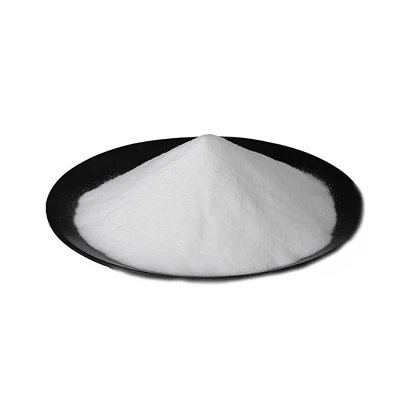
Hey there! As a supplier of White Fused Alumina, I've seen firsthand how the quality of this material can make or break its performance. In this blog, I'm gonna dive deep into how different quality aspects of White Fused Alumina impact what it can do.
First off, let's talk about purity. Purity is like the backbone of White Fused Alumina. High - purity White Fused Alumina has a significantly higher content of aluminum oxide (Al₂O₃). When the purity is up, it means there are fewer impurities like silica, iron oxide, and titanium dioxide. Why does this matter? Well, impurities can act like little troublemakers in various applications.
In the abrasives industry, for example, high - purity White Fused Alumina is a game - changer. When used in grinding wheels, it provides a much sharper and more consistent cutting edge. The absence of impurities means that the abrasive grains are more uniform in size and hardness. This results in better precision when grinding metals or other materials. On the other hand, low - purity White Fused Alumina might have some soft or hard spots due to impurities, which can lead to uneven grinding and a lower - quality finish on the workpiece.
Another application where purity shines is in the refractory industry. Refractory materials need to withstand extremely high temperatures without deforming or reacting with other substances. High - purity White Fused Alumina has excellent thermal stability. It can maintain its structural integrity even at temperatures above 1800°C. Impurities, however, can lower the melting point and cause the refractory to break down prematurely. This can be a huge problem in industries like steelmaking, where furnaces operate at incredibly high temperatures. If the refractory lining fails, it can lead to costly downtime for repairs and potential safety hazards.
Now, let's move on to particle size. The size of the White Fused Alumina particles is crucial for its performance. There are different grades available, from coarse to fine.
In abrasive blasting, coarse - grained White Fused Alumina is often used for heavy - duty surface preparation. It can quickly remove rust, scale, and old paint from large metal surfaces. The larger particles have more mass and energy when they hit the surface, allowing for faster material removal. But if you need a smoother finish or are working on a more delicate surface, fine - grained White Fused Alumina is the way to go. It can provide a more polished look and is less likely to damage the underlying material.
In the production of ceramics, particle size also plays a vital role. Fine - grained White Fused Alumina can be used to create dense and uniform ceramic bodies. The small particles can pack together more tightly, resulting in a stronger and more durable ceramic product. Coarse - grained alumina, on the other hand, might be used in applications where porosity is desired, such as in some types of filter ceramics.
The shape of the White Fused Alumina particles is another factor that affects performance. Angular particles are great for abrasive applications. Their sharp edges can cut through materials more effectively, making them ideal for grinding and sanding. Rounded particles, on the other hand, are often used in applications where a more gentle abrasion is needed or where the material needs to flow easily.
For example, in some polishing compounds, rounded White Fused Alumina particles are used. They can provide a smooth and scratch - free finish on surfaces like glass or jewelry. In fluidized - bed applications, rounded particles flow more freely, which is important for ensuring even distribution of the material.
Let's also touch on the crystal structure of White Fused Alumina. There are different crystal forms, and the most common one is alpha - alumina. The way the crystals are formed during the production process can impact the material's properties. Well - formed, large - sized alpha - alumina crystals generally result in a harder and more wear - resistant product.
In the production of cutting tools, a White Fused Alumina with a well - developed crystal structure can provide a longer service life. The strong crystal lattice can withstand the high stresses and temperatures generated during cutting operations. If the crystal structure is poorly formed, the cutting tool might wear out quickly, leading to more frequent replacements and higher costs.
Now, I know I've been going on about the different quality factors, but how do you ensure you're getting high - quality White Fused Alumina? That's where a reliable supplier comes in. As a supplier, we have strict quality control measures in place. We test every batch of White Fused Alumina for purity, particle size, shape, and crystal structure. This way, we can guarantee that our customers are getting a product that will perform as expected.
If you're in the market for high - quality White Fused Alumina, whether it's for abrasives, refractories, ceramics, or other applications, we're here to help. And if you're also interested in related products, check out Tabular Alumina, Grit White Fused Alumina Oxide, or Calcined Bauxite India.
We're always open to discussing your specific needs and finding the right product for you. Whether you need a small sample to test or a large - scale order, just reach out to us for a friendly chat and we can start the ball rolling on your purchase.
In conclusion, the quality of White Fused Alumina is a multi - faceted thing. Purity, particle size, shape, and crystal structure all play a role in determining how well it will perform in different applications. By understanding these factors and working with a trusted supplier, you can ensure that you're getting the most out of this versatile material.
References
- "Alumina: Properties, Processing, and Applications" by John S. Reed
- Various industry reports on abrasive and refractory materials