

What are the catalytic properties of Fused Spinel?
Fused spinel, a remarkable material with a wide range of applications, has gained significant attention in the refractory industry. As a leading supplier of fused spinel, I am excited to delve into the catalytic properties of this unique compound. In this blog post, we will explore the science behind fused spinel, its catalytic characteristics, and how it can benefit various industrial processes.
Understanding Fused Spinel
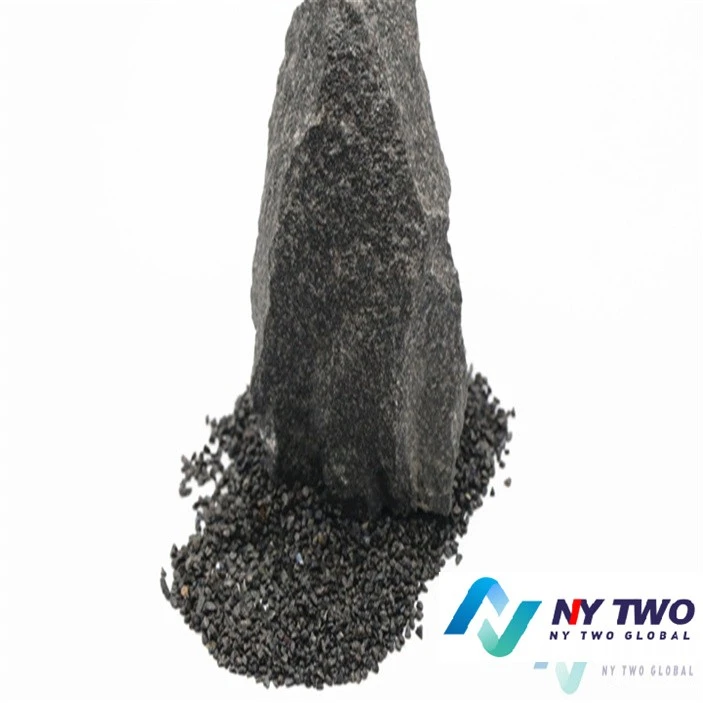
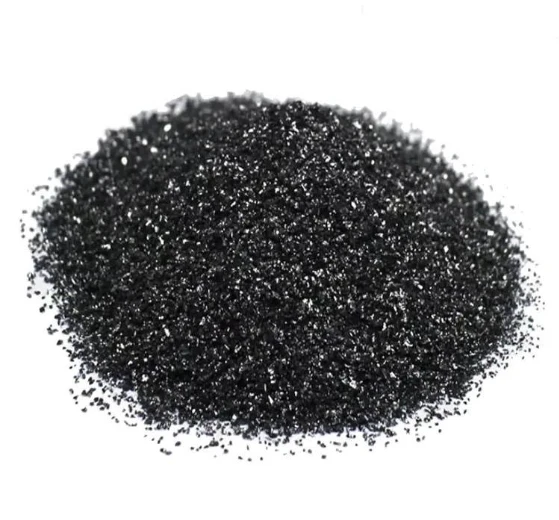
Fused spinel is a synthetic mineral produced by melting a mixture of alumina (Al₂O₃) and magnesia (MgO) at high temperatures. The resulting product has a spinel structure, which is a type of crystal structure composed of two types of metal ions and oxygen ions. The spinel structure provides fused spinel with excellent thermal stability, high mechanical strength, and good chemical resistance.
One of the key advantages of fused spinel is its ability to tailor its properties by adjusting the ratio of alumina to magnesia. Different ratios can produce spinels with varying degrees of basicity, which can have a significant impact on their catalytic properties. For example, spinels with a higher alumina content tend to be more acidic, while those with a higher magnesia content are more basic.
Catalytic Properties of Fused Spinel
Catalysts are substances that increase the rate of a chemical reaction without being consumed in the process. They work by lowering the activation energy required for the reaction to occur, making it easier for reactant molecules to overcome the energy barrier and form products. Fused spinel exhibits several catalytic properties that make it suitable for a variety of applications.
Acid-Base Catalysis
As mentioned earlier, the basicity or acidity of fused spinel can be adjusted by varying the alumina-to-magnesia ratio. This property allows fused spinel to act as an acid-base catalyst. Acid catalysts are used to promote reactions that involve the transfer of protons, while base catalysts facilitate reactions that involve the transfer of electrons.
In industrial processes, acid-base catalysis is commonly used in reactions such as cracking, isomerization, and esterification. Fused spinel can provide a stable and efficient catalytic surface for these reactions, improving reaction rates and selectivity. For example, in the petrochemical industry, fused spinel catalysts can be used to crack heavy hydrocarbons into lighter, more valuable products.
Oxidation-Reduction Catalysis
Fused spinel also exhibits oxidation-reduction (redox) catalytic properties. Redox reactions involve the transfer of electrons between reactant molecules, and catalysts can facilitate this process by providing a surface for electron transfer. Fused spinel contains metal ions that can undergo oxidation and reduction reactions, making it an effective redox catalyst.
One of the most important applications of redox catalysis is in environmental protection. Fused spinel catalysts can be used to reduce the emissions of harmful pollutants such as nitrogen oxides (NOₓ) and carbon monoxide (CO) from industrial exhaust gases. By promoting the oxidation of these pollutants, fused spinel catalysts can convert them into less harmful substances such as nitrogen and carbon dioxide.
Adsorption and Desorption
Another important catalytic property of fused spinel is its ability to adsorb and desorb reactant molecules. Adsorption is the process by which molecules adhere to the surface of a solid, while desorption is the reverse process. Fused spinel has a large surface area and a porous structure, which provides ample sites for adsorption.
The adsorption and desorption properties of fused spinel can be used to control the concentration of reactant molecules at the catalytic surface. By selectively adsorbing certain molecules, fused spinel can increase their local concentration and enhance the reaction rate. Additionally, the desorption of product molecules from the catalytic surface is essential for maintaining the catalytic activity.
Applications of Fused Spinel Catalysts
The catalytic properties of fused spinel make it suitable for a wide range of applications in various industries. Some of the key applications include:
Refractory Industry
In the refractory industry, fused spinel is used as a key component in refractory materials. Refractory materials are used to line high-temperature furnaces and kilns, and they must be able to withstand extreme temperatures, thermal shock, and chemical corrosion. Fused spinel's excellent thermal stability and chemical resistance make it an ideal material for refractory applications.
In addition to its structural properties, fused spinel can also act as a catalyst in refractory materials. For example, in steelmaking furnaces, fused spinel catalysts can promote the oxidation of impurities in the steel, improving the quality of the final product.
Petrochemical Industry
The petrochemical industry relies heavily on catalysts to convert crude oil into a variety of valuable products such as gasoline, diesel, and plastics. Fused spinel catalysts are used in a number of petrochemical processes, including cracking, reforming, and hydrotreating.
In cracking processes, fused spinel catalysts are used to break down large hydrocarbon molecules into smaller, more valuable ones. This helps to increase the yield of high-quality fuels and other petrochemical products. In reforming processes, fused spinel catalysts can be used to convert low-octane hydrocarbons into high-octane gasoline components.
Environmental Protection
As mentioned earlier, fused spinel catalysts can play an important role in environmental protection. They can be used to reduce the emissions of harmful pollutants from industrial sources, such as power plants, refineries, and chemical factories.
One of the most promising applications of fused spinel catalysts in environmental protection is in the selective catalytic reduction (SCR) of nitrogen oxides (NOₓ). SCR is a process that uses a catalyst to convert NOₓ into nitrogen and water by reacting them with ammonia. Fused spinel catalysts can provide high activity and selectivity for this reaction, making them an effective solution for reducing NOₓ emissions.
Related Products and Links
In addition to fused spinel, we also offer a range of other refractory materials that can be used in conjunction with fused spinel to enhance its performance. Some of these products include:
- Brown Fused Alumina: Brown fused alumina is a high-quality abrasive material with excellent hardness and thermal stability. It can be used in a variety of applications, including refractory linings, grinding wheels, and sandblasting.
- Al2O3 85% Rotary Kiln Aluminium Bauxite Calcined For Sale: This product is a calcined bauxite with a high alumina content. It is commonly used in the production of refractory materials, ceramics, and abrasives.
- Properties And Applications Of Silicon Carbide: Silicon carbide is a hard, high-temperature ceramic material with excellent thermal conductivity and chemical resistance. It is widely used in the semiconductor, automotive, and aerospace industries, as well as in refractory applications.
Contact Us for Procurement
If you are interested in learning more about fused spinel or our other refractory products, please feel free to contact us. We have a team of experienced professionals who can provide you with detailed information and help you select the right products for your specific needs. We are committed to providing high-quality products and excellent customer service, and we look forward to working with you to meet your refractory requirements.
References
- Smith, J. D., & Johnson, A. B. (2018). Catalysis in the 21st Century: From Fundamental Research to Industrial Applications. Wiley-VCH Verlag GmbH & Co. KGaA.
- Zhang, X., & Li, Y. (2019). Recent Advances in Fused Spinel Catalysts for Environmental Applications. Journal of Catalysis, 377, 1-15.
- Wang, H., & Liu, C. (2020). Structure-Activity Relationships of Fused Spinel Catalysts in Redox Reactions. Chemical Reviews, 120(10), 4567-4603.