

What is the particle size distribution of White Fused?
White fused alumina is a high - quality abrasive material widely used in various industrial applications due to its excellent hardness, high melting point, and chemical stability. As a leading supplier of white fused alumina, understanding the particle size distribution of this product is crucial for both us and our customers. In this blog, we will delve into the significance of particle size distribution in white fused alumina, the methods of measurement, and how it affects different applications.
The Importance of Particle Size Distribution in White Fused Alumina
The particle size distribution of white fused alumina plays a vital role in determining its performance in different applications. In abrasive applications, such as sandblasting and grinding, the size of the particles directly affects the cutting ability, surface finish, and efficiency of the process. For example, larger particles are more suitable for heavy - duty grinding and rough surface preparation, as they can remove material quickly. On the other hand, smaller particles are used for fine finishing operations to achieve a smooth and polished surface.
In refractory applications, the particle size distribution influences the packing density and porosity of the refractory material. A well - controlled particle size distribution can improve the strength, thermal shock resistance, and corrosion resistance of the refractory product. Moreover, in the production of ceramics and composites, the particle size of white fused alumina affects the rheological properties of the slurry, which in turn impacts the molding process and the final properties of the product.
Methods of Measuring Particle Size Distribution
There are several methods available for measuring the particle size distribution of white fused alumina. One of the most commonly used methods is sieve analysis. In this method, a sample of white fused alumina is passed through a series of sieves with different mesh sizes. The material is shaken for a specified period, and the amount of material retained on each sieve is weighed. The particle size distribution is then calculated based on the mass of the material retained on each sieve.
Another popular method is laser diffraction. This technique uses a laser beam to measure the size of particles in a suspension. When the laser beam passes through the particle suspension, the particles scatter the light at different angles. By analyzing the intensity of the scattered light at different angles, the particle size distribution can be determined. Laser diffraction is a fast and accurate method that can provide detailed information about the particle size distribution over a wide range of sizes.
In addition to sieve analysis and laser diffraction, sedimentation analysis can also be used to measure the particle size distribution of white fused alumina. This method is based on the principle that particles of different sizes settle at different rates in a liquid medium. By measuring the sedimentation rate of the particles, the particle size distribution can be calculated.
Particle Size Distribution in Different Applications
Sandblasting
In sandblasting applications, the particle size distribution of white fused alumina is carefully controlled to achieve the desired surface finish and cleaning efficiency. For general - purpose sandblasting, a wide range of particle sizes may be used. However, for more precise applications, such as precision cleaning or surface preparation for coating, a narrow particle size distribution is preferred.
White Fused Alumina Grits For Sandblasting are available in different particle size ranges, such as 24 - 40 mesh, 40 - 60 mesh, and 60 - 80 mesh. The coarser particles are used for heavy - duty sandblasting to remove thick layers of rust, scale, and paint, while the finer particles are used for light - duty sandblasting and surface finishing.
Grinding
In grinding applications, the particle size distribution of white fused alumina affects the grinding performance and the quality of the ground surface. For coarse grinding operations, larger particles are used to remove material quickly. As the grinding process progresses towards fine grinding and finishing, smaller particles are employed to achieve a smooth surface finish.
The selection of the appropriate particle size distribution depends on the material being ground, the grinding machine, and the desired surface quality. For example, when grinding hard materials, a coarser particle size distribution may be required to ensure efficient material removal. Conversely, when grinding soft materials or when a high - quality surface finish is required, a finer particle size distribution is preferred.
Refractory Applications
In refractory applications, the particle size distribution of white fused alumina is optimized to improve the physical and chemical properties of the refractory material. A well - graded particle size distribution can increase the packing density of the refractory, reduce the porosity, and enhance the strength and thermal shock resistance.
The refractory industry often uses a combination of different particle sizes, including coarse, medium, and fine particles, to achieve the desired properties. By carefully controlling the particle size distribution, the refractory manufacturer can produce high - quality refractory products that can withstand harsh operating conditions in industries such as steelmaking, cement production, and glass manufacturing.
Our Product Range and Particle Size Options
As a reliable supplier of white fused alumina, we offer a wide range of products with different particle size distributions to meet the diverse needs of our customers. Our products are available in various mesh sizes, from coarse to fine, and we can also customize the particle size distribution according to the specific requirements of our customers.
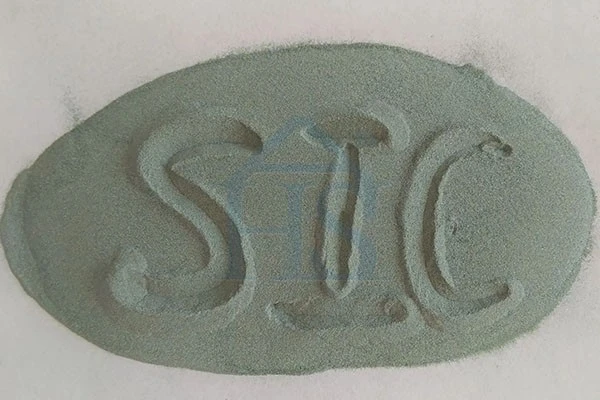
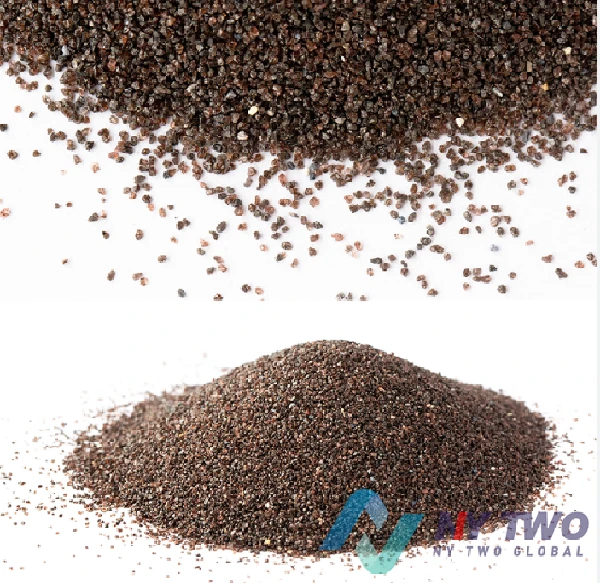
In addition to white fused alumina, we also supply other abrasive materials such as Garnet J80A 50 - 80mesh and Green Silicon Carbide For Bonded And Coated Abrasives. These products are also carefully selected and processed to ensure high quality and consistent performance.
Conclusion
The particle size distribution of white fused alumina is a critical factor that affects its performance in various industrial applications. By understanding the importance of particle size distribution, using appropriate measurement methods, and controlling the particle size distribution in our products, we can provide our customers with high - quality white fused alumina that meets their specific requirements.
If you are interested in our products or have any questions about the particle size distribution of white fused alumina, please feel free to contact us for further information and to discuss your procurement needs. We are committed to providing excellent products and services to our customers and look forward to establishing long - term partnerships with you.
References
- ASTM International. Standard Test Methods for Particle - Size Analysis of Soils. ASTM D422 - 63(2007).
- ISO. ISO 13320:2009 - Particle size analysis - Laser diffraction methods.
- Allen, T. (1997). Particle Size Measurement. Chapman & Hall.