

What is the refractive index of the abrasives I can buy?
When it comes to the world of abrasives, one of the key scientific properties that often goes unnoticed but is incredibly important is the refractive index. As a supplier of high - quality abrasives, I've encountered numerous customers who are curious about this property and how it relates to the abrasives they can buy from us. In this blog, I'll delve into what the refractive index of abrasives is, its significance, and how it varies among the different types of abrasives we offer.
Understanding the Refractive Index
The refractive index is a fundamental optical property of a material. It is defined as the ratio of the speed of light in a vacuum to the speed of light in the material. Mathematically, it is expressed as (n = \frac{c}{v}), where (n) is the refractive index, (c) is the speed of light in a vacuum ((c\approx 299792458\ m/s)), and (v) is the speed of light in the material.
When light passes from one medium to another, its direction changes due to the difference in the refractive indices of the two media. This phenomenon is known as refraction. The refractive index of a material can provide insights into its internal structure, density, and chemical composition.
Significance of Refractive Index in Abrasives
In the context of abrasives, the refractive index can have several implications. Firstly, it can affect the optical appearance of the abrasive particles. Abrasives with different refractive indices will scatter and reflect light in distinct ways, which can be important in applications where the aesthetic appearance of the finished product matters.
Secondly, the refractive index can be related to the hardness and density of the abrasive material. Generally, materials with higher refractive indices tend to be denser and harder. Since hardness is a crucial property for abrasives, as it determines their ability to cut, grind, and polish other materials, the refractive index can serve as an indirect indicator of an abrasive's performance.
Refractive Indices of Common Abrasives We Offer
Brown Aluminum Oxide
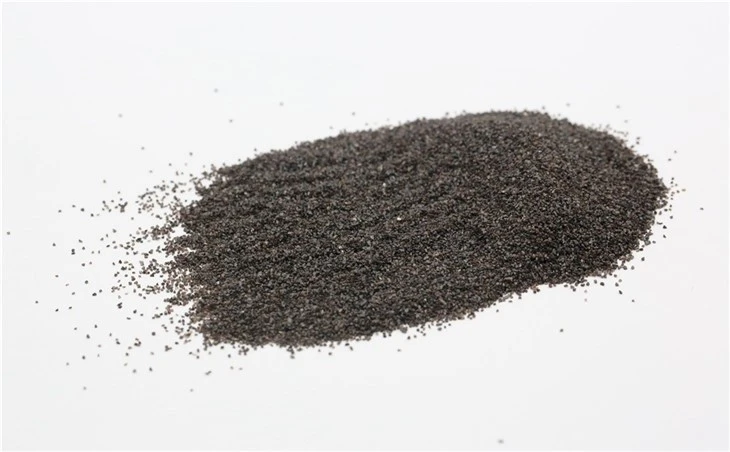
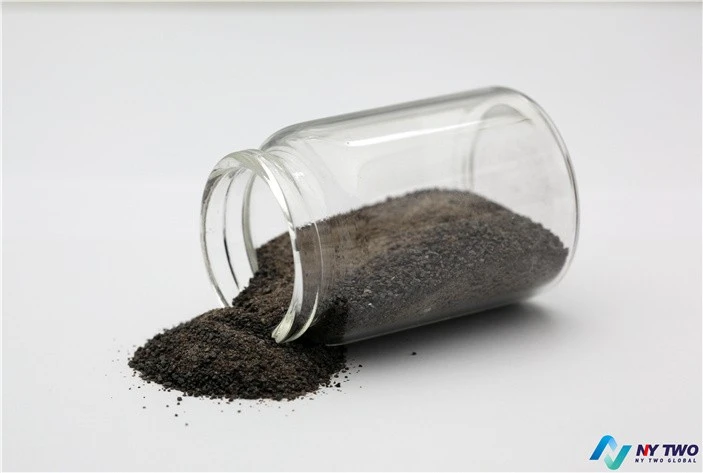
Brown Aluminum Oxide is one of the most widely used abrasives in our product range. It is known for its high hardness, good cutting ability, and cost - effectiveness. The refractive index of brown aluminum oxide typically ranges from 1.76 to 1.77. This relatively high refractive index is in line with its high density and hardness, which make it suitable for heavy - duty grinding and cutting applications.
The chemical composition of brown aluminum oxide, which mainly consists of aluminum oxide ((Al_2O_3)) with some impurities such as iron oxide ((Fe_2O_3)) and titanium dioxide ((TiO_2)), contributes to its refractive index. The presence of these impurities can slightly modify the internal structure of the material, affecting the way light propagates through it.
Brow Fused Aluminum Oxide
Brow Fused Aluminum Oxide is another important abrasive we supply. It is produced through a fusion process at high temperatures, which results in a more homogeneous and pure material compared to brown aluminum oxide. The refractive index of brow fused aluminum oxide is around 1.76, similar to that of brown aluminum oxide.
However, the fusion process gives brow fused aluminum oxide a more regular crystal structure, which can lead to more consistent optical and mechanical properties. This makes it a preferred choice for applications where precision and uniformity are required, such as in the manufacturing of high - quality grinding wheels and abrasive belts.
Factors Affecting the Refractive Index of Abrasives
Several factors can influence the refractive index of abrasives. One of the main factors is the chemical composition. As mentioned earlier, the presence of different elements and compounds in the abrasive material can change its refractive index. For example, increasing the amount of impurities in aluminum oxide can slightly alter its refractive index.
The crystal structure of the abrasive also plays a significant role. Materials with a more ordered crystal structure tend to have a more consistent refractive index. Heat treatment and manufacturing processes can affect the crystal structure of abrasives. For instance, the fusion process used to produce brow fused aluminum oxide results in a more regular crystal lattice compared to other manufacturing methods, which can lead to a more stable refractive index.
The particle size of the abrasives can also have an impact on the refractive index. Smaller particles may scatter light more effectively, which can affect the overall optical properties of the abrasive material. However, the effect of particle size on the refractive index is relatively minor compared to chemical composition and crystal structure.
Measuring the Refractive Index of Abrasives
There are several methods available for measuring the refractive index of abrasives. One common method is the use of a refractometer. A refractometer works by measuring the angle of refraction of light passing through the abrasive material. This method is relatively simple, quick, and can provide accurate results for transparent or translucent abrasives.
For opaque abrasives, more advanced techniques such as ellipsometry or X - ray diffraction can be used. Ellipsometry measures the change in the polarization state of light reflected from the surface of the abrasive, which can be related to its refractive index. X - ray diffraction can provide information about the crystal structure of the abrasive, from which the refractive index can be inferred.
Applications and the Role of Refractive Index
In different applications, the refractive index of abrasives can play a role in determining their suitability. In the automotive industry, for example, when using abrasives to polish car bodies, the refractive index can affect the final shine and appearance of the paintwork. Abrasives with a more consistent refractive index can ensure a uniform and high - quality finish.
In the optical industry, where precision grinding and polishing of lenses and optical components are required, the refractive index of the abrasives is crucial. Abrasives with a well - defined refractive index can help achieve the desired optical properties of the finished products, such as the correct focal length and light transmission.
Conclusion
The refractive index of abrasives is a fascinating and important property that can provide valuable insights into their performance, appearance, and suitability for different applications. As a supplier of abrasives, we understand the significance of this property and strive to provide our customers with high - quality products with consistent refractive indices.
If you are interested in learning more about the abrasives we offer or have specific requirements regarding the refractive index or other properties of our products, we encourage you to contact us for a detailed discussion. Our team of experts is always ready to assist you in finding the perfect abrasive solution for your needs.
References
- Smith, J. (2018). Handbook of Abrasive Materials. New York: Academic Press.
- Jones, A. (2020). Optical Properties of Industrial Minerals. London: Taylor & Francis.
- Brown, C. (2019). Abrasive Technology and Applications. Chicago: Wiley - Blackwell.