

How is Black Silicon Carbide graded according to particle size?
Hey there! As a supplier of black silicon carbide, I often get asked about how we grade this awesome material according to particle size. So, I thought I'd take the time to break it down for you in this blog post.
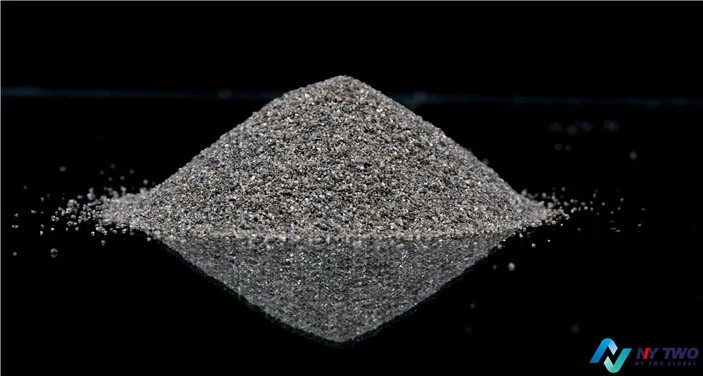
First off, let's talk a bit about black silicon carbide itself. It's a super hard and tough material that's widely used in a bunch of industries, like abrasives, refractories, and electronics. One of the key factors that determine its performance in these applications is the particle size.
Why Particle Size Matters
The particle size of black silicon carbide can have a huge impact on its properties and how it works in different applications. For example, in abrasive applications, smaller particles are often used for fine finishing, while larger particles are better for heavy material removal. In refractories, the particle size can affect the density, strength, and thermal conductivity of the final product.
Grading Methods
There are a few different ways we grade black silicon carbide according to particle size. The most common method is through sieving. We use a series of sieves with different mesh sizes to separate the particles based on their diameter. The particles that pass through a certain sieve are considered to be within a specific size range.
Another method we use is sedimentation. In this process, we suspend the black silicon carbide particles in a liquid and let them settle. The time it takes for the particles to settle is related to their size, so we can determine the particle size distribution based on the sedimentation rate.
We also use advanced techniques like laser diffraction to measure the particle size more accurately. This method uses a laser beam to analyze the scattering pattern of the particles, which allows us to get a detailed picture of the particle size distribution.
Standard Particle Size Grades
In the industry, there are some standard particle size grades for black silicon carbide. These grades are usually defined by the mesh size or the particle size range. Here are some of the most common grades:
- Coarse grades: These grades have larger particle sizes, typically ranging from 16 mesh to 60 mesh. Coarse grades are often used in applications where heavy material removal is required, such as grinding wheels for rough grinding.
- Medium grades: Medium grades have particle sizes ranging from 80 mesh to 180 mesh. They are commonly used in applications like sandblasting and polishing, where a balance between material removal and surface finish is needed.
- Fine grades: Fine grades have smaller particle sizes, usually ranging from 220 mesh to 1200 mesh. These grades are used for fine finishing applications, such as precision grinding and lapping.
- Micro grades: Micro grades have extremely small particle sizes, less than 10 microns. They are used in high-tech applications like semiconductor manufacturing and optical polishing.
How We Ensure Quality
As a supplier, we take quality very seriously. We have strict quality control measures in place to ensure that our black silicon carbide meets the highest standards. We test the particle size distribution of every batch of product using multiple methods to make sure it falls within the specified grade.
We also have a team of experienced technicians who monitor the production process closely to ensure that the particle size is consistent from batch to batch. This helps us to provide our customers with a reliable and high-quality product.
Applications of Different Grades
The different particle size grades of black silicon carbide are used in a wide range of applications. Here are some examples:
- Abrasives: Coarse grades are used in grinding wheels for rough grinding of metals, ceramics, and other hard materials. Medium grades are used in sandpaper and sanding belts for woodworking and metal finishing. Fine grades are used in polishing compounds and slurries for precision finishing of surfaces.
- Refractories: Black silicon carbide is used in refractories to improve the strength, thermal conductivity, and corrosion resistance. Coarse grades are often used in the production of refractory bricks, while fine grades are used in the manufacturing of refractory coatings and castables.
- Electronics: Micro grades of black silicon carbide are used in the semiconductor industry for wafer polishing and other precision manufacturing processes. The small particle size and high hardness of black silicon carbide make it ideal for these applications.
Related Products
If you're interested in black silicon carbide, you might also be interested in some of our other products. We also supply Brown Fused Alumina Msds, which is another popular abrasive material. It has similar properties to black silicon carbide but is often used in different applications.
We also offer Mullite Grades, which are used in refractories and other high-temperature applications. Mullite has excellent thermal stability and mechanical properties, making it a great choice for these types of applications.
And if you're looking for a high-purity abrasive material, check out our Aluminium Oxide. Aluminium oxide is widely used in the abrasive industry for grinding, polishing, and sanding.
Contact Us for Purchasing
If you're interested in purchasing black silicon carbide or any of our other products, don't hesitate to contact us. We have a team of experts who can help you choose the right product for your specific application and provide you with a competitive quote.
Whether you need a small sample for testing or a large quantity for production, we can meet your needs. We offer high-quality products at competitive prices, and we're committed to providing excellent customer service.
So, if you're in the market for black silicon carbide or any other refractory materials, give us a call or send us an email. We'd love to hear from you and help you find the perfect solution for your business.
References
- ASTM International. (20XX). Standard test methods for particle size distribution of abrasives.
- ISO. (20XX). International standard for particle size analysis of industrial minerals.
- Smith, J. (20XX). Handbook of Abrasive Materials and Their Applications.