

What are the factors affecting the calcination quality of bauxite in a rotary kiln?
As a supplier of Rotary Kiln Bauxite, I've witnessed firsthand the critical role that calcination quality plays in determining the value and performance of our product. Calcination is a thermal treatment process that involves heating bauxite to high temperatures in a rotary kiln to remove volatile components, transform its mineral structure, and enhance its physical and chemical properties. The quality of calcined bauxite can significantly impact its suitability for various applications, such as the production of Brown Fused Alumina, White Fused Alumina And White Fused Alumina, and High Temperature Brown Fused Alumina Grain. In this blog post, I'll explore the key factors that can affect the calcination quality of bauxite in a rotary kiln.
1. Bauxite Ore Characteristics
The quality of the raw bauxite ore is the foundation for successful calcination. Different bauxite deposits have varying mineral compositions, chemical properties, and impurity levels, which can significantly influence the calcination process and the final product quality.
- Mineral Composition: Bauxite typically contains a mixture of aluminum hydroxide minerals, such as gibbsite, boehmite, and diaspore. The relative proportions of these minerals can affect the calcination temperature and the resulting crystal structure of the calcined product. For example, gibbsite-rich bauxite requires lower calcination temperatures compared to boehmite or diaspore-rich bauxite.
- Chemical Properties: The chemical composition of bauxite, including the content of aluminum oxide (Al₂O₃), silica (SiO₂), iron oxide (Fe₂O₃), and other impurities, can impact the calcination process and the quality of the calcined product. High levels of impurities can lead to the formation of unwanted phases, reduce the refractoriness of the product, and increase the energy consumption during calcination.
- Particle Size and Distribution: The particle size and distribution of the bauxite ore can affect the heat transfer rate and the uniformity of calcination. Fine particles have a larger surface area, which can enhance the heat transfer and promote more rapid calcination. However, excessively fine particles can also cause problems such as dust generation and agglomeration during the calcination process.
2. Calcination Temperature
Calcination temperature is one of the most critical factors affecting the quality of calcined bauxite. The temperature range for bauxite calcination typically falls between 1200°C and 1600°C, depending on the mineral composition of the bauxite ore and the desired properties of the final product.
- Phase Transformation: At different calcination temperatures, the aluminum hydroxide minerals in bauxite undergo phase transformations, resulting in the formation of different crystal structures. For example, gibbsite decomposes to boehmite at around 200°C - 300°C, and boehmite further transforms to gamma-alumina at around 400°C - 600°C. At higher temperatures (above 1200°C), gamma-alumina transforms to alpha-alumina, which is the most stable and desirable crystal structure for many applications.
- Densification and Sintering: As the calcination temperature increases, the bauxite particles undergo densification and sintering, which can improve the strength, hardness, and refractoriness of the calcined product. However, excessive temperatures can also cause over-sintering, leading to the formation of large crystals, reduced porosity, and decreased reactivity.
- Impurity Removal: Calcination at high temperatures can also help to remove volatile impurities, such as water, carbon dioxide, and organic matter, from the bauxite ore. However, some impurities, such as silica and iron oxide, may react with the aluminum oxide at high temperatures to form unwanted phases, which can affect the quality of the calcined product.
3. Residence Time
Residence time refers to the amount of time that the bauxite ore spends in the rotary kiln during the calcination process. The residence time is determined by the rotational speed of the kiln, the length and diameter of the kiln, and the feed rate of the bauxite ore.
- Complete Calcination: Sufficient residence time is required to ensure that the bauxite ore undergoes complete calcination and achieves the desired phase transformation and densification. If the residence time is too short, the bauxite may not be fully calcined, resulting in a product with low strength, high porosity, and poor refractoriness.
- Uniformity of Calcination: A longer residence time can also promote more uniform calcination throughout the bauxite particles, reducing the variation in properties within the calcined product. However, excessively long residence times can increase the energy consumption and reduce the production efficiency.
4. Atmosphere in the Rotary Kiln
The atmosphere in the rotary kiln can also have a significant impact on the calcination quality of bauxite. The atmosphere can be either oxidizing, reducing, or neutral, depending on the type of fuel used and the ventilation conditions in the kiln.
- Oxidizing Atmosphere: An oxidizing atmosphere is typically used during bauxite calcination to ensure the complete oxidation of any organic matter and to promote the formation of stable oxide phases. In an oxidizing atmosphere, the oxygen in the air reacts with the carbon and other combustible impurities in the bauxite ore, removing them as carbon dioxide and other gases.
- Reducing Atmosphere: In some cases, a reducing atmosphere may be used to reduce the iron oxide content in the bauxite ore or to produce specific types of calcined bauxite with tailored properties. However, a reducing atmosphere can also cause problems such as the formation of metallic phases and the reduction of aluminum oxide, which can affect the quality of the calcined product.
- Neutral Atmosphere: A neutral atmosphere, such as nitrogen or argon, can be used to prevent oxidation or reduction reactions during the calcination process. This is often used when calcining bauxite for applications that require a high degree of purity and stability.
5. Kiln Design and Operation
The design and operation of the rotary kiln can also influence the calcination quality of bauxite. The kiln design includes factors such as the length-to-diameter ratio, the slope of the kiln, the type of burner, and the heat transfer efficiency.
- Heat Transfer Efficiency: The heat transfer efficiency of the rotary kiln is crucial for ensuring uniform heating and efficient calcination of the bauxite ore. A well-designed kiln should have a high heat transfer coefficient, which can be achieved through proper insulation, the use of high-quality refractory materials, and the optimization of the gas flow and combustion conditions.
- Mixing and Agitation: The mixing and agitation of the bauxite ore within the kiln can also affect the calcination quality. A good mixing action can ensure that all the bauxite particles are exposed to the same temperature and atmosphere, promoting more uniform calcination. This can be achieved through the use of internal lifters or flights in the kiln, which help to lift and tumble the bauxite particles as the kiln rotates.
- Kiln Maintenance and Monitoring: Regular maintenance and monitoring of the rotary kiln are essential for ensuring its proper operation and the quality of the calcined product. This includes checking the kiln lining for wear and damage, monitoring the temperature and pressure in the kiln, and adjusting the operating parameters as needed to maintain optimal calcination conditions.
6. Post-Calcination Treatment
After the calcination process, the calcined bauxite may undergo further treatment to improve its quality and performance. This can include processes such as crushing, grinding, screening, and beneficiation.
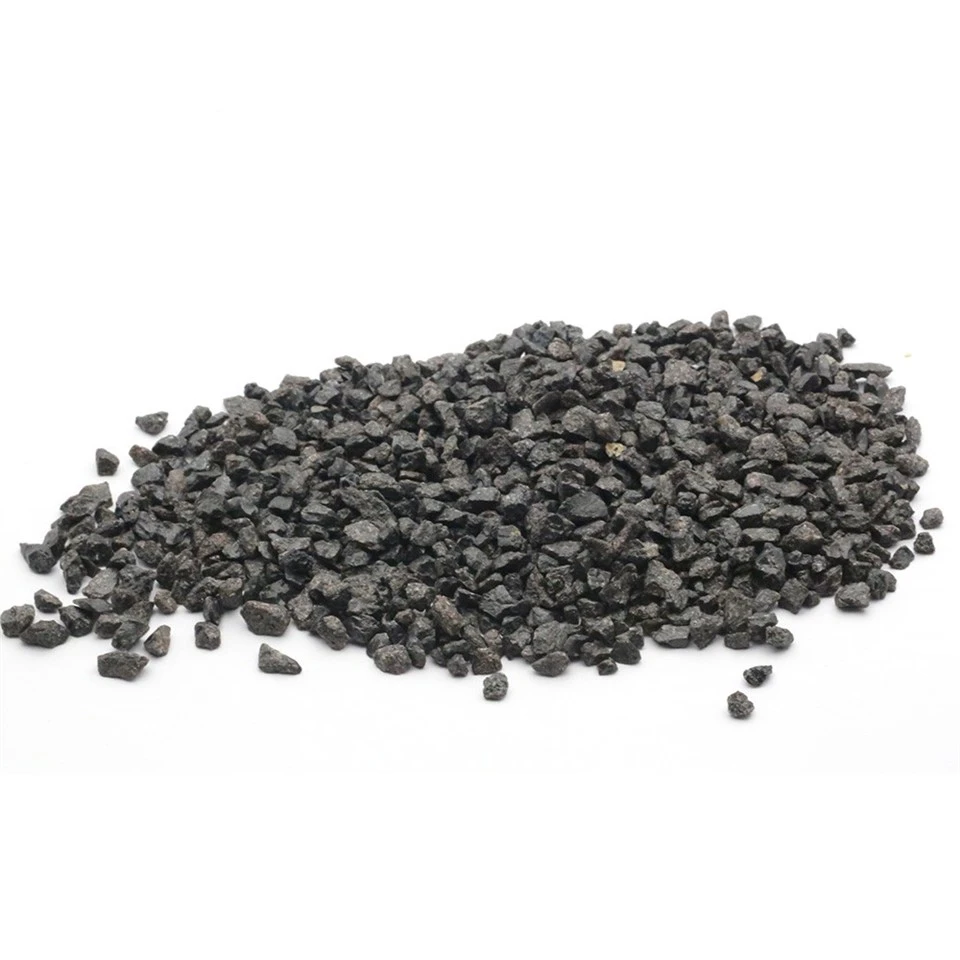
- Crushing and Grinding: Crushing and grinding the calcined bauxite can reduce its particle size and improve its reactivity. The particle size distribution of the crushed and ground bauxite can be adjusted to meet the specific requirements of different applications.
- Screening: Screening the calcined bauxite can separate the particles into different size fractions, ensuring that the product meets the desired specifications. This can help to improve the uniformity and consistency of the product quality.
- Beneficiation: Beneficiation processes, such as magnetic separation or flotation, can be used to remove any remaining impurities from the calcined bauxite, further improving its purity and quality.
Conclusion
In conclusion, the calcination quality of bauxite in a rotary kiln is influenced by a variety of factors, including the characteristics of the bauxite ore, the calcination temperature, the residence time, the atmosphere in the kiln, the kiln design and operation, and the post-calcination treatment. As a Rotary Kiln Bauxite supplier, we understand the importance of controlling these factors to ensure the production of high-quality calcined bauxite that meets the specific requirements of our customers.
If you are interested in purchasing high-quality Rotary Kiln Bauxite for your applications, such as the production of Brown Fused Alumina, White Fused Alumina And White Fused Alumina, or High Temperature Brown Fused Alumina Grain, please feel free to contact us for more information and to discuss your specific needs. We look forward to the opportunity to work with you and to provide you with the best possible products and services.
References
- Chen, X., & Evans, J. R. G. (2004). Calcination of bauxite: A review. Minerals Engineering, 17(10), 1129 - 1140.
- Das, S., & Natarajan, K. A. (2010). Calcination of bauxite for the production of alumina: A review. International Journal of Mineral Processing, 96(1 - 2), 1 - 10.
- Gupta, C. K., & Krishnamurthy, N. (2005). Extractive metallurgy of aluminum. CRC Press.