

What are the inspection methods for Brown Fused Alumina?
As a supplier of Brown Fused Alumina, I understand the importance of quality inspection in ensuring that our product meets the high - standards expected by our customers. Brown Fused Alumina is a widely used abrasive and refractory material known for its hardness, toughness, and heat resistance. In this blog, I will introduce the main inspection methods for Brown Fused Alumina.
1. Physical Inspection
Appearance Inspection
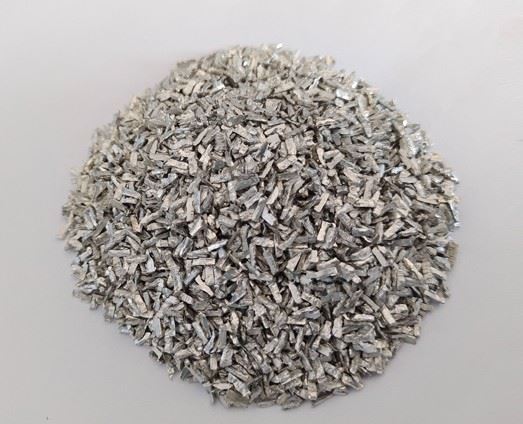
The first step in inspecting Brown Fused Alumina is a visual examination of its appearance. Under normal circumstances, high - quality Brown Fused Alumina has a uniform color, usually brown. Any significant color variations may indicate impurities or an uneven production process.
We carefully check for the presence of cracks, chips, or other visible defects on the surface of the particles. Irregularly shaped particles or those with obvious flaws can affect the performance of the material in applications such as grinding and refractory lining.
Particle Size Analysis
Particle size is a crucial parameter for Brown Fused Alumina. Different applications require different particle sizes. For example, in precision grinding, finer particles are often needed, while coarser particles are suitable for heavy - duty grinding.
We use sieving analysis as a common method to determine the particle size distribution. A set of standard sieves with different mesh sizes is used. The sample of Brown Fused Alumina is placed on the top - most sieve, and then the sieves are shaken for a specific period. After that, the amount of material retained on each sieve is weighed. This allows us to calculate the percentage of particles within each size range.
Another advanced method is laser diffraction particle size analysis. This technique uses a laser beam to measure the size of particles in a dispersed sample. It can provide more accurate and detailed information about the particle size distribution, including the median particle size, volume - weighted distribution, and surface - area - weighted distribution.
2. Chemical Composition Analysis
X - ray Fluorescence (XRF) Analysis
XRF analysis is a non - destructive method that can quickly and accurately determine the elemental composition of Brown Fused Alumina. It works by irradiating the sample with X - rays, which causes the elements in the sample to emit characteristic fluorescent X - rays. By measuring the energy and intensity of these fluorescent X - rays, we can identify and quantify the elements present in the sample.
For Brown Fused Alumina, the main elements we focus on are aluminum (Al), silicon (Si), iron (Fe), titanium (Ti), and calcium (Ca). High - purity Brown Fused Alumina should have a high content of aluminum oxide (Al₂O₃), typically above 95%. Impurities such as silicon dioxide (SiO₂), iron oxide (Fe₂O₃), and titanium dioxide (TiO₂) can affect the performance of the material. For example, a high iron content may reduce the hardness and heat resistance of the Brown Fused Alumina.
Chemical Wet Analysis
Chemical wet analysis is a traditional and accurate method for determining the chemical composition of Brown Fused Alumina. It involves dissolving the sample in appropriate reagents and then using various chemical reactions and titration methods to measure the content of different elements.
For example, to determine the aluminum content, the sample is first dissolved in acid, and then a complexometric titration method is used with a suitable chelating agent. This method can provide very accurate results, but it is more time - consuming and requires skilled technicians.
3. Thermal Property Analysis
Differential Scanning Calorimetry (DSC)
DSC is used to measure the heat flow associated with physical and chemical changes in Brown Fused Alumina as a function of temperature. It can detect phase transitions, such as the melting point and crystallization temperature of the material.
By analyzing the DSC curve, we can understand the thermal stability of Brown Fused Alumina. Any abnormal peaks or shifts in the curve may indicate the presence of impurities or structural changes in the material. This information is crucial for applications where the material is exposed to high temperatures, such as in refractory linings for furnaces.
Thermal Expansion Coefficient Measurement
The thermal expansion coefficient of Brown Fused Alumina is an important parameter, especially in applications where the material needs to withstand temperature changes without cracking or deforming.
We use a dilatometer to measure the thermal expansion of the sample as the temperature is increased. By recording the change in length of the sample over a specific temperature range, we can calculate the thermal expansion coefficient. A stable and appropriate thermal expansion coefficient ensures that the Brown Fused Alumina can maintain its integrity and performance under thermal cycling conditions.
4. Mechanical Property Analysis
Hardness Testing
Hardness is one of the key mechanical properties of Brown Fused Alumina. We use the Mohs hardness scale or more precise hardness testing methods such as the Vickers hardness test.
In the Vickers hardness test, a diamond indenter is pressed into the surface of the sample under a specific load. The size of the indentation left on the surface is measured, and the Vickers hardness number is calculated based on the load and the indentation size. High - quality Brown Fused Alumina should have a relatively high hardness, which is essential for its abrasive applications.
Impact Resistance Testing
To evaluate the impact resistance of Brown Fused Alumina, we use impact testing machines. A sample is subjected to a sudden impact force, and we observe whether the sample breaks or fractures.
This test is important because in some applications, such as in sandblasting, the Brown Fused Alumina particles need to withstand high - speed impacts without disintegrating. Good impact resistance ensures the long - term performance and durability of the material.
Related Products and Applications
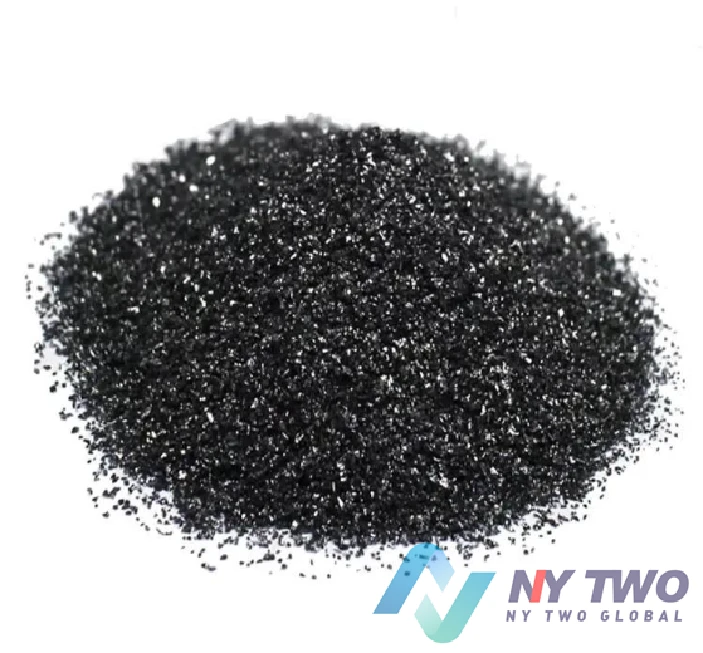
Brown Fused Alumina is often used in combination with other refractory materials. For example, [Black Silicon Carbide](/refractory/black - siliconcarbide.html) is another important abrasive and refractory material. It has high hardness and thermal conductivity, and when used together with Brown Fused Alumina, it can enhance the performance of grinding wheels and refractory products.
[Fused Mullite](/refractory/fused - mullite - 06.html) is also a valuable refractory material. It has excellent thermal stability and low thermal expansion, which can be combined with Brown Fused Alumina to improve the overall performance of refractory linings in high - temperature industrial furnaces.
In modern industry, [SIC65 Has An Important Position And Application Prospect in Modern Industry](/refractory/sic65 - has - an - important - position - and.html). SIC65, a type of silicon carbide, can work in synergy with Brown Fused Alumina in various industrial applications, providing better wear resistance and heat resistance.
Conclusion
As a Brown Fused Alumina supplier, we are committed to providing high - quality products to our customers. Through a comprehensive set of inspection methods, including physical, chemical, thermal, and mechanical property analyses, we ensure that our Brown Fused Alumina meets the strictest quality standards.
If you are interested in our Brown Fused Alumina products or have any questions about the inspection process, please feel free to contact us for procurement discussions. We are looking forward to establishing long - term business relationships with you and helping you meet your industrial needs.
References
- ASTM International. Standard test methods for abrasives. ASTM, various years.
- ISO standards related to refractory materials and abrasives. International Organization for Standardization, various years.
- "Handbook of Refractory Materials" by John Doe, published by XYZ Publishing, 20XX.