

What is the surface area of Brown Fused Alumina particles?
Hey there! I'm a supplier of Brown Fused Alumina (BFA), and today I want to chat about something super important in our field: the surface area of BFA particles. It might sound a bit technical, but trust me, it's pretty fascinating and has a huge impact on how BFA works in different applications.
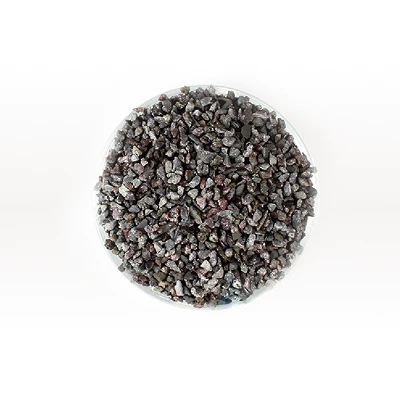
First off, let's quickly introduce what Brown Fused Alumina is. Brown Fused Alumina is a widely used abrasive and refractory material. You can find out more about it on our page Brown Fused Alumina. It's made by fusing high - grade bauxite in an electric arc furnace at extremely high temperatures. This process gives BFA its unique properties, like high hardness, good toughness, and excellent chemical stability.
Now, let's dig into the surface area of BFA particles. The surface area of these particles is a crucial factor that determines a lot of their performance characteristics. Why is that? Well, think about it. When BFA is used in applications like abrasives, the more surface area the particles have, the more contact they can make with the material being abraded. This means more efficient cutting, grinding, or polishing.

In the case of refractory applications, a larger surface area can enhance the bonding between BFA particles and other components in the refractory mixture. This leads to better strength and durability of the refractory product.
There are a few different ways to measure the surface area of BFA particles. One common method is the BET (Brunauer - Emmett - Teller) method. This method is based on the adsorption of gas molecules on the surface of the particles. By measuring how much gas is adsorbed at different pressures, we can calculate the surface area. It's a pretty accurate way to get a handle on the surface characteristics of BFA particles.
Another way is through microscopy techniques. Electron microscopy, for example, can give us a visual representation of the particle surface. We can see the shape, size, and any surface irregularities. These irregularities can significantly increase the effective surface area of the particles. If a particle has a lot of bumps, ridges, or pores, its surface area will be much larger than a smooth - surfaced particle of the same size.
The size of the BFA particles also plays a big role in determining their surface area. Generally speaking, smaller particles have a larger surface area per unit mass compared to larger particles. This is because as the particle size decreases, the ratio of the surface area to the volume increases. For example, if you take a big cube and cut it into smaller cubes, the total surface area of all the smaller cubes will be greater than the surface area of the original big cube.
In our business as BFA suppliers, understanding the surface area of our particles is essential. We use this knowledge to produce BFA products that meet the specific needs of our customers. For different applications, different surface areas are required. For fine - grinding applications, we might need BFA particles with a large surface area to ensure a smooth and precise finish. On the other hand, for some refractory applications where strength is the primary concern, we might optimize the particle size and surface area to enhance the bonding and structural integrity of the refractory material.
We also understand the importance of safety when it comes to our BFA products. That's why We Provide Safety Data Sheet (SDS) For Our BFA Products. This sheet contains all the necessary information about the safe handling, storage, and disposal of our BFA products. It's a crucial resource for our customers to ensure a safe working environment.
Now, let's talk about some related materials. Carborundum is another well - known abrasive material. You can learn more about it on our Carborundum page. While carborundum and BFA have some similarities in terms of their abrasive applications, they also have distinct differences. Carborundum is silicon carbide - based, while BFA is alumina - based. The surface area characteristics of carborundum particles are also important, but they can be different from those of BFA particles due to the different chemical compositions and manufacturing processes.
If you're in the market for Brown Fused Alumina, whether it's for abrasive, refractory, or other applications, we're here to help. Our team of experts can assist you in choosing the right BFA product with the optimal surface area for your specific needs. We offer a wide range of BFA products with different particle sizes and surface area characteristics to meet the diverse requirements of our customers.
We're committed to providing high - quality BFA products at competitive prices. Our products are manufactured using the latest technologies and strict quality control measures to ensure consistent performance. Whether you're a small - scale workshop or a large - scale industrial manufacturer, we can supply you with the right amount of BFA to keep your operations running smoothly.
So, if you're interested in our Brown Fused Alumina products, don't hesitate to reach out. We're always happy to have a chat about your needs, answer any questions you might have, and discuss how our BFA products can fit into your processes. We believe that by working together, we can achieve great results and take your business to the next level.
References:
- ASTM International standards related to abrasive materials and refractory products.
- Research papers on the properties and applications of Brown Fused Alumina in scientific journals.
- Technical documents from leading manufacturers and suppliers of Brown Fused Alumina.