

What is the chemical formula of Black Silicon Carbide?
Silicon carbide is a well - known and widely - used industrial material, and black silicon carbide is one of its important forms. As a black silicon carbide supplier, I am often asked about the chemical formula of black silicon carbide and its significance in various industries.
Chemical Formula of Black Silicon Carbide
The chemical formula of black silicon carbide is SiC. This formula represents the fundamental composition of the material, which consists of one silicon (Si) atom and one carbon (C) atom. The formation of silicon carbide is based on a chemical reaction between silicon and carbon at high temperatures. Typically, it is produced by heating silica sand (SiO₂) and carbon (usually in the form of coke) in an electric furnace at temperatures around 2,200 - 2,500 °C. The reaction can be represented as follows:
SiO₂ + 3C → SiC + 2CO↑
In this reaction, the silica sand provides the silicon source, and the carbon source reacts with it to form silicon carbide, while carbon monoxide gas is released as a by - product.
Characteristics of Black Silicon Carbide
Black silicon carbide has several unique characteristics that make it suitable for a wide range of applications. Firstly, it has a high hardness, second only to diamond, boron carbide, and cubic boron nitride. This high hardness allows it to be used as an abrasive material for cutting, grinding, and polishing.
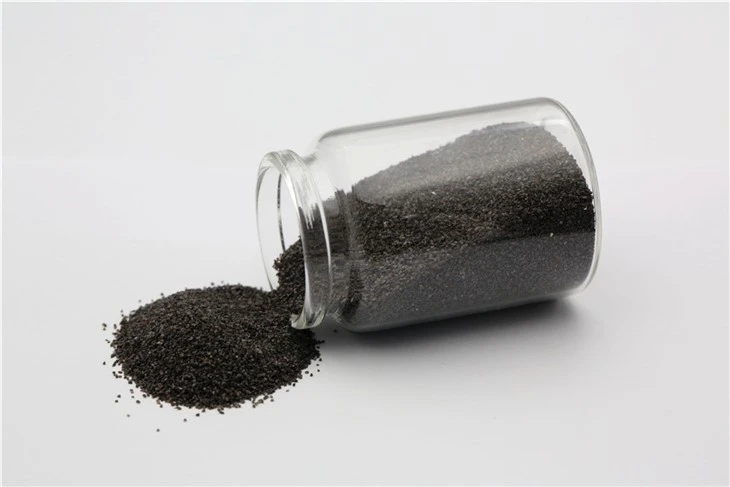
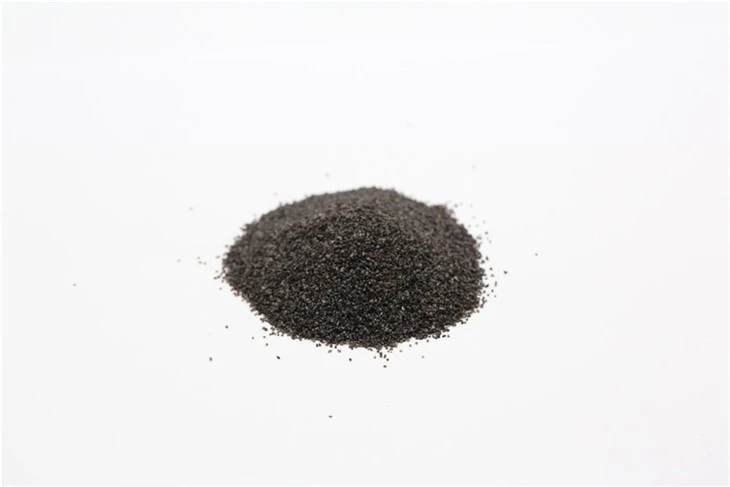
Secondly, it has excellent thermal conductivity. This property makes it useful in applications where heat dissipation is crucial, such as in electronic devices and high - temperature industrial processes.
Thirdly, black silicon carbide has good chemical stability. It is resistant to corrosion by many chemicals, which enables it to be used in harsh chemical environments.
Applications of Black Silicon Carbide
Abrasive Industry
In the abrasive industry, black silicon carbide is a popular choice. It is used in the manufacturing of grinding wheels, sandpaper, and abrasive belts. The high hardness and sharp edges of black silicon carbide particles make them effective in removing material from the surface of workpieces. It can be used to grind materials such as non - ferrous metals, ceramics, and glass.
Refractory Industry
Black silicon carbide is also an important raw material in the refractory industry. Refractory materials are used in high - temperature environments, such as in furnaces, kilns, and incinerators. The high melting point and good thermal conductivity of black silicon carbide make it suitable for use in refractory bricks and linings. It helps to improve the heat - resistance and durability of the refractory structures. For more information on related refractory materials, you can refer to Introduction To Mullite and Zirconium Corundum.
Electronic Industry
In the electronic industry, the thermal conductivity of black silicon carbide is highly valued. It can be used as a heat sink material to dissipate heat generated by electronic components, such as integrated circuits and power transistors. This helps to improve the performance and reliability of electronic devices.
Ceramic Industry
Black silicon carbide can be added to ceramic materials to improve their mechanical properties. It can increase the strength, hardness, and wear - resistance of ceramics, making them more suitable for applications in high - stress environments.
Comparison with Other Similar Materials
When compared with other similar materials, such as brown corundum and white corundum, black silicon carbide has its own advantages and disadvantages. Compared to Brown Corundum And White Corundum Difference, black silicon carbide has a higher hardness but is more brittle. This means that it is more effective in grinding hard and brittle materials, while brown and white corundum are better suited for grinding softer materials.
Quality Control in Black Silicon Carbide Production
As a black silicon carbide supplier, quality control is of utmost importance. We ensure that the chemical composition of our black silicon carbide products strictly adheres to the SiC formula. We use advanced production techniques and testing methods to monitor the production process.
During the production process, we carefully select raw materials to ensure their purity. The silica sand and carbon used should have a high degree of purity to avoid the introduction of impurities. After the synthesis of silicon carbide, we use various testing methods, such as X - ray diffraction (XRD) and chemical analysis, to verify the chemical composition and crystal structure of the product.
Future Development of Black Silicon Carbide
With the continuous development of various industries, the demand for black silicon carbide is expected to increase. In the field of new energy, for example, the development of high - power batteries and electric vehicles requires materials with good thermal conductivity and high hardness. Black silicon carbide may find new applications in these areas.
In addition, research on improving the performance of black silicon carbide is ongoing. Scientists are exploring ways to enhance its mechanical properties, thermal conductivity, and chemical stability through various methods, such as doping and surface treatment.
Conclusion
In conclusion, the chemical formula of black silicon carbide is SiC, which represents its basic composition and provides the basis for its unique properties and wide range of applications. As a black silicon carbide supplier, we are committed to providing high - quality products that meet the needs of different industries. Whether you are in the abrasive, refractory, electronic, or ceramic industry, our black silicon carbide products can offer you excellent performance.
If you are interested in our black silicon carbide products or have any questions about its application and usage, please feel free to contact us for further discussion and procurement negotiations.
References
- Kok, Y. H., & Cheong, K. F. (2005). Properties and applications of silicon carbide. Journal of Materials Science, 40(11), 3013 - 3046.
- Powell, J., & Hemmat, K. (2012). Silicon carbide technology for advanced energy applications. Springer Science & Business Media.
- Singh, D. J., & Sally, A. B. (2017). Handbook of silicon carbide technology: processing, properties and applications. William Andrew.