

What is the hardness of Brown Aluminum Oxide?
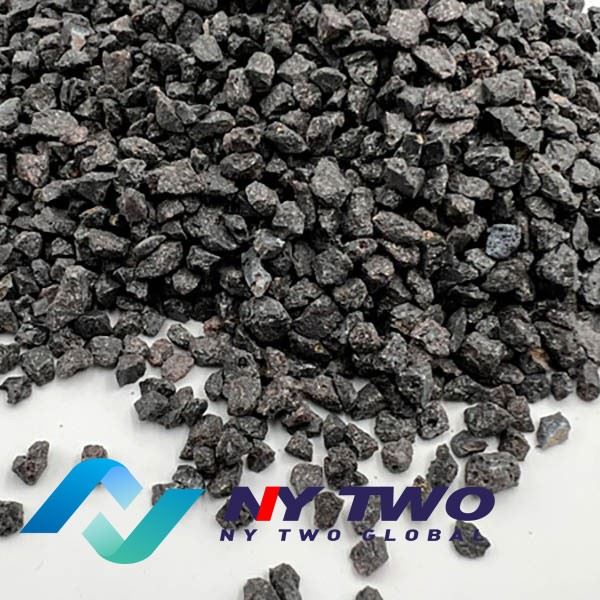
Brown Aluminum Oxide, also known as Brown Fused Alumina, is a widely used abrasive and refractory material. In this blog, as a supplier of Brown Aluminum Oxide, I will delve into the topic of its hardness, exploring its significance, measurement, and factors that influence it.
Understanding the Concept of Hardness
Hardness is a fundamental property of materials, which refers to the ability of a material to resist local deformation, especially plastic deformation, indentation, or scratching. In the case of Brown Aluminum Oxide, its hardness plays a crucial role in determining its performance in various applications.
There are several methods to measure the hardness of materials, and for Brown Aluminum Oxide, the Mohs scale and the Vickers hardness test are commonly used. The Mohs scale is a qualitative ordinal scale that characterizes the scratch resistance of various minerals through the ability of a harder material to scratch a softer one. Brown Aluminum Oxide has a relatively high Mohs hardness, typically around 9. This places it close to diamond, which has a Mohs hardness of 10, indicating its excellent scratch - resistant property.
The Vickers hardness test, on the other hand, is a more quantitative method. It involves indenting the material with a square - based pyramid indenter under a specific load and measuring the size of the indentation. The Vickers hardness value of Brown Aluminum Oxide is quite high, usually in the range of 1800 - 2200 HV. This high Vickers hardness makes it suitable for applications where high - strength and wear - resistant materials are required.
Significance of Hardness in Applications
The high hardness of Brown Aluminum Oxide makes it an ideal choice for a wide range of applications.
Abrasive Applications
In the abrasive industry, Brown Aluminum Oxide is widely used for grinding, sandblasting, and polishing. Its hardness allows it to cut through various materials, including metals, ceramics, and glass, with high efficiency. For example, in metal grinding operations, the hard particles of Brown Aluminum Oxide can quickly remove excess material from the metal surface, achieving a smooth finish. The sharp edges and high hardness of the particles ensure a long - lasting cutting ability, reducing the frequency of abrasive replacement.
Refractory Applications
In the refractory field, the hardness of Brown Aluminum Oxide contributes to its excellent thermal and mechanical stability. Refractory materials are used in high - temperature environments, such as furnaces and kilns. The high hardness of Brown Aluminum Oxide helps it maintain its shape and structure under extreme heat and mechanical stress. It can resist the erosion and corrosion caused by molten metals and slags, providing reliable protection for industrial equipment. For instance, Al2O3 85% Rotary Kiln Aluminium Bauxite Calcined For Sale, which is often used in combination with Brown Aluminum Oxide, benefits from its hardness to enhance the overall performance of refractory products.
Factors Influencing the Hardness of Brown Aluminum Oxide
The hardness of Brown Aluminum Oxide is not a fixed value and can be influenced by several factors.
Chemical Composition
The chemical composition of Brown Aluminum Oxide is a major factor affecting its hardness. The main component is Al₂O₃, and the purity of Al₂O₃ has a direct impact on hardness. Generally, a higher Al₂O₃ content leads to a higher hardness. Other impurities, such as iron oxide, titanium dioxide, and silicon dioxide, can also affect the hardness. For example, an appropriate amount of titanium dioxide can enhance the toughness and hardness of Brown Aluminum Oxide, while excessive silicon dioxide may reduce its hardness.
Manufacturing Process
The manufacturing process of Brown Aluminum Oxide also plays a crucial role in determining its hardness. The raw material, usually bauxite, is smelted in an electric arc furnace at high temperatures. The smelting temperature, time, and cooling rate can all affect the crystal structure and hardness of the final product. A well - controlled manufacturing process can ensure a uniform crystal structure and high hardness. For example, slow cooling after smelting can promote the growth of large - sized crystals, which generally have higher hardness compared to small - sized crystals.
Particle Size
The particle size of Brown Aluminum Oxide can influence its hardness to some extent. Smaller particles tend to have a higher surface - to - volume ratio, which may result in a relatively lower hardness due to the higher probability of surface defects. Larger particles, on the other hand, are more likely to have a more complete crystal structure and higher hardness. However, in some applications, smaller particles may be preferred for achieving a finer finish, despite their relatively lower hardness.
Comparison with Other Abrasive and Refractory Materials
When compared with other abrasive and refractory materials, the hardness of Brown Aluminum Oxide gives it certain advantages.
Compared with White Aluminum Oxide
White Aluminum Oxide is another common abrasive material. While White Aluminum Oxide has a higher purity of Al₂O₃ and a more uniform crystal structure, Brown Aluminum Oxide has a comparable hardness and is generally more cost - effective. In applications where high - volume grinding or sandblasting is required, Brown Aluminum Oxide is often the preferred choice due to its good balance between hardness and cost.
Compared with Silicon Carbide
Silicon Carbide is also a popular abrasive material known for its high hardness. However, Brown Aluminum Oxide has better chemical stability in some environments. For example, in wet grinding operations, Brown Aluminum Oxide is less likely to react with water or other chemicals compared to Silicon Carbide. This makes it a more reliable choice in applications where chemical resistance is important.
Conclusion
In conclusion, the hardness of Brown Aluminum Oxide is a key property that determines its performance in abrasive and refractory applications. With a high Mohs hardness of around 9 and a Vickers hardness in the range of 1800 - 2200 HV, it offers excellent scratch resistance and wear - resistant properties. The hardness is influenced by factors such as chemical composition, manufacturing process, and particle size. When compared with other materials, Brown Aluminum Oxide shows unique advantages in terms of cost - effectiveness and chemical stability.
If you are interested in our Brown Aluminum Oxide products or have any questions about its properties and applications, we welcome you to contact us for procurement and further discussions. Our team of experts is ready to provide you with detailed information and professional advice to meet your specific needs.
References
- "Handbook of Abrasive Technology", John Wiley & Sons
- "Refractory Materials: Properties and Applications", CRC Press