

What is the impact of the kiln inclination on bauxite flow in a rotary kiln?
The rotary kiln is a crucial piece of equipment in the bauxite processing industry. As a leading Rotary Kiln Bauxite supplier, I have witnessed firsthand the significant role that the kiln's inclination plays in the bauxite flow process. In this blog, I will delve into the impact of kiln inclination on bauxite flow in a rotary kiln, exploring the scientific principles and practical implications.
Understanding the Basics of Rotary Kiln and Bauxite Flow
A rotary kiln is a cylindrical device that rotates around its axis. It is used for various thermal processes, including the calcination of bauxite. Bauxite, a sedimentary rock rich in aluminum, is fed into the kiln at one end and moves through the kiln as it rotates. The heat generated inside the kiln causes chemical and physical changes in the bauxite, transforming it into useful products such as Magnesia Alumina Spinel, Mullite Wikipedia, and Corundum.
The flow of bauxite through the rotary kiln is a complex process influenced by several factors, including the kiln's rotation speed, temperature distribution, and, most importantly, its inclination. The inclination of the kiln determines the direction and speed of the bauxite's movement along the length of the kiln.
Impact of Kiln Inclination on Bauxite Flow Rate
One of the most significant impacts of kiln inclination on bauxite flow is on the flow rate. The inclination creates a gravitational force that helps the bauxite move from the higher end of the kiln to the lower end. As the inclination angle increases, the gravitational force acting on the bauxite also increases, resulting in a higher flow rate.
However, it is important to note that increasing the inclination angle too much can lead to problems. If the flow rate is too high, the bauxite may not have enough time to undergo the necessary thermal reactions inside the kiln. This can result in incomplete calcination and lower-quality products. On the other hand, if the inclination angle is too small, the flow rate will be too slow, leading to longer processing times and reduced productivity.
Therefore, finding the optimal inclination angle is crucial for achieving the desired flow rate and ensuring efficient bauxite processing. This requires a careful balance between the gravitational force and the time required for the bauxite to react inside the kiln.
Influence on Bauxite Residence Time
The inclination of the kiln also affects the residence time of the bauxite inside the kiln. Residence time refers to the amount of time the bauxite spends inside the kiln, which is essential for the completion of the calcination process. A longer residence time allows for more thorough heating and chemical reactions, resulting in higher-quality products.
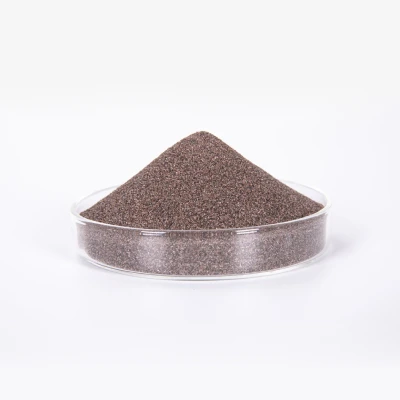

A lower inclination angle generally leads to a longer residence time because the bauxite moves more slowly through the kiln. This can be beneficial for processes that require a longer reaction time, such as the production of high-purity Corundum. However, a longer residence time also means lower throughput and potentially higher energy consumption.
Conversely, a higher inclination angle reduces the residence time, increasing the throughput of the kiln. This can be advantageous for large-scale production where speed is a priority. However, it may also lead to incomplete reactions if the bauxite does not have enough time to reach the desired temperature and undergo the necessary chemical changes.
Effect on Bauxite Mixing and Heat Transfer
In addition to affecting the flow rate and residence time, the kiln inclination also plays a role in bauxite mixing and heat transfer. As the kiln rotates, the bauxite tumbles and mixes, ensuring that all particles are exposed to the heat source. The inclination of the kiln influences the way the bauxite tumbles and the degree of mixing that occurs.
A steeper inclination angle can enhance the mixing of the bauxite by causing the particles to slide and roll more vigorously. This improved mixing can lead to more uniform heating and better heat transfer within the bauxite bed. As a result, the calcination process becomes more efficient, and the quality of the final products is improved.
On the other hand, a shallower inclination angle may result in less effective mixing, leading to uneven heating and potential variations in product quality. Therefore, the kiln inclination needs to be carefully adjusted to ensure optimal mixing and heat transfer, which are essential for consistent and high-quality bauxite processing.
Practical Considerations for Optimizing Kiln Inclination
In practice, optimizing the kiln inclination for bauxite flow requires a combination of theoretical knowledge and practical experience. Here are some key considerations:
- Product Requirements: The type and quality of the final product determine the required residence time and reaction conditions. For example, if high-purity Mullite Wikipedia is the target product, a lower inclination angle may be necessary to ensure a longer residence time and more complete reactions.
- Kiln Design and Capacity: The size and design of the rotary kiln also influence the optimal inclination angle. Larger kilns may require a different inclination than smaller ones to achieve the same flow characteristics. Additionally, the kiln's capacity and throughput requirements need to be taken into account when adjusting the inclination.
- Operational Conditions: Factors such as the rotation speed of the kiln, the feed rate of the bauxite, and the temperature distribution inside the kiln can interact with the inclination angle. These operational conditions need to be finely tuned to work in harmony with the chosen inclination to achieve the best results.
Conclusion
In conclusion, the inclination of the rotary kiln has a profound impact on the flow of bauxite inside the kiln. It affects the flow rate, residence time, mixing, and heat transfer, all of which are critical for the efficient and high-quality processing of bauxite. As a Rotary Kiln Bauxite supplier, I understand the importance of optimizing the kiln inclination to meet the specific needs of our customers.
By carefully considering the product requirements, kiln design, and operational conditions, we can determine the optimal inclination angle for each application. This ensures that our customers can achieve the desired flow characteristics, maximize productivity, and produce high-quality bauxite products such as Magnesia Alumina Spinel, Mullite Wikipedia, and Corundum.
If you are in the market for high-quality bauxite products processed in rotary kilns, I invite you to contact us for a detailed discussion. Our team of experts is ready to provide you with customized solutions tailored to your specific requirements. Let's work together to achieve the best results in bauxite processing.
References
- Smith, J. (2018). Rotary Kiln Technology: Principles and Applications. New York: Elsevier.
- Johnson, R. (2019). Bauxite Processing and Utilization. London: CRC Press.
- Brown, A. (2020). Thermal Processing in Rotary Kilns. Sydney: Springer.