

What is the maximum current capacity of cored wires?
As a seasoned supplier of cored wires, I've often been asked about the maximum current capacity of these essential products. Cored wires play a crucial role in various industries, especially in welding and metallurgy. Understanding their maximum current capacity is vital for ensuring optimal performance and safety in applications.
Understanding Cored Wires
Cored wires are composite welding wires that consist of a metal sheath filled with a flux or alloying agents. They are designed to provide specific properties and benefits in welding processes. The composition of the core material and the outer sheath can vary significantly depending on the intended application. For instance, some cored wires are used for general-purpose welding, while others are tailored for high-strength or corrosion-resistant applications.
Factors Affecting the Maximum Current Capacity
The maximum current capacity of cored wires is influenced by several key factors. One of the primary factors is the wire diameter. Generally, larger diameter cored wires can handle higher currents compared to smaller ones. This is because a larger cross-sectional area allows for more efficient heat dissipation and a lower resistance to the flow of electric current.
The composition of the core material also plays a critical role. Different flux and alloying agents have varying electrical conductivities and melting points. For example, wires with a high proportion of conductive elements like copper or aluminum in the core may have a higher current capacity. Additionally, the melting point of the core material affects how quickly it can transfer heat away from the welding arc, which in turn impacts the maximum current that can be applied.
The type of shielding gas used in the welding process is another important factor. Shielding gases help protect the weld pool from atmospheric contamination and can also influence the heat transfer and current distribution. Some gases, such as argon or carbon dioxide, are more effective at conducting heat and may allow for higher current capacities.
Determining the Maximum Current Capacity
Manufacturers typically provide guidelines on the maximum current capacity for their cored wires based on extensive testing and research. These guidelines take into account the wire diameter, composition, and recommended welding parameters. However, it's important to note that these values are general recommendations and may need to be adjusted based on specific application requirements and conditions.
In practice, the maximum current capacity can be determined through a combination of theoretical calculations and practical testing. Theoretical calculations involve considering the electrical properties of the wire, such as its resistance and conductivity, as well as the heat transfer characteristics. Practical testing, on the other hand, involves conducting welding trials under controlled conditions to observe the behavior of the wire at different current levels.
Importance of Staying within the Maximum Current Capacity
Exceeding the maximum current capacity of cored wires can have several negative consequences. One of the most significant risks is overheating, which can lead to premature wire degradation, increased spatter, and poor weld quality. Overheating can also cause the wire to melt unevenly, resulting in inconsistent bead formation and reduced mechanical properties of the weld.
In addition to affecting weld quality, exceeding the current capacity can also pose safety hazards. High currents can generate excessive heat and electromagnetic fields, which can damage equipment and pose a risk of electrical shock to operators. Therefore, it's essential to follow the manufacturer's recommendations and stay within the specified current limits to ensure safe and efficient operation.
Applications and Considerations
Cored wires are used in a wide range of applications, each with its own specific requirements and considerations. In the automotive industry, for example, cored wires are commonly used for welding body panels and structural components. The high strength and corrosion resistance of these wires make them ideal for ensuring the durability and safety of vehicles.
In the construction industry, cored wires are used for welding steel structures, bridges, and pipelines. The ability to handle high currents and produce high-quality welds is crucial for ensuring the integrity and stability of these structures. Additionally, in the shipbuilding industry, cored wires are used for welding thick steel plates and components, where the maximum current capacity is particularly important for achieving deep penetration and strong welds.
When selecting cored wires for a specific application, it's important to consider the maximum current capacity in relation to the welding equipment and process being used. Different welding machines have different output capabilities, and it's essential to choose a wire that is compatible with the machine's current range. Additionally, factors such as the welding position, joint design, and travel speed can also affect the current requirements and should be taken into account.
Related Products and Their Role
As a supplier of cored wires, we also offer a range of related products that can enhance the performance and efficiency of the welding process. Medium Carbon Ferromanganese is one such product. It is an important alloying agent that can be used in the production of cored wires to improve their strength and hardness. By adding medium carbon ferromanganese to the core material, the wire can achieve better mechanical properties and resistance to wear and corrosion.
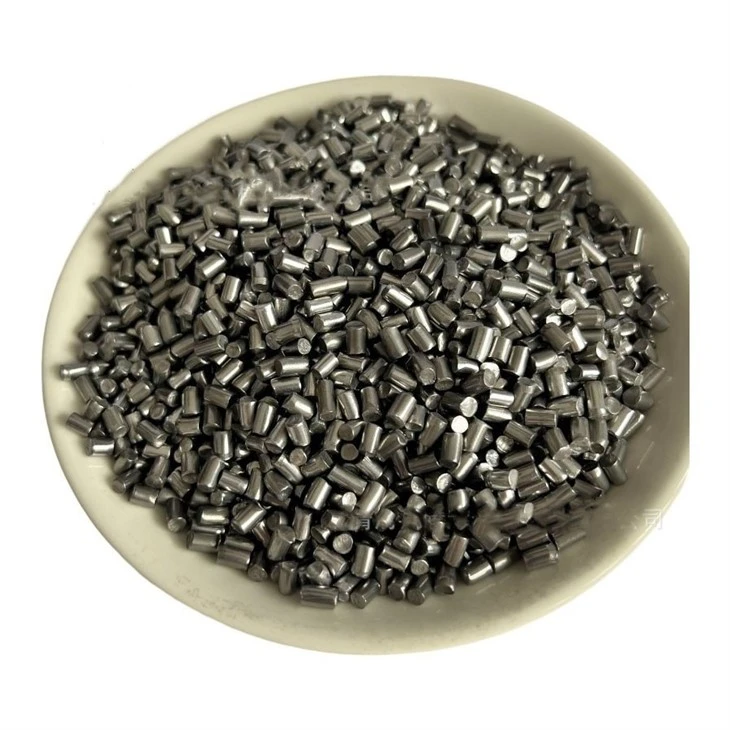
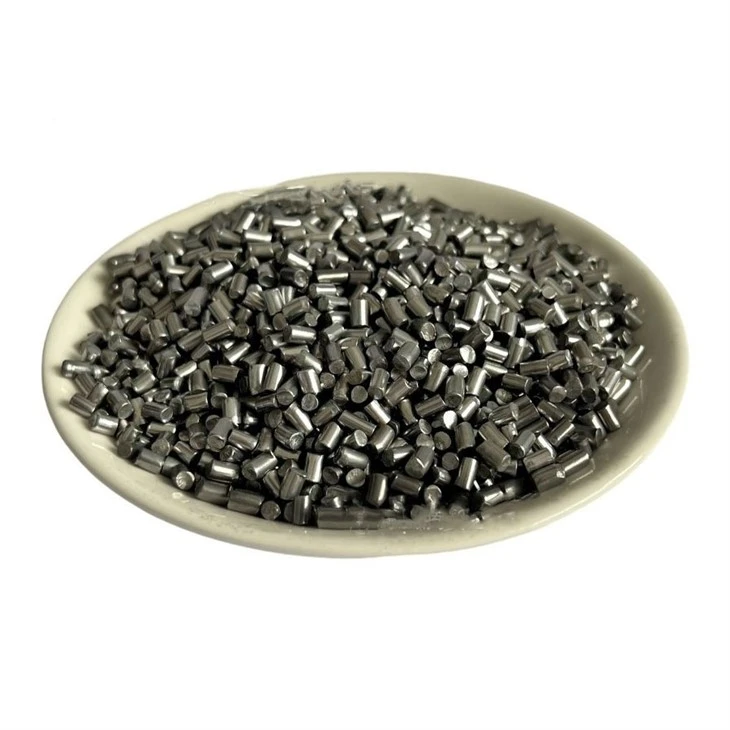
Magnesium Chips & Granules are another valuable addition to the welding process. Magnesium is a lightweight and highly reactive metal that can be used as a deoxidizer and desulfurizer in the weld pool. It helps to remove impurities and improve the quality of the weld. Additionally, magnesium can enhance the fluidity of the molten metal, resulting in better bead formation and penetration.
Ferrosilicon is a widely used alloying agent in the production of cored wires. It contains silicon and iron, which can improve the strength, ductility, and corrosion resistance of the weld. Ferrosilicon also acts as a deoxidizer and helps to reduce the formation of porosity in the weld.
Conclusion
In conclusion, the maximum current capacity of cored wires is a critical factor that determines their performance and suitability for different applications. By understanding the factors that affect the current capacity and following the manufacturer's guidelines, users can ensure safe and efficient operation. As a supplier of cored wires and related products, we are committed to providing high-quality solutions that meet the diverse needs of our customers.
If you are interested in learning more about our cored wires or have specific requirements for your welding applications, we encourage you to contact us for a detailed discussion. Our team of experts is available to provide you with personalized advice and support to help you make the right choice for your project.
References
- Welding Handbook, American Welding Society
- Metallurgy of Welding, John C. Lippold and David K. Miller
- Cored Wire Technology and Applications, Industry Research Reports