

What is the refractoriness of Fused Mullite?
Hey there! As a supplier of Fused Mullite, I often get asked about the refractoriness of this amazing material. So, I thought I'd take a moment to break it down for you in simple terms.
First off, let's talk about what Fused Mullite is. It's a high - performance refractory material that's made by fusing alumina and silica at extremely high temperatures. This process creates a product with some really cool properties, and refractoriness is one of the most important ones.
Refractoriness refers to a material's ability to withstand high temperatures without melting, deforming, or losing its strength. In the case of Fused Mullite, it has a really high refractoriness, which makes it super useful in a bunch of industries.
The refractoriness of Fused Mullite is mainly determined by its chemical composition and crystal structure. Typically, Fused Mullite contains a high percentage of alumina (Al₂O₃) and silica (SiO₂). The ratio of these two components can vary, but a common composition is around 70 - 80% alumina and 20 - 30% silica. This specific combination gives Fused Mullite its excellent heat - resistant properties.
The crystal structure of Fused Mullite also plays a crucial role. It has a well - ordered structure that provides stability at high temperatures. The mullite crystals act as a sort of framework, holding the material together and preventing it from breaking down easily.
In industrial applications, the high refractoriness of Fused Mullite makes it ideal for use in furnaces, kilns, and other high - temperature environments. For example, in steelmaking, furnaces need to operate at extremely high temperatures. Fused Mullite can be used as a lining material for these furnaces because it can withstand the intense heat without melting or cracking. This not only helps to extend the lifespan of the furnace but also improves the efficiency of the steel - making process.
Another area where Fused Mullite shines is in the ceramics industry. Kilns used for firing ceramics need to reach high temperatures to transform raw clay into beautiful, durable ceramic products. Fused Mullite components in the kiln lining ensure that the kiln can maintain a stable temperature environment, which is essential for producing high - quality ceramics.
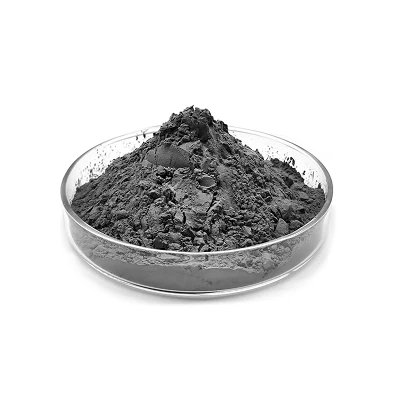
Now, let's compare Fused Mullite with some other refractory materials. There are materials like Black Silicon Carbide(one). Black Silicon Carbide also has good refractoriness, but it has different properties compared to Fused Mullite. Silicon carbide is more reactive in some high - temperature chemical environments, while Fused Mullite is more chemically stable. So, depending on the specific application, one material might be a better choice than the other.
Producers Of Brown Fused Alumina Powder often talk about the properties of brown fused alumina. Brown Fused Alumina is also a well - known refractory material and is sometimes called Brown Fused Alumina Is Called The Teeth Of Industry. It has a high hardness and good refractoriness, but Fused Mullite offers better thermal shock resistance in many cases. Thermal shock resistance is important when a material is exposed to rapid changes in temperature, as it helps prevent cracking and failure.
When it comes to measuring the refractoriness of Fused Mullite, there are a few standard tests. One common method is the Pyrometric Cone Equivalent (PCE) test. In this test, small cones made of Fused Mullite are heated along with standard cones of known refractoriness. The temperature at which the Fused Mullite cone softens and bends to touch the base is compared to the standard cones, and this gives an indication of its refractoriness.
The refractoriness of Fused Mullite can also be affected by impurities. Even small amounts of certain elements can lower its refractoriness. For example, if there are traces of alkali metals in the Fused Mullite, they can react with the alumina and silica at high temperatures, causing the material to soften at a lower temperature than expected. That's why it's really important to have strict quality control during the production process to ensure a high - purity product.
As a supplier of Fused Mullite, I know how important it is to provide a product that meets the high - temperature requirements of our customers. We use advanced production techniques to ensure that our Fused Mullite has a consistent and high - quality refractoriness. Our team of experts constantly monitors the production process, from the selection of raw materials to the final product inspection.
If you're in an industry that requires high - performance refractory materials, I'd love to talk to you about our Fused Mullite. Whether you're in the steel, ceramics, or any other high - temperature industry, our Fused Mullite can offer the heat - resistant properties you need. Don't hesitate to reach out if you have any questions or if you're interested in discussing a potential purchase.
In conclusion, the refractoriness of Fused Mullite is what makes it such a valuable material in high - temperature applications. Its unique chemical composition and crystal structure give it the ability to withstand extreme heat, making it a top choice for many industries. If you're looking for a reliable refractory solution, Fused Mullite could be the answer.
References

- ASTM International standards on refractory testing
- Textbooks on refractory materials and high - temperature engineering