

What is the specific heat capacity of Fused Magnesia?
Hey there! As a supplier of Fused Magnesia, I often get asked about all sorts of technical details regarding this amazing material. One question that pops up quite frequently is about the specific heat capacity of Fused Magnesia. So, let's dive right in and explore this topic together.
First off, what exactly is Fused Magnesia? Well, it's a high - quality refractory material produced by fusing high - purity magnesite in an electric arc furnace. It has excellent thermal stability, high melting point, and good chemical resistance, which makes it a top choice in various industries, especially in the steelmaking, cement, and glass industries.
Now, onto the specific heat capacity. Specific heat capacity is defined as the amount of heat energy required to raise the temperature of a unit mass of a substance by one degree Celsius (or one Kelvin). It's an important property because it helps us understand how a material will respond to changes in temperature.
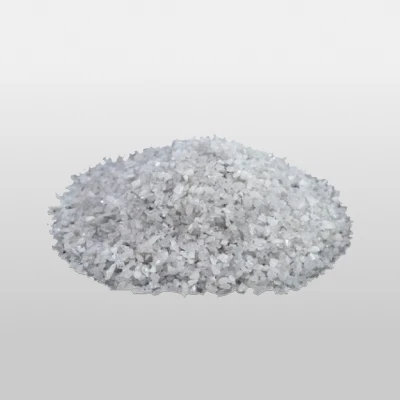
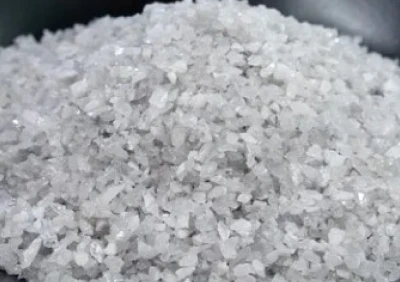
The specific heat capacity of Fused Magnesia can vary depending on a few factors, such as its purity, crystal structure, and temperature. Generally speaking, at room temperature (around 25°C or 298K), the specific heat capacity of Fused Magnesia is approximately 0.88 J/g·K. This value means that it takes about 0.88 joules of energy to raise the temperature of one gram of Fused Magnesia by one degree Kelvin.
As the temperature increases, the specific heat capacity of Fused Magnesia also changes. At higher temperatures, the atoms in the Fused Magnesia lattice have more energy and can vibrate more freely. This increased atomic motion requires more energy to further increase the temperature, so the specific heat capacity tends to rise. For example, at 1000°C (1273K), the specific heat capacity of Fused Magnesia can be around 1.1 J/g·K.
Understanding the specific heat capacity of Fused Magnesia is crucial for many industrial applications. In the steelmaking industry, for instance, refractory linings made of Fused Magnesia are used in ladles, converters, and electric arc furnaces. Knowing the specific heat capacity helps engineers design these linings to withstand the extreme temperatures generated during the steel - making process. If the specific heat capacity is too low, the lining might heat up too quickly and degrade, leading to costly repairs and production downtime.
In the cement industry, Fused Magnesia is used in the kiln linings. The high specific heat capacity allows the lining to absorb and store heat energy during the heating phase of the cement - making process and then release it slowly during the cooling phase. This helps maintain a more stable temperature inside the kiln, improving the quality of the cement produced.
Now, let's talk a bit about how Fused Magnesia compares to other refractory materials. There are some other popular refractory materials out there, like Tabular Corundum, Aluminumsilicate, and White Fused Alumina And White Fused Alumina.
Tabular Corundum is another high - performance refractory material. It has a relatively high specific heat capacity, but it's different from that of Fused Magnesia. The specific heat capacity of Tabular Corundum at room temperature is around 0.75 J/g·K, which is slightly lower than that of Fused Magnesia. This difference can affect how these materials are used in different applications.
Aluminumsilicate, on the other hand, has a more complex composition, and its specific heat capacity can vary widely depending on the exact ratio of aluminum and silicon in the material. Generally, it has a specific heat capacity in the range of 0.8 - 1.0 J/g·K at room temperature.
White Fused Alumina also has its own unique specific heat capacity characteristics. At room temperature, it's around 0.86 J/g·K, which is close to that of Fused Magnesia. However, the performance of these materials under high - temperature conditions can be quite different due to their different crystal structures and chemical properties.
As a supplier of Fused Magnesia, I can tell you that we take great pride in the quality of our product. We ensure that our Fused Magnesia has consistent properties, including a well - defined specific heat capacity. Our manufacturing process is carefully controlled to produce Fused Magnesia with high purity and the right crystal structure, which in turn gives it the desired thermal properties.
If you're in an industry that requires high - performance refractory materials, Fused Magnesia could be the perfect choice for you. Whether you're in the steel, cement, glass, or any other industry that deals with high - temperature processes, our Fused Magnesia can provide the thermal stability and durability you need.
We're always here to help you understand how our Fused Magnesia can fit into your specific application. If you have any questions about the specific heat capacity, or any other technical aspects of our product, don't hesitate to reach out. We can also provide samples so you can test our Fused Magnesia in your own environment.
If you're interested in purchasing Fused Magnesia, we'd love to have a chat with you about your requirements. We can offer competitive prices and excellent customer service. Whether you need a small quantity for testing or a large - scale supply for your production line, we've got you covered.
In conclusion, the specific heat capacity of Fused Magnesia is an important property that affects its performance in various high - temperature applications. By understanding this property, you can make more informed decisions when choosing refractory materials for your business. So, if you think Fused Magnesia might be the right fit for you, get in touch with us today to start the conversation.
References
- "Handbook of Refractory Materials"
- Journal of Thermal Analysis and Calorimetry articles on refractory materials