

What is the crystal structure of Black Silicon Carbide?
Hey there! As a supplier of Black Silicon Carbide, I often get asked about its crystal structure. So, I thought I'd take a moment to break it down for you.
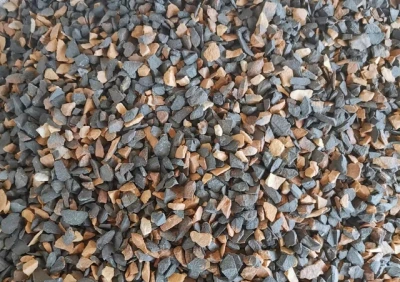
First off, let's talk a bit about what Black Silicon Carbide is. It's a compound made up of silicon and carbon atoms. It's known for its high hardness, excellent thermal conductivity, and chemical stability. These properties make it super useful in a whole bunch of industries, like abrasives, refractories, and electronics.
Now, onto the crystal structure. Black Silicon Carbide has a hexagonal crystal structure. In this structure, the silicon and carbon atoms are arranged in a repeating pattern. Each silicon atom is surrounded by four carbon atoms, and each carbon atom is surrounded by four silicon atoms. This forms a three - dimensional network that gives the material its unique properties.
The hexagonal crystal structure of Black Silicon Carbide is actually quite complex. It has a specific lattice parameter, which is the distance between the atoms in the crystal lattice. This lattice parameter affects the physical and chemical properties of the material. For example, a smaller lattice parameter usually means a harder material.
One of the cool things about the crystal structure of Black Silicon Carbide is its polymorphism. That means it can exist in different crystal forms. The most common form is the 6H - SiC polytype. The "6H" refers to the stacking sequence of the atomic layers in the crystal. In the 6H - SiC polytype, the layers are stacked in a specific pattern that repeats every six layers.
This polymorphism is important because different polytypes can have different properties. For instance, some polytypes might have better electrical conductivity than others. This allows us to tailor the properties of Black Silicon Carbide for specific applications.
In the abrasives industry, the hardness and crystal structure of Black Silicon Carbide make it a top - notch choice. The sharp edges and high hardness of the crystals can effectively grind and polish various materials. Whether it's metal, ceramics, or glass, Black Silicon Carbide can get the job done.
When it comes to refractories, the chemical stability and high thermal conductivity of Black Silicon Carbide are key. The crystal structure helps the material withstand high temperatures without breaking down. It can be used in furnaces, kilns, and other high - temperature applications.
If you're interested in learning more about related refractory materials, I've got some great resources for you. Check out Fused Brown Aluminum Oxide Technical Data to learn about the technical details of another important refractory material. Also, Introduction To Mullite gives you a good overview of mullite, which is often used in combination with Black Silicon Carbide in some applications. And if you're into tabular alumina products, Tabular Alumina Balls is a must - read.
As a supplier, I know how important it is to have high - quality Black Silicon Carbide for your projects. The crystal structure plays a huge role in determining the performance of the material. Whether you're in the research phase or ready to place an order, I'm here to help.
If you're looking for a reliable source of Black Silicon Carbide, I've got you covered. I can provide you with different grades and particle sizes to meet your specific needs. Whether you need a small sample for testing or a large - scale order for production, just reach out.
The crystal structure of Black Silicon Carbide is fascinating and has a big impact on its performance in various applications. If you have any questions or want to discuss a potential purchase, don't hesitate to get in touch. Let's work together to find the perfect Black Silicon Carbide solution for your business.
References:
- Smith, J. (2018). "Properties and Applications of Silicon Carbide". Journal of Materials Science.
- Johnson, A. (2020). "Crystal Structures in Refractory Materials". Refractory Research Quarterly.