

What is the market demand for Fused Mullite?
In the dynamic landscape of industrial materials, fused mullite has emerged as a pivotal component, driving innovation and efficiency across multiple sectors. As a dedicated supplier of fused mullite, I've witnessed firsthand the growing market demand for this remarkable material. In this blog, I'll delve into the factors fueling the market demand for fused mullite, exploring its unique properties, diverse applications, and the advantages it offers to various industries.
Understanding Fused Mullite
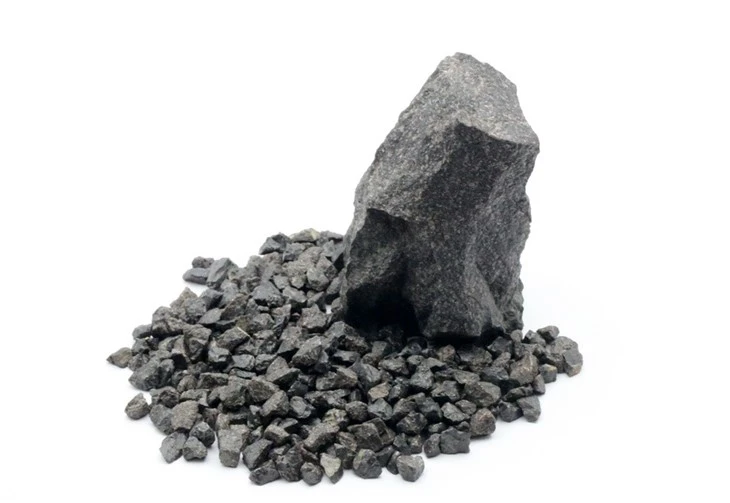
Before we explore the market demand, it's essential to understand what fused mullite is. Fused mullite is a high - performance refractory material produced by melting a mixture of high - alumina raw materials in an electric arc furnace at extremely high temperatures. The resulting product is a crystalline material with excellent physical and chemical properties.
To learn more about the basics of mullite, you can visit Introduction To Mullite. This page provides in - depth information on the nature and characteristics of mullite, which is fundamental to understanding fused mullite.
Key Properties of Fused Mullite
The market demand for fused mullite is largely driven by its outstanding properties. Firstly, it has a high melting point, typically above 1800°C. This makes it ideal for use in high - temperature environments where other materials would fail. For example, in the steelmaking industry, where temperatures can reach well over 1500°C, fused mullite can withstand the extreme heat without significant deformation or degradation.
Secondly, fused mullite exhibits excellent thermal shock resistance. Thermal shock occurs when a material is subjected to rapid temperature changes, which can cause cracking and failure. Fused mullite's ability to resist thermal shock ensures its long - term performance in applications where temperature fluctuations are common, such as in glass melting furnaces.
Another important property is its chemical stability. Fused mullite is resistant to corrosion from various chemicals, including acids and alkalis. This makes it suitable for use in chemical processing plants, where it can be used to line reactors and storage tanks, protecting them from chemical attack.
Diverse Applications of Fused Mullite
The wide range of applications of fused mullite is a major factor contributing to its market demand.
Metallurgical Industry
In the metallurgical industry, fused mullite is used extensively in the lining of furnaces, ladles, and tundishes. In steelmaking, it helps to maintain the integrity of the furnace lining, reducing heat loss and improving energy efficiency. It also enhances the quality of the steel by preventing contamination from the lining material. For example, in electric arc furnaces, the use of fused mullite - based refractories can increase the furnace's service life, reducing maintenance costs and downtime.
Glass Industry
The glass industry also relies heavily on fused mullite. In glass melting furnaces, fused mullite is used in the superstructure and the throat area. Its high - temperature resistance and thermal shock resistance ensure that the furnace can operate continuously at high temperatures. Moreover, its chemical stability prevents it from reacting with the molten glass, ensuring the purity of the final glass product.
Ceramics Industry
In the ceramics industry, fused mullite is used as a raw material for manufacturing high - quality ceramic products. It can improve the mechanical strength, thermal stability, and wear resistance of ceramics. For instance, in the production of ceramic tiles, adding fused mullite can enhance the tile's hardness and resistance to scratching, making it more suitable for high - traffic areas.
Foundry Industry
In the foundry industry, fused mullite is used in the production of molds and cores. Its high - temperature resistance and low thermal expansion coefficient ensure that the molds and cores can withstand the heat of the molten metal without cracking or deforming. This results in high - quality castings with precise dimensions.
Comparison with Other Refractory Materials
To better understand the market demand for fused mullite, it's useful to compare it with other refractory materials.
Tabular Alumina
Tabular alumina is another popular refractory material. While tabular alumina has high purity and good refractoriness, fused mullite offers better thermal shock resistance. In applications where thermal shock is a major concern, such as in some types of furnaces, fused mullite is often the preferred choice. You can find more information about tabular alumina on Tabular Alumina Msds.
Brown Corundum
Brown corundum is known for its high hardness and abrasion resistance. However, fused mullite's chemical stability and thermal shock resistance give it an edge in applications where chemical corrosion and temperature fluctuations are significant factors. To learn more about brown corundum, visit Brown Corundum.
Market Trends and Future Outlook
The market demand for fused mullite is expected to continue growing in the coming years. The increasing demand for high - quality steel, glass, and ceramic products, coupled with the need for energy - efficient and long - lasting refractory materials, will drive the market.
In addition, the growing focus on environmental protection and sustainable development is also likely to boost the demand for fused mullite. Its energy - saving properties and long service life contribute to reducing the overall environmental impact of industrial processes.
Advantages of Choosing Our Fused Mullite
As a supplier of fused mullite, we take pride in offering high - quality products. Our fused mullite is produced using advanced manufacturing processes, ensuring consistent quality and performance. We have a strict quality control system in place, from the selection of raw materials to the final product inspection.
We also offer customized solutions to meet the specific needs of our customers. Whether you need fused mullite with a specific chemical composition or particle size, we can work with you to develop the right product.
Our technical support team is always ready to provide assistance. We can help you with product selection, installation, and after - sales service. Our goal is to ensure that you get the most out of our fused mullite products.
Conclusion
The market demand for fused mullite is driven by its unique properties, diverse applications, and advantages over other refractory materials. As industries continue to seek high - performance and sustainable materials, the demand for fused mullite is expected to rise.
If you are interested in purchasing fused mullite for your industrial applications, I encourage you to contact us for a detailed discussion. We are committed to providing you with the best products and services to meet your needs. Let's work together to drive innovation and efficiency in your industry with our high - quality fused mullite.
References
- "Refractories Handbook", CRC Press
- "High - Temperature Materials and Technology", Woodhead Publishing
- Industry reports on metallurgy, glass, ceramics, and foundry industries.